
Mortgage Rates Near 3-Year Low: What It Means for Homebuyers
 Aime Summary
U.S. mortgage rates have dropped to 6.06% for 30-year fixed-rate loans, the lowest since late 2022 according to Fortune. President Donald Trump's directive for Fannie Mae and Freddie Mac to buy $200 billion in mortgage-backed securities is a key driver of the rate decline as CNBC reports. Despite falling rates, the housing market remains frozen, with 70% of U.S. homeowners having mortgages at 5% or lower according to Bloomberg. Refinancing activity has increased, with a 40% surge in refinancing applications following the rate drop ABC News reports. Analysts predict rates may remain above 6% for the foreseeable future, with some forecasting stabilization around 6.5% by year-end according to Bloomberg.
Mortgage rates in the U.S. have fallen to their lowest level in over three years, sparking optimism in a housing market that has been largely stagnant since the pandemic. On January 15, 2026, the average 30-year fixed-rate mortgage dropped to 6.06%, according to data from Freddie Mac. This decline has been fueled by policy moves from the Trump administration, including a $200 billion purchase of mortgage-backed securities by Fannie Mae and Freddie Mac as CNBC reports.
Still, the broader housing market remains constrained. Despite the drop in borrowing costs, home prices remain near 50% higher than pre-pandemic levels, and many homeowners are reluctant to refinance or sell due to favorable existing mortgage terms according to Bloomberg.
What Caused Mortgage Rates to Drop Below 6% in 2026?
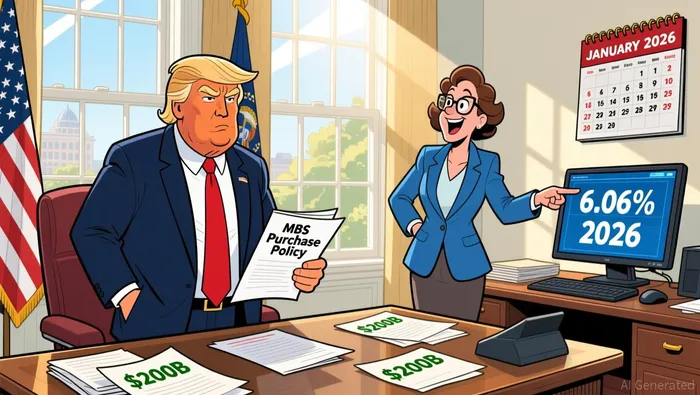
The decline in mortgage rates can be largely attributed to President Trump's directive to Fannie Mae and Freddie Mac to purchase $200 billion in mortgage-backed securities (MBS). This move aims to increase liquidity for lenders and stabilize the housing market as CNBC reports. Fannie and Freddie, which are in government conservatorship, do not originate loans but bundle them into MBS for sale to investors. This provides lenders with the capital needed to issue new loans and keeps borrowing costs low according to ABC News.
The policy is reminiscent of the Federal Reserve's actions during the early stages of the pandemic, when MBS purchases helped drive the 30-year rate down to 2.75% in 2021 as ABC News reports. Analysts estimate that the $200 billion MBS purchase could reduce the current 30-year rate by 10–25 basis points, potentially pushing it below 6% according to NBC News. For a median-priced home of $425,000 with a 20% down payment, this would reduce monthly payments by nearly $120, helping to improve affordability for first-time buyers according to NBC News.
Why Is the Housing Market Still Frozen Despite Lower Rates?
Despite the drop in mortgage rates, the housing market remains in a deep freeze. About 70% of U.S. homeowners still have fixed-rate mortgages of 5% or lower, making them reluctant to refinance or sell at higher rates according to Bloomberg. This is known as the "lock-in effect," a phenomenon that has suppressed home sales and contributed to rising home prices according to NBC News.
Homebuyers are also facing affordability challenges beyond interest rates. High home prices and down payment requirements continue to be major barriers for many potential first-time buyers according to ABC News. In some areas, particularly in the Northeast and Midwest, inventory is rising, which could signal a gradual shift in the market. However, this trend is expected to be slow and uneven across regions according to Bloomberg.
For investors, the current rate environment and housing market dynamics present both opportunities and risks. Lenders and mortgage-backed securities investors may see short-term gains as refinancing activity picks up, but long-term demand may remain constrained by broader affordability challenges. Retail investors interested in the housing sector should closely watch trends in home inventory, refinancing activity, and regional price movements as the market continues to evolve.
What to Watch as Mortgage Rates Continue to Shift in 2026
The Federal Reserve's monetary policy, inflation expectations, and housing inventory levels will be key factors shaping the mortgage rate landscape in 2026. Investors should monitor upcoming economic reports, including employment and inflation data, which influence the Fed's interest rate decisions. In addition, policy changes affecting homebuyer incentives and mortgage eligibility could also impact the broader housing market.
Homebuilders and mortgage-related financial institutions are already responding to the drop in rates, with some shares showing positive movement in the wake of the Trump administration's announcement according to NBC News. However, the extent to which this translates into broader market activity remains uncertain. Investors may want to keep an eye on regional housing trends, as well as changes in mortgage refinancing volumes and homebuilder confidence metrics.
Ultimately, while the drop in mortgage rates is a positive development for many homebuyers, broader affordability challenges remain. Potential buyers should evaluate their financial situations, including credit scores, down payment readiness, and long-term homeownership goals before making a move. For investors, the next few months will be crucial in determining whether this rate shift leads to a meaningful rebound in the housing market.

Stay ahead of the market.
Get curated U.S. market news, insights and key dates delivered to your inbox.


AInvest
PRO
AInvest
PRO



Comments
No comments yet