
Mortgage Rate Volatility and Its Impact on Housing Market Sentiment


 Aime Summary
The U.S. housing market in 2025 has been shaped by a complex interplay of shifting mortgage rates, inflationary pressures, and evolving investor strategies. As the 30-year fixed-rate mortgage averaged 6.3% by the end of Q3 2025-a decline from earlier in the year and an 11-month low-
market participants are recalibrating their approaches to navigate the volatility. This easing of rates, while modest, has begun to revive buyer confidence and transaction volumes, particularly in regions like the South and West.
According to market analysis, the broader economic landscape remains fraught with uncertainty, driven by sticky inflation, elevated tariffs, and labor market softness.
Economic Drivers and Market Sentiment
The Federal Reserve's monetary policy and inflation dynamics have been central to mortgage rate volatility.
Data from Q3 2025 indicates that core personal consumption expenditures (PCE) inflation is projected to hover near 3.3% through 2026, constrained by high tariffs and immigration-related labor shortages. These factors have kept borrowing costs elevated despite the recent stabilization in mortgage rates. Meanwhile,
businesses and financial institutions are closely monitoring consumer behavior, with mortgage affordability and fraud trends emerging as key concerns.
The housing market itself has shown mixed signals. 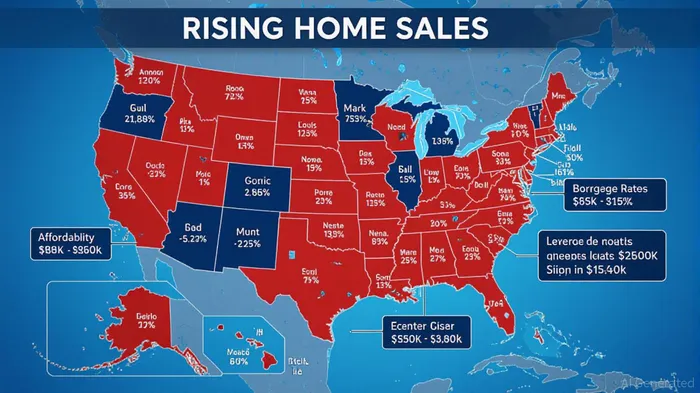 While falling rates and increased inventory have spurred a modest recovery in home sales,
affordability challenges persist due to high prices and lingering interest rates. This duality has pushed investors to adopt a more nuanced approach, balancing short-term opportunities with long-term risk mitigation.
Strategic Real Estate Positioning
Investors are increasingly prioritizing markets with strong job growth and affordability advantages.
The Southeast, Mountain West, and Midwest have emerged as focal points, driven by lower borrowing costs and demographic trends. For example,
developers are leveraging refinancing opportunities to reposition portfolios, capitalizing on the potential for lower financing costs in a near-term rate-cut environment.
The shift toward a "renter society" is also reshaping investment strategies. With 40% of household formations projected to be rentals by 2035-up from 28% over the past decade-
real estate investment trusts (REITs) with exposure to affordable or senior housing are gaining traction. Simultaneously,
homebuilders and materials companies are well-positioned to benefit from the urgent need for 18 million new housing units by 2035, particularly in the Midwest and South.
Risk Mitigation and Forward-Looking Scenarios
Given the projected range of mortgage rates (6% to 7% over the next five years absent a recession),
liquidity planning and scenario modeling have become critical. Real estate professionals are advised to build flexibility into financial models, prioritizing markets with resilient labor markets and regulatory tailwinds. For instance, the recent easing of rates has prompted developers to reassess construction pipelines, with a focus on cost-efficient projects that align with long-term demand.
Conclusion
Mortgage rate volatility in 2025 underscores the need for strategic agility in real estate positioning. While near-term stability in borrowing costs has provided a modest tailwind, the broader economic environment-marked by inflationary pressures and policy uncertainty-demands a cautious, data-driven approach. Investors who align their strategies with regional growth dynamics, rental market trends, and refinancing opportunities are likely to navigate this landscape more effectively, even as the path forward remains subject to macroeconomic headwinds.

Stay ahead of the market.
Get curated U.S. market news, insights and key dates delivered to your inbox.


AInvest
PRO
AInvest
PRO



Comments
No comments yet