
Mortgage Rate Volatility and Housing Market Rebound: Navigating Fed Policy and Real Estate Opportunities


 Aime Summary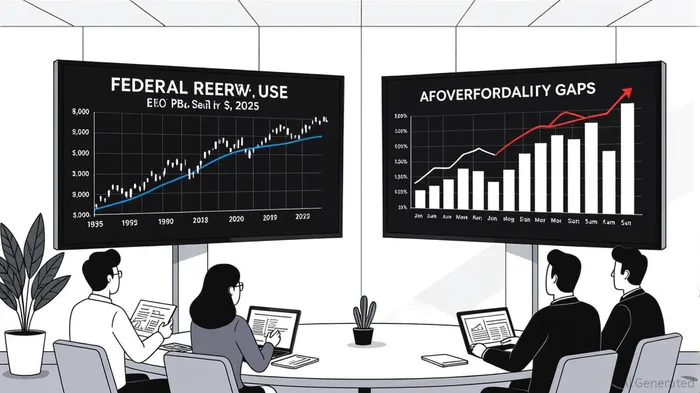
The U.S. housing market in 2025 is at a pivotal crossroads, shaped by the Federal Reserve's cautious monetary policy and the lingering effects of high mortgage rates. As the Fed grapples with inflationary pressures and economic uncertainties, its decisions are directly influencing mortgage rate volatility, housing affordability, and real estate investment dynamics. For investors, understanding these interconnections is critical to identifying opportunities in a market that remains both challenging and ripe for strategic entry.
Fed Policy and the Mortgage Rate Trajectory
The Federal Reserve's June 2025 Monetary Policy Report underscores a nuanced approach to interest rates. , , slightly above the 2% target. , a decision that indirectly stabilizes mortgage rates. However, the Fed has signaled openness to rate cuts in the latter half of 2025, contingent on inflation trends and labor market data.
, . This decline, though modest, reflects the Fed's measured policy stance and a gradual normalization of rates. , . However, the path to lower rates is not linear. Geopolitical risks, such as the , and the lingering effects of on construction costs could delay or disrupt this trajectory.
Housing Affordability: A Mixed Picture
The affordability gap remains a stark indicator of the housing market's challenges. Nationally, , . In high-cost markets like Kill Devil Hills (NC) and Brevard (NC), , reflecting a severe mismatch between income growth and home prices.
The Federal Reserve's policy has a dual effect here. Elevated mortgage rates have disproportionately impacted lower-income buyers, reducing their purchasing power. Yet, the Fed's commitment to price stability has anchored long-term inflation expectations, preventing a sharper rise in housing costs. For example, , , signaling a gradual normalization of affordability.
Real Estate Investment Opportunities in a Volatile Market
For investors, the current environment presents both risks and opportunities. The Fed's anticipated rate cuts could catalyze a housing market rebound, particularly in markets where affordability is improving. For instance, areas with slowing rent growth and stabilizing home prices—such as Charlotte-Concord-Gastonia (NC)—may see increased demand as mortgage rates decline.

Investors should also consider the "lock-in effect," where homeowners with low fixed-rate mortgages are reluctant to sell. This has reduced inventory in many markets, creating upward pressure on prices. However, as rates ease, this effect may wane, unlocking liquidity and enabling price corrections in overvalued markets.
Strategic Investment Recommendations
- Focus on Undervalued Markets: Prioritize regions with improving affordability metrics and strong income growth, such as Charlotte or Raleigh, where the affordability gap is narrowing.
- Leverage REITs and ETFs: Real estate investment trusts () and real estate offer diversified exposure to housing-related assets, mitigating risks associated with individual property investments.
- Monitor Tariff Impacts, but their effects may wane as global supply chains adjust. Investors in construction or homebuilding stocks should track these dynamics closely.
- Time the Fed's Moves: Anticipate rate cuts in September and December 2025 to time entry into the housing market. , significantly improving affordability.
Conclusion: Balancing Caution and Opportunity
The 2025 housing market is a study in contrasts: high rates persist, yet affordability is gradually improving. The Fed's policy signals—particularly its openness to rate cuts—will be the key driver of future market activity. For investors, the path forward requires a balance of caution and agility. By aligning strategies with the Fed's trajectory and focusing on markets with favorable fundamentals, real estate investors can position themselves to capitalize on the inevitable rebound.
As the Fed navigates its dual mandate, the housing market's response will hinge on its ability to reconcile inflation control with economic growth. For now, the message is clear: patience and precision will reward those who dare to act.

Delivering real-time insights and analysis on emerging financial trends and market movements.
Latest Articles
Stay ahead of the market.
Get curated U.S. market news, insights and key dates delivered to your inbox.


AInvest
PRO
AInvest
PRO



Comments
No comments yet