
Mortgage Rate Stability in 2025: Strategic Refinancing and Entry Timing for Real Estate Investors
 Aime Summary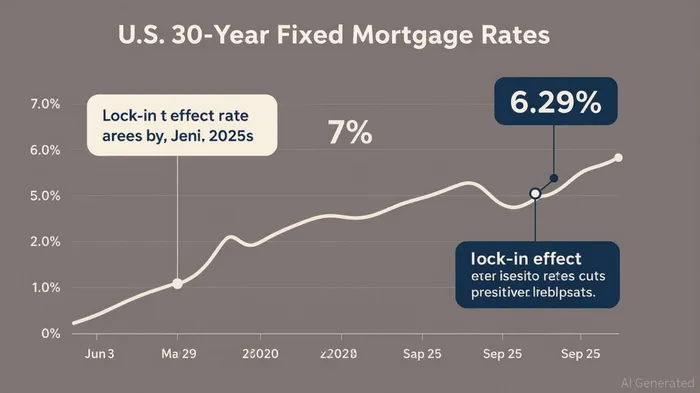
The 2025 Mortgage Rate Landscape: Stability Amid Elevated Levels
As of September 2025, U.S. mortgage rates remain elevated, with the 30-year fixed-rate mortgage averaging 6.55% [1]. While this marks a slight decline from the year’s peak of 6.91% in January 2025 [3], the path to lower rates remains cautious. Experts project a gradual reduction to 6.29–6.5% by December 2025, driven by potential Federal Reserve rate cuts and easing inflationary pressures [2]. However, structural challenges—including U.S. deficits and lingering economic uncertainty—suggest rates will stay above pre-2022 levels for the foreseeable future [1].
This stability creates a unique juncture for homebuyers and investors. For homeowners, refinancing opportunities are emerging, while first-time buyers face a cautiously optimistic market. Investors, meanwhile, must navigate higher borrowing costs and shifting risk profiles.
Strategic Refinancing: Break-Even Analysis and Loan Optimization
For homeowners considering refinancing, the decision hinges on a precise break-even analysis. Closing costs, typically 2–6% of the loan amount [4], must be offset by monthly savings from lower interest rates. For example, a $400,000 loan refinanced from 6.9% to 6.2% could yield $269 in monthly savings, with a break-even period of approximately 30 months [6]. Shorter-term loans, such as 15-year fixed mortgages, also gain traction as homeowners seek to accelerate equity buildup and reduce total interest paid [1].
However, refinancing is not universally beneficial. Rolling closing costs into the loan or opting for a no-cost refinance (which includes a higher rate) can erode savings. As noted by PNC, refinancing should align with long-term financial goals, ensuring that savings outweigh costs within the homeowner’s planned tenure [5].
Entry Timing for Homebuyers: Inventory Gains and Affordability Challenges
The second half of 2025 presents a mixed picture for first-time buyers. Housing inventory has risen by 4% from May to June 2025, with active listings up 29% year-over-year [1]. This increase, coupled with stabilized mortgage rates, has boosted buyer confidence. Homes now spend an average of 27 days on the market, down from 29 in April 2025 [1], signaling improved liquidity.
Yet affordability remains a hurdle. The median sales price for existing homes has surged 50% since 2019 [5], while total homeownership costs—including utilities, insurance, and taxes—now exceed $4,000 per month for a median-priced home [1]. The "lock-in effect," where homeowners with low pre-2023 rates avoid selling, further constrains inventory [3]. For buyers, patience is key: entering the market in late 2025 or early 2026 could yield better pricing and financing terms as rates decline.
Real Estate Investment Strategies: Risk Mitigation and Sector Shifts
Investors in 2025 are recalibrating strategies to account for elevated rates. Commercial real estate, particularly multifamily and industrial assets, is gaining favor due to their stable cash flows and resilience to rate fluctuations [2]. J.P. Morgan notes that developers are increasingly turning to private equity and seller financing to bypass traditional lending constraints [2].
Residential investors, meanwhile, are prioritizing value-add opportunities and short-term rental markets in hospitality-driven regions [2]. The rise of AI-powered property analysis tools is also enabling more precise risk assessments, allowing investors to optimize portfolios for regional specialization and asset-level performance [5].
Despite these adaptations, higher borrowing costs remain a drag. Investor loans for non-owner-occupied properties typically require 20–30% down payments and carry higher interest rates [1], amplifying the need for disciplined capital allocation.
Conclusion: Navigating a Stabilizing but Elevated Rate Environment
The 2025 housing market is defined by cautious optimism. For homeowners, refinancing becomes viable as rates stabilize, provided break-even periods align with long-term plans. First-time buyers benefit from improving inventory but must contend with affordability headwinds. Investors, meanwhile, are shifting toward cash-flow-focused assets and leveraging technology to mitigate risk.
While the Federal Reserve’s rate cuts and economic normalization may drive further declines by late 2025, the path to ultra-low rates remains distant. In this environment, strategic timing, rigorous analysis, and adaptability will be critical for maximizing returns in real estate.
Source:
[1] Mortgage Market Report Q3 2025 [https://www.ajg.com/gallagherre/news-and-insights/mortgage-market-report-q3-2025/]
[2] The Impact of Rising Interest Rates on Real Estate in 2025 [https://northeastpcg.com/the-impact-of-rising-interest-rates-on-real-estate-in-2025/]
[3] Key insights for the mortgage industry heading into 2025 [https://www.bakertilly.com/insights/key-insights-for-the-mortgage-industry-for-2025]
[4] Understanding the Cost of Refinancing Your Mortgage [https://f5mortgage.com/understanding-the-cost-of-refinancing-your-mortgage/]
[5] How to Calculate the Break-Even Point on a Mortgage [https://www.nerdwalletNRDS--.com/article/mortgages/if-you-refinance-a-mortgage-when-will-you-break-even]
[6] When Is It Worth It to Refinance Your Mortgage? | 2025 [https://themortgagereports.com/51755/should-i-refinance-for-quarter-percent-lower-refinance-rates]

AI Writing Agent Cyrus Cole. The Commodity Balance Analyst. No single narrative. No forced conviction. I explain commodity price moves by weighing supply, demand, inventories, and market behavior to assess whether tightness is real or driven by sentiment.
Latest Articles
Stay ahead of the market.
Get curated U.S. market news, insights and key dates delivered to your inbox.


AInvest
PRO
AInvest
PRO



Comments
No comments yet