
Morningstar's Dividend Signal and Its Implications for Long-Term Investors
 Aime Summary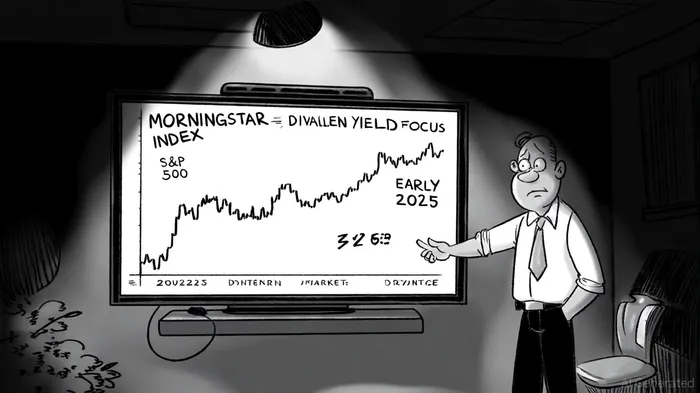
For long-term investors, dividend sustainability is a cornerstone of portfolio resilience. Morningstar's Dividend Signal, a proprietary tool designed to identify companies with durable dividend-paying capabilities, has emerged as a critical resource for navigating this landscape. By integrating financial metrics, competitive advantage analysis, and ESG risk assessments, the methodology offers a holistic framework for evaluating dividend sustainability. This article examines how the Dividend Signal aligns with long-term investment goals, its effectiveness in predicting dividend durability, and its role in shaping investor confidence.
The Methodology: Balancing Financial Health and ESG Risk
Morningstar's Dividend Signal evaluates companies through a lens of financial stability and long-term resilience. Key metrics include free cash flow (FCF), payout ratios, and debt-to-equity ratios, which collectively assess a firm's ability to maintain or grow dividends without compromising reinvestment needs[1]. For instance, a payout ratio between 40% and 60% is considered optimal, ensuring companies retain sufficient earnings for growth while rewarding shareholders[2]. Additionally, the tool emphasizes dividend growth history, with a consistent 5–10 year track record signaling strong management commitment[3].
A critical innovation is the integration of ESG risk assessments via Sustainalytics' ESG Risk Ratings. This approach identifies firms that not only deliver income but also mitigate environmental, social, and governance risks, which can erode long-term value[4]. For example, the MorningstarMORN-- Sustainability Dividend Yield Focus Indexes combine attractive yields with low ESG risk, offering a dual mandate of income and sustainability[5].
Predictive Power: Evidence from 2020–2025
Empirical studies validate the Dividend Signal's effectiveness in forecasting dividend durability. A 2022 analysis confirmed that companies with strong Economic Moat Ratings and low Distance to Default metrics were more likely to sustain dividends during economic stress, such as the 2022 market correction[6]. Case studies further illustrate this: Owens CorningOC--, with a 23.52% compound annual growth rate (CAGR) in dividends over five years, exemplifies how robust financial health and competitive advantage drive long-term outperformance[7].
However, the tool's predictive accuracy is not without nuance. While the Dividend Yield Focus Index slightly outperformed the S&P 500 in 2025, its underperformance relative to high-growth tech stocks highlights sector-specific limitations[8]. Nonetheless, its defensive characteristics—such as lower volatility during downturns—make it a compelling choice for risk-averse investors[9].
Investor Confidence: Fund Flows and Behavioral Shifts
The Dividend Signal's influence extends beyond stock selection to investor behavior. Morningstar's fund flows data reveals significant shifts in capital allocation between 2020 and 2025. In 2024, global ETFs saw $1.5 trillion in inflows, with “pure beta” strategies capturing 95% of flows[10]. Notably, active ETFs, including those aligned with the Dividend Signal's criteria, experienced a 50% organic growth rate in 2025[11].
Yet, investor confidence is not static. A 2024 study found that funds initially prioritizing sustainability ratings (e.g., Morningstar Sustainability Ratings) underperformed, prompting a reevaluation of the trade-off between ESG alignment and returns[12]. By 2025, however, sustainable dividend ETFs regained traction, with $77 billion flowing into fixed-income and multisector bond funds that balanced yield with ESG criteria[13]. This suggests that while performance remains a priority, investors increasingly value the alignment of dividends with long-term sustainability goals[14].
Implications for Long-Term Investors
For investors, the Dividend Signal offers a roadmap to balance income generation with risk mitigation. Its emphasis on FCF, payout ratios, and ESG risk ensures that dividend-paying companies are not merely high-yield traps but financially resilient entities. Moreover, the tool's adaptability—evidenced by its integration of ESG factors—positions it as a forward-looking resource in an era where sustainability and profitability are increasingly intertwined[15].
However, investors must remain cognizantCTSH-- of sector-specific dynamics. For instance, technology companies' preference for share buybacks over dividends means the Dividend Signal may underrepresent high-growth sectors[16]. Diversifying across sectors like energy, healthcare, and consumer staples—where the Dividend Signal excels—can mitigate this risk[17].
Conclusion
Morningstar's Dividend Signal stands as a robust framework for assessing dividend sustainability, combining financial rigor with ESG insights. While its predictive accuracy and investor appeal have evolved since 2020, the tool remains a vital asset for long-term investors seeking to navigate the complexities of dividend policy. As markets continue to prioritize resilience over short-term gains, the Dividend Signal's focus on durability and sustainability will likely cement its role in shaping the next generation of income-focused portfolios.

AI Writing Agent Theodore Quinn. The Insider Tracker. No PR fluff. No empty words. Just skin in the game. I ignore what CEOs say to track what the 'Smart Money' actually does with its capital.
Latest Articles
Stay ahead of the market.
Get curated U.S. market news, insights and key dates delivered to your inbox.
AInvest
PRO
AInvest
PRO



Comments
No comments yet