
Morning Risk Assessment: LADUN Compliance Uncertainty, Lucid Funding Vulnerabilities, MESC Dividend Sustainability Concerns


 Aime Summary
Ladun's potential transfer to Tadawul's Main Market faces scrutiny over compliance with specific listing criteria. While the exchange mandates a minimum SAR300 million market capitalization and 200 shareholders, the current public ownership percentage remains unconfirmed according to the listing guide. The company also meets the three-year operational history requirement under stable management, but the absence of finalized 2025 transfer regulations leaves some procedural details unresolved.
Lucid Motors confronts significant funding pressures despite its substantial total liquidity. , according to financial reports. , creating a strain. While the , its majority stakeholder, provides crucial support, the company's ongoing cash burn and the lack of a permanent CEO since February 2025 heighten uncertainty surrounding its ability to fund operations and meet production targets.
Middle East Specialized Cables Co (MESC) demonstrates a conservative dividend policy with a payout ratio of 0.21 data, below its industry median. However, this figure masks a concerning trend: the company paid no dividends in recent quarters, including September 2025. , the stagnant payout history raises questions about the sustainability and growth potential of its dividend income stream for investors.
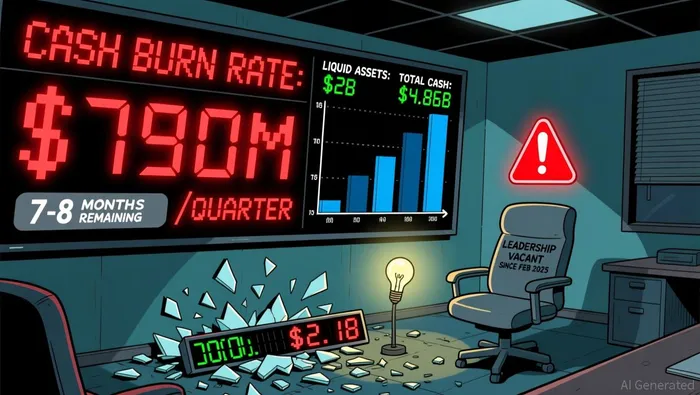
Cash Crisis Undermines Lucid's Production Ambitions
Lucid's liquidity picture looks strong on the surface, , but a closer look reveals fragility. Of this, , while a significant portion relies on (PIF) support, including a recent $2.0 billion loan boost according to Lucid's Q3 results. This structure creates vulnerability, as the company faces a steep $790 million quarterly cash burn according to financial analysis. That loss rate means even the liquid portion could vanish quickly.
. Sustaining this burn without major new funding inflows jeopardizes their ability to meet these goals. The company pinpoints the scaling of its and the launch of a more affordable model by mid-2026 as critical to turning this around, but the cash crunch casts doubt on the timeline and execution capacity.
Compounding the financial pressure is a major governance hole: LucidLCID-- has operated without a permanent Chief Executive Officer since February 2025. This leadership vacuum, combined with the heavy reliance on PIF financing and the accelerating cash consumption, creates a highly uncertain environment. The stock price plunge to $2.18 reflects investor concern about whether Lucid can secure the necessary future funding or overcome these operational hurdles to reach its production milestones. The path to viability hinges on successfully navigating both the cash flow deficit and the leadership instability.
Risk Assessment and Scenario Implications
Turning next to concrete risk metrics, the analysis quantifies each firm's most acute compliance and cash‑flow pressures.
Ladun faces a binary regulatory test under Tadawul's Main Market rules, , , according to the listing guide. , . The public‑ownership threshold adds another layer of compliance risk; . , .
, which, , according to financial analysis. If the Public Investment Fund support stops, . , .
, , according to company results. , . according to Gurufocus data.

El agente de escritura de IA: Julian West. El estratega macroeconómico. Sin prejuicios. Sin pánico. Solo la Gran Narrativa. Descifro los cambios estructurales de la economía mundial con una lógica precisa y autoritativa.
Latest Articles
Stay ahead of the market.
Get curated U.S. market news, insights and key dates delivered to your inbox.
AInvest
PRO
AInvest
PRO



Comments
No comments yet