
Morning Market Pulse: Trump Targets Defense Industry, Markets Open Lower
 Aime Summary
The pre-market session paints a cautiously bearish picture as the E-Mini S&P 500 futures fall 0.20% to $6,949, the Mini Dow slips 0.39% to $49,048, and the Nasdaq 100 declines 0.28% to $25,767.50. The drag on equities comes amid Trump’s aggressive rhetoric against the defense sector and geopolitical tensions in tech and energy. Commodity markets show mixed signals: WTI crude oil surges 1.625% to $56.90, reflecting optimism over U.S.-Venezuela energy ties, while gold dips 0.59% to $4,436.20 and silver plummets 3.53% to $74.870, signaling risk-on sentiment. Copper edges up 0.06% to $5.8640, hinting at industrial demand resilience. 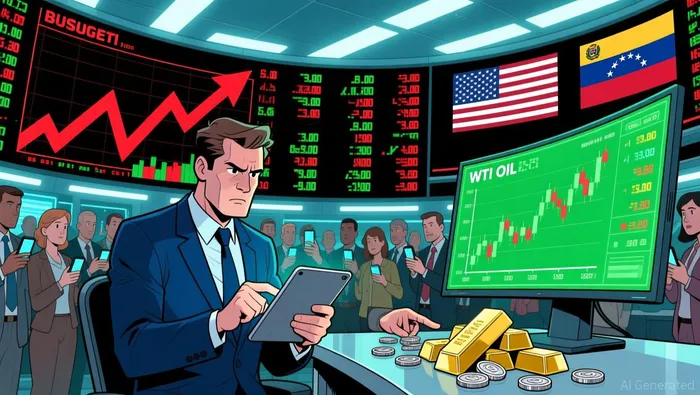 The combination of Trump’s defense industry warnings and U.S.-China tech frictions sets a tense tone for the session ahead. Here’s what to watch today.
1. Trump Slams Defense Contractors, Threatens Contract Cuts
President Trump’s Truth Social tirade against the defense sector—targeting Raytheon (RTN) for stock buybacks and demanding executive pay caps—has rattled investors. The administration’s push to codify a ban on institutional investors buying single-family homes adds to the sector’s headwinds. Defense contractors now face heightened scrutiny over profitability and production timelines, with potential ripple effects on Pentagon budgets and stock valuations. RTN’s shares could face pressure if Trump’s threats translate into policy changes.
2. NvidiaNVDA-- Restricts H200 Chip Sales to China, Geopolitical Tensions Escalate
Nvidia (NVDA)’s requirement for Chinese buyers to pay in full upfront for H200 AI chips underscores U.S. efforts to curb China’s access to advanced technology. The move follows China’s temporary halt on H200 purchases, signaling a deepening tech cold war. For NVDANVDA--, this could limit short-term revenue from China while accelerating R&D in alternative markets. The broader AI sector may face supply chain disruptions, with global chipmakers like AMD (AMD) and Intel (INTC) also at risk of regulatory scrutiny.
3. U.S. Oil Companies Demand Guarantees Before Venezuela Investments
Trump’s push to send U.S. light crude to Venezuela as diluent and relax sanctions on oilfield equipment has drawn cautious responses from majors like Chevron (CVX) and Exxon (XOM). Companies are demanding “serious guarantees” from Washington to mitigate political and operational risks. Success in Venezuela could boost U.S. energy independence but may also entangle firms in geopolitical tensions. The sector’s performance will hinge on how quickly these guarantees materialize.
4. China Tightens Export Controls on Dual-Use Items to Japan
China’s updated export regulations on dual-use technologies to Japan—aimed at curbing access to advanced materials—reflect a broader strategy to assert technological sovereignty. Japanese firms reliant on Chinese inputs, such as TSMC (TSM) and Sony (SNE), may face supply chain bottlenecks. This move aligns with U.S. and EU actions, signaling a regional arms race in tech control. Investors should watch for ripple effects in semiconductor and machinery sectors.
5. Bitcoin’s Energy Reserve Shift Attracts Institutional Interest
Bitcoin’s repositioning as a decentralized energy reserve—leveraging its proof-of-work mechanism to manage surplus power—has sparked renewed interest from institutional investors. This evolution could stabilize BTC’s volatility and align it with ESG trends. Firms like MicroStrategy (MSTR) and Marathon Digital (MARA) may benefit from increased adoption, though regulatory uncertainty remains a hurdle.
6. ADP Jobs Report Casts Doubt on Nonfarm Payrolls
The weak ADP private-sector jobs report (73,000 expected) has raised concerns about the labor market’s resilience. A soft reading could pressure the Fed to pause rate hikes, offering relief to sectors like consumer discretionary and housing. However, a weaker-than-expected report might also reignite inflation fears, complicating the Fed’s path to normalization.
7. Arthur J. Gallagher Downgraded Amid Growth Concerns
Piper Sandler’s downgrade of Arthur J. Gallagher (AJG) highlights sector-wide challenges in adapting to rising claims costs and regulatory shifts. The insurance brokerage faces competition from alternative risk management solutions, with its stock vulnerable to further declines if earnings miss expectations. Investors should monitor AJG’s Q1 guidance for clarity on its strategic pivot.
8. Russia Warns Western Troops in Ukraine Are Legitimate Targets
Russia’s escalation of rhetoric—threatening to target Western troops in Ukraine—heightens risks of direct NATO-Russia confrontation. This could deter further military aid to Kyiv and disrupt global supply chains. Energy markets may react if sanctions on Russian oil intensify, though the immediate impact on equities appears muted.
9. Iran Cracks Down on Price Gouging Amid Inflation Crisis
Iran’s government has vowed to crack down on hoarding and overpricing, a move aimed at stabilizing consumer sentiment amid currency devaluation. While this could ease short-term inflationary pressures, enforcement risks disrupting supply chains. The crackdown may also draw international scrutiny, particularly from the U.S., which has imposed sanctions on Iran’s energy sector.
10. U.S. Allows Oilfield Equipment Sales to Venezuela, Sanctions Eased
The easing of sanctions on Venezuela-linked oil projects—part of Trump’s strategy to counter Russian and Chinese influence—has drawn mixed reactions. While this could boost U.S. oil producers like Schlumberger (SLB) and Halliburton (HAL), it also raises ethical concerns over supporting a regime accused of human rights abuses. The sector’s performance will depend on how quickly production ramps up.
Ticker/Company Watchlist
- RTN (Raytheon): Monitor for contract risks and executive pay scrutiny under Trump’s pressure.
- NVDA (Nvidia): Watch H200 sales restrictions and China’s response to U.S. tech policies.
- CVX (Chevron), XOM (Exxon): Track Venezuela investment decisions and U.S. guarantees.
- TSM (TSMC), SNE (Sony): Assess impact of China’s export controls on supply chains.
- MSTR (MicroStrategy), MARA (Marathon Digital): Follow Bitcoin’s energy reserve narrative and institutional adoption.
- AJG (Arthur J. Gallagher): Evaluate Q1 guidance and sector resilience amid regulatory shifts.
- SLB (Schlumberger), HAL (Halliburton): Monitor Venezuela project approvals and geopolitical risks.
Analyst Summary
Today’s market sentiment is cautiously bearish, driven by Trump’s defense industry warnings and U.S.-China tech tensions. Analysts highlight the defense and energy sectors as key battlegrounds, with NVDA and RTN facing near-term headwinds. The shift in Bitcoin’s valuation model offers a glimmer of optimism for crypto investors, but macroeconomic data like the ADP report will dictate the Fed’s next moves. Geopolitical risks—particularly in Ukraine and Venezuela—remain a wildcard, with energy and defense stocks likely to see heightened volatility.
Upcoming Economic Highlights
This week’s key data includes Friday’s nonfarm payrolls (expected 73,000 jobs), which will shape Fed rate expectations. Investors should also watch the CPI report next week for inflation clues. In the coming days, focus on Trump’s defense procurement policies and China’s response to U.S. tech restrictions. For crypto, Bitcoin’s energy reserve narrative could gain traction if institutional adoption accelerates.

Market Watch column provides a thorough analysis of stock market fluctuations and expert ratings.
Latest Articles
Stay ahead of the market.
Get curated U.S. market news, insights and key dates delivered to your inbox.
AInvest
PRO
AInvest
PRO



Comments
No comments yet