
Morning Market Pulse: Trump’s Policy Shifts and AI-Driven Sectors Drive Pre-Open Optimism
 Aime Summary
The pre-market session is off to a cautiously optimistic start, with all three major U.S. equity futures trading higher ahead of the open. The E-Mini S&P 500 Futures are up 0.53% at $6,655.50, the E-Mini Dow Jones Futures gained 0.25% to $46,437.00, and the E-Mini Nasdaq 100 Futures surged 0.77% to $24,491.50. The Nasdaq’s outperformance reflects lingering enthusiasm for AI-driven sectors, while the S&P’s modest gains suggest a balanced approach to macro risks. Commodity markets are mixed: WTI crude oil edged up 0.017% to $58.07, but gold, silver, and copper all declined, with copper falling 0.383% to $5.0765. The weak metals performance hints at ongoing concerns about global demand, while the oil market’s flatness underscores uncertainty around OPEC+ policy. Today’s tone is shaped by Trump’s aggressive policy agenda, European resistance to U.S. Ukraine plans, and AI sector momentum. Let’s break down the key stories shaping the session.
1. Trump’s Immigration Ban Sparks Legal and Political Uncertainty
President Trump’s proposal to ban foreign-born citizens from elected office has ignited immediate backlash from Democrats and immigrant rights groups. While the policy aligns with his populist playbook, it raises red flags for legal challenges and potential market volatility. The move could deepen political polarization, complicating legislative agendas and potentially deterring foreign investment. For now, the market is pricing in short-term uncertainty but remains focused on Trump’s broader economic agenda.
2. Supreme Court Weighs Trump’s Tariff Power, Market Braces for Outcome
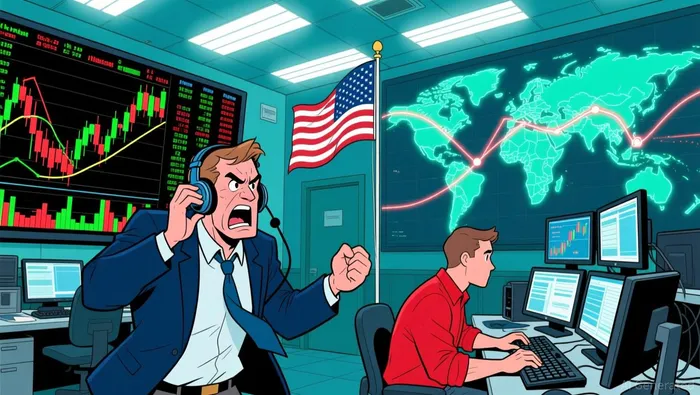 The Supreme Court’s review of Trump’s IEEPA-based tariffs has become a critical legal battleground. Trump’s recent comments—warning that tariff revenues will "skyrocket" as inventory stockpiling wanes—signal a strategic push to justify the policy’s economic benefits. A ruling against the administration could force a policy reset, while a green light would embolden Trump’s trade strategy. The Commerce Department and USTR are reportedly preparing contingency plans, but the outcome remains a wildcard for global trade dynamics.
3. Saudi Aramco’s $10B+ Asset Sales Signal Diversification Push
Saudi Aramco’s plan to sell stakes in oil terminals and real estate could unlock $10+ billion, accelerating its Vision 2030 goals. The move mirrors its recent $11 billion Jafurah gas project lease and reflects a broader strategy to attract foreign capital. With global infrastructure demand surging, these sales could attract bidders like BlackRock or private equity firms. The market is watching for clarity on timelines and asset valuations, which could influence energy and infrastructure sectors.
4. Trump’s Healthcare Plan Faces Political and Public Backlash
Trump’s "Healthcare Price Cuts Act" aims to curb ACA premium spikes by ending subsidies and introducing a minimum payment requirement. While the plan targets cost control, it risks alienating lower-income voters and faces bipartisan resistance. Polls show 74% of Americans support extending ACA subsidies, including 50% of Republicans. The proposal’s success hinges on navigating a divided Congress and public sentiment, with House Speaker Mike Johnson and Senate Leader John Thune key to its fate.
5. U.S.-Ukraine Peace Plan Stalls as Europe Pushes Back
U.S. Secretary of State Marco Rubio called Geneva talks the "most productive in months," but European leaders remain skeptical. Ursula von der Leyen’s red lines—preserving Ukraine’s sovereignty, military strength, and EU/NATO membership—highlight the gap between U.S. and European priorities. Russia’s silence adds uncertainty, and the U.S. faces pressure to incorporate European concerns. The plan’s viability depends on balancing U.S. leverage with European security guarantees.
6. Germany’s Ifo Index Confirms Stagnation, Structural Risks Loom
Germany’s November Ifo business climate index (88.1) underscores economic stagnation, with expectations dropping sharply. Analysts point to underinvestment, loss of competitiveness, and political infighting as root causes. The euro’s strength and U.S. tariffs further strain exporters. Without structural reforms, Germany’s growth outlook remains bleak, weighing on European markets and the broader global economy.
7. Semtech (SMTC) Poised for Strong Q3 Earnings Amid AI Surge
Semtech’s Q3 earnings report on Nov 24 is a key event for the AI infrastructure sector. The company has consistently outperformed estimates, driven by demand for high-speed data transmission. Recent debt refinancing and capital spending signal long-term growth bets. While AI-driven optimism is strong, investors should watch for near-term volatility as the sector digests earnings and macro risks.
8. CoreWeaveCRWV-- (CRWV) Capitalizes on AI Data Center Boom
CoreWeave’s pivot from crypto mining to AI infrastructure has paid off: revenue jumped from $16M in 2022 to $4.3B in 12 months. With $6.7T in global data center investments projected by 2030, the company is well-positioned. However, its $1.2B debt load and recent losses mean investors must balance growth potential with financial risks. Contracts with Meta and other tech giants add credibility to its AI-focused strategy.
Ticker Watchlist
- SMTC: Watch Q3 earnings for AI-driven revenue confirmation. Strong results could boost the sector but may face short-term volatility.
- CRWV: Monitor debt management and client contracts. Growth potential is high, but leverage and losses remain near-term risks.
Analyst Summary
Today’s market sentiment is a mix of cautious optimism and macro caution. AI-driven sectors like Semtech and CoreWeave are in the spotlight, with earnings and growth potential driving momentum. However, Trump’s policy shifts—particularly tariffs and healthcare—introduce political and legal risks. European resistance to the U.S. Ukraine plan adds geopolitical uncertainty, while Germany’s economic stagnation highlights structural challenges. The key takeaway: investors are betting on AI’s long-term potential but remain wary of short-term policy and geopolitical headwinds.
Upcoming Economic Highlights
- Nov 24: Venezuela’s Cartel de los Soles designated as a foreign terrorist organization, effective today. Market reaction to geopolitical tensions and sanctions.
- Nov 24: Russian air defenses intercept Ukrainian drone en route to Moscow. Flight restrictions and potential escalation risks.
- Nov 28: U.S. pressures Ukraine to finalize peace deal by Nov 30, with threats to cut intelligence and weapons support. Geopolitical risks remain high.
- Nov 30: S&P 500 drops 3.0% in November, raising concerns about liquidity and debt issuance. Watch for market corrections or stabilizing moves.

Market Watch column provides a thorough analysis of stock market fluctuations and expert ratings.
Latest Articles
Stay ahead of the market.
Get curated U.S. market news, insights and key dates delivered to your inbox.
AInvest
PRO
AInvest
PRO



Comments
No comments yet