
Morning Market Pulse: Futures Firm, Oil Slips As Hormuz Risk Stays Front and Center
 Aime Summary
U.S. equity futures are pointing to a solidly positive open. E-mini S&P 500 (Sep 26) is up 0.76%, the Mini Dow futures gain 0.83%, and Nasdaq 100 futures add 0.89%. That’s a risk-on bias led by growth and tech, but with all three majors participating.
WTI crude is off nearly 3% at about $99.50, still hovering near triple digits despite the pullback. COMEX gold is slightly lower, copper is essentially flat, and silver is marginally higher. The mix says this: equity traders are leaning into the rally, but energy and inflation risks tied to the Iran–Hormuz standoff haven’t gone away.
So you’ve got this tension—optimism on screens, geopolitics in the background. Today’s tape will be about whether investors stay focused on AI and mega-cap capex stories, or suddenly remember that shipping traffic through the Strait of Hormuz has dropped to single digits.
Let’s dig into today’s key stories.
- DeepSeek’s $71B Valuation: China’s AI Scarcity Trade
DeepSeek has just raised $7 billion at a $71 billion valuation, with annualized revenue of roughly $500 million and a 2027 Shanghai IPO in its sights. You don’t need a model to see that 140–175x revenue is less a DCF output and more a scarcity premium.
What’s really happening is a shadow market around Chinese AI champions. With direct access hard, intermediaries stack SPVs—sometimes eight layers deep—charging double-digit upfront fees plus cuts of future upside. That structure keeps valuations elevated, benchmarks them to names like Zhipu, and makes any eventual “down round” IPO politically awkward for state-backed investors.
Market implications: For global capital, this is a textbook case of price reflecting exit scarcity, not business health. It’s a reminder for anyone chasing AI exposure in opaque jurisdictions—especially via structured vehicles—that the steepest fees tend to be paid by those furthest from the underlying truth. Expect heightened scrutiny on any offshore structures tied to Chinese AI, and a growing preference for listed, auditable AI plays.
- Trump, Iran, and the ‘Trump Strait’: Energy Risk Still in Charge
Donald Trump’s latest remarks in Dallas—calling the Strait of Hormuz the “Trump Strait” and insisting Iran is “retreating and backing down”—don’t change the basic math: oil over $100 and heavily disrupted shipping routes.
The geopolitical setup is messy. Tensions around Iran and the shipping chokepoint have pushed crude into triple digits, and vessel crossings through the Strait are reported in single digits. The EU has responded by hiking rates to contain energy-driven inflation, effectively tightening into a geopolitical supply shock.
Market implications: Today’s small pullback in WTIWTI-- doesn’t erase this as a primary volatility driver. Equities can rally in the face of geopolitical risk—until they can’t. Energy, shipping, and inflation-sensitive assets remain tethered to any headlines from the Gulf. For macro traders, this isn’t background noise; it’s the base case driving central bank reaction functions.
- UAE’s AI Data Centers Go Defensive
The UAE is quietly reworking its 5GW AI data center ambitions, moving away from a single megacampus toward a dispersed, hardened network of facilities. Think underground sites, mountain bases, and integrated air defense systems.
This isn’t just a construction change—it’s a recognition that AI infrastructure is now national-security infrastructure. The project, anchored by G42 with partners like Nvidia (NVDA), OpenAI, and Oracle (ORCL), has become a test case for how Gulf states protect sensitive American technology in a region where AWS facilities have already come under attack.
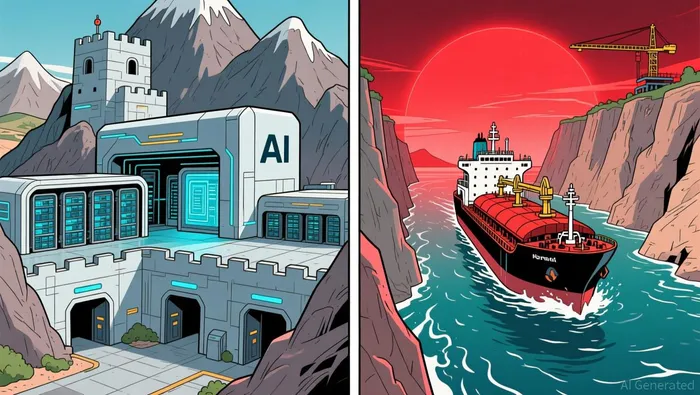
Market implications: The capex won’t disappear; it’ll just get redirected toward resilience. For AI hardware and cloud names, that’s supportive for long-term demand but adds complexity, timelines, and geopolitical risk to deployment. It reinforces a broader theme: AI isn’t just a growth story, it’s a defense story.
- Meta and Amazon: Stock Split Hype vs. Cash Flow Reality
Investors are buzzing about potential stock splits for Meta (META) and Amazon (AMZN), but that’s mostly optics. The real story is the burn rate on AI infrastructure.
Meta has guided 2026 AI capex to $130–145 billion, collapsing free cash flow 91% year-on-year in Q2. Amazon has pushed its 2026 capex guidance to around $220 billion, pushing free cash flow into the red. Revenue growth is strong—Meta at 28%, AWS at 37%—but the bridge from operating income to sustainable shareholder returns is under heavy strain.
Market implications: A split could spark a short-term retail pop, but it doesn’t fix the math. Until either capex growth slows or operating cash flow accelerates fast enough, these trillion-dollar leaders are effectively running an AI land grab financed by future margin recovery. Near term, the market will reward numbers, not nominal share counts.
- Apple’s Foldable iPhone: Late Mover, High Stakes
Apple (AAPL) is set to unveil its first foldable iPhone at the “Surprise and Shine” event, reportedly priced north of $2,000. As a late mover, Apple is betting it can fix the hinge, crease, and durability issues that plagued early foldables and then pull demand through its ecosystem.
IDC expects Apple could capture 40% of the foldable niche by next year. The bigger question is durability of that demand: does this become a true new premium segment, or just a halo product that boosts ASPs for a couple of cycles?
Market implications: For tech ETFs like Global X PureCap MSCI Information Technology ETF and Vanguard Information Technology ETF, Apple’s success or failure here is a meaningful swing factor. Even if the foldable market is small, a strong launch can reinforce Apple’s positioning at the very top of the price stack—and that matters for margins and optionality around services.
- ECB Hikes to 2.50%: Fighting Middle East Inflation
The ECB has lifted its benchmark rate 25 bps to 2.50%, explicitly citing energy-driven inflation linked to the Iran conflict and high oil prices. Eurozone inflation sits at 3.3%, above target, while U.S. inflation remains elevated at 3.7%.
Lagarde flagged upside risks to inflation and downside risks to growth, and the decision—taken in Berlin—signals a willingness to lean against imported energy shocks even at the cost of slower activity.
Market implications: For risk assets, this reinforces the “higher for longer” narrative in Europe, driven not by domestic overheating but by geopolitical energy pressure. Fixed income will stay highly data-dependent, and any further escalation in the Middle East will feed straight into rate expectations and FX positioning.
- Tesla’s China Push: Model Y Performance vs. Market Share Slump
Tesla (TSLA) is launching the Model Y Performance variant in China at 369,000 yuan (~$54,450), its priciest Chinese Model Y, boasting 3.5-second 0–100 km/h acceleration and a 659 km range.
The timing is defensive. Model Y sales in China have declined year-on-year for three straight months; August deliveries fell 25.76% to 29,260 units, and overall China deliveries are down 12.44% over the first eight months. Tesla is pairing the new variant with a 10,000 yuan discount on inventory vehicles to stimulate demand.
Market implications: This is an attempt to re-energize a core product line in an increasingly crowded EV market. Near term, investors will watch whether performance branding and price incentives can stabilize share in China without eroding margins too aggressively.
- Michael Burry Pulls Back Risk, Stays Short AI
Michael Burry has exited his December 2026 put options on NVDA and PLTR to avoid time decay, while saying he’s comfortable “sitting on cash” into the fall. Importantly, he remains heavily short Nvidia, Palantir, and the broader semiconductor complex, while holding large longs in names like Lululemon (LULU), Molina Healthcare (MOH), and MercadoLibre (MELI).
Market implications: Burry’s positioning says he sees the current AI-led rally as stretched and vulnerable to correction, even as retail sentiment on Palantir has turned broadly bearish and Nvidia sentiment shifts from neutral to bearish. Whether you treat his stance as a trading signal or just a reminder, it reinforces the idea that sitting on cash is a position—and that valuation risk in AI remains front of mind.
- Broadcom vs. EU: VMware Licensing Under the Microscope
Broadcom (AVGO) is under EU antitrust scrutiny over its post-acquisition licensing changes for VMware. Regulators are probing whether limiting VMware sales to selected partners and imposing expensive new terms is choking off smaller cloud providers.
The European Commission faces a key March 31 deadline. Potential outcomes include interim measures or fines up to 10% of global revenue. The case follows earlier commitments by Broadcom to preserve access and interoperability when the $61 billion deal was approved.
Market implications: For investors, this is another reminder that large tech acquisitions don’t end with closing—they can carry regulatory overhang for years. Any strong enforcement action would ripple across cloud ecosystems and could set a precedent for how software assets are integrated into diversified chip and infrastructure giants.
- ServiceTitan: Strong Growth, GAAP Reality Check
ServiceTitan delivered Q2 revenue growth of 21% to $292.8 million, with platform revenue up 22% and gross transaction volume rising 17% to $26.8 billion. Non-GAAP operating income hit $44.4 million, and net dollar retention is north of 110%, helped by its Max subscription product.
But GAAP operating losses remain at $27.6 million, largely due to stock-based compensation and the timing of Max billing, which defers revenue recognition. Management is flagging a 2027 headwind as new cohorts ramp, but also laying out a path to eventual GAAP profitability.
Market implications: For investors, this is classic SaaS math: strong cash generation and retention versus the drag from compensation and accounting timing. The key is whether adjusted margins ultimately translate into clean GAAP earnings as the Max product matures.
Ticker / Company Watchlist
- NVDA (Nvidia) – Watch AI sentiment, Burry’s ongoing short stance, and any Gulf infrastructure headlines.
- PLTR (Palantir) – Retail sentiment is bearish; sensitive to broader AI correction and defense data deals.
- META (Meta Platforms) – Potential stock split chatter; focus on 2026 capex and free cash flow trajectory.
- AMZN (Amazon) – AWS growth vs. heavy AI capex; watch for signs of free cash flow normalization.
- AAPL (Apple) – Foldable iPhone event; monitor ASPs, initial demand, and tech ETF flows.
- TSLA (Tesla) – China Model Y Performance launch plus discounts; track demand and margin pressure.
- AVGO (Broadcom) – EU antitrust timeline; any interim measures could hit sentiment.
- LULU (Lululemon) – Beneficiary of Burry’s rotation; consumer resilience vs. higher rates.
- MOH (Molina Healthcare) – Defensive healthcare exposure amid macro and geopolitical volatility.
- MELI (MercadoLibre) – Growth play in LatAm e-commerce and fintech; sensitive to global risk appetite.
- G42 – Private, but central to UAE AI build-out; watch for partnerships, security-driven capex shifts.
Analyst Summary
Sentiment today sits in that familiar middle lane: cautiously optimistic but with a very real awareness of tail risk.
On one hand, you’ve got shipping players like Tsakos Energy Navigation throwing off record cash flows and planning a sizable newbuilding program, while openly calling the Strait of Hormuz an operational minefield and steering clear. That kind of granular, operational risk management matters—it’s how companies stay liquid and keep paying growing dividends even when the macro picture turns nasty.
On the other hand, the broader message from analysts is: don’t outsource your judgment. Ratings are useful, but they’re not infallible, especially when conflicts of interest exist. The most compelling narrative right now blends strong sector fundamentals—energy shipping, AI infrastructure, selective consumer—with disciplined capital allocation and clear-eyed respect for geopolitical risk. It still remains uncertain, but the bias is toward selectively adding risk, not blindly chasing beta.
Upcoming Economic Highlights
Into the rest of the week, investors will stay locked on inflation prints, central bank communication, and any data that either reinforces or challenges the ECB’s latest hike and the market’s read on the Fed’s path.
Layer on top the Middle East headlines, vessel counts through Hormuz, and any fresh signals from Washington or Brussels. If oil stabilizes below $100 and inflation expectations cool, today’s risk-on tone in futures can extend. If not, expect fast rotations—from growth to defense, from AI exuberance back toward cash-heavy, dividend-paying names.

Market Watch column provides a thorough analysis of stock market fluctuations and expert ratings.
Latest Articles
Stay ahead of the market.
Get curated U.S. market news, insights and key dates delivered to your inbox.


AInvest
PRO
AInvest
PRO




Comments
No comments yet