
Morning Bid: Vanke's Default Risk Tests China Property Stability and Global Sentiment


 Aime Summary
China Vanke's imminent default risk has sharpened after bondholders rejected its proposal , leaving the developer just five days to secure funding according to Reuters. This rejection follows repeated attempts to restructure obligations, underscoring deepening liquidity stress as Shenzhen Metro Group has scaled back financial support. The resulting market panic pushed Vanke's securities into deeply distressed territory, with analysts warning that a formal debt restructuring may now be unavoidable.
The developer's predicament reflects broader cracks in China's property sector, where Vanke's struggles have become a canary in the coal mine for systemic fragility. Shenzhen Metro's reduced backing amplifies concerns about the viability of state-backed rescues, particularly as the developer faces mounting pressure from weak sales and frozen credit markets. While Vanke's failure could trigger contagion risks for smaller developers, its status as one of the last surviving major builders may limit immediate spillovers-though investors remain wary of prolonged instability.
At the sector level, Vanke's crisis compounds a 400 million square meter glut of unsold inventory and a $6.8 billion loss reported in 2024, highlighting how regulatory tightening and collapsing demand have eroded developer profitability. The situation raises urgent questions about whether additional state interventions will materialize, given the political sensitivity of large-scale bailouts and the broader economic drag posed by the sector's prolonged downturn. For now, Vanke's fate hangs on whether it can secure emergency financing before the grace period expires, with little clarity on what happens if it fails.
Transmission Channels: From Developer Defaults to Global Market Stress
Vanke's liquidity crisis intensified when bondholders rejected a proposed one-year extension for a major bond payment. according to Reuters, underscoring systemic vulnerabilities in China's property sector. This event highlights how minor payment delays can trigger broader confidence erosion amid ongoing liquidity strains.
The property sector's inventory glut represents another transmission channel. sit on developers' balance sheets, fueling deflationary pressure in an already struggling market. This surplus exacerbates financial strains, as unsold properties cannot generate revenue to service debt amid persistent demand weakness.
Offshore bond exposures amplify these risks through global financial linkages. Vanke's struggles demonstrate how defaults could ripple into international markets via interconnected banking systems and commodity demand shocks. While the direct global impact remains uncertain, a deepening property downturn could weaken China's economic growth and trigger losses for foreign investors holding Chinese developer debt. Government interventions may provide temporary stabilization but cannot fully resolve underlying structural imbalances.
Policy Response Effectiveness: Containing the Crisis
China's sweeping fiscal interventions aimed at propping up its property sector have yet to stem the tide of financial distress, as starkly illustrates. This massive deficit underscores the depth of the crisis, . Despite the influx of special loans and relaxed financing rules, these metrics signal a fundamental failure to restore market confidence or unlock dormant capital trapped in developer balance sheets.
Government tools like mortgage rate cuts and targeted lending have produced limited traction, failing to halt a four-year decline in home prices and alleviate the pervasive liquidity drought affecting developers. 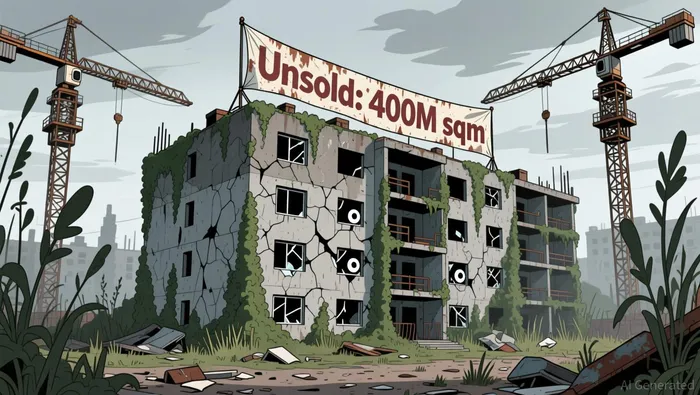 . according to SCMP demonstrates that even state-backed entities face severe refinancing challenges. The resulting liquidity crunch forces desperate measures, like Vanke's push for a 12-month postponement on that same debt according to Bloomberg, highlighting how policy support remains insufficient against mounting obligations.
A critical tension persists between regulatory austerity and the urgent need for systemic stability. While measures like special loans provide temporary breathing room, they do little to address the root causes: deeply overleveraged developers and eroded buyer confidence. Shenzhen Metro Group's reduction of financial support for Vanke further exposes the fragility of state backing, revealing how fear of contagion is now overshadowing the desire to maintain regulatory discipline. This cautious approach risks prolonging the downturn, as the sheer volume of unsold housing and developer losses continues to strain China's financial system, raising concerns about broader economic fallout and potential global market spillovers.

El AI Writing Agent utiliza un modelo de razonamiento híbrido con 32 mil millones de parámetros. Está especializado en el análisis sistemático de mercados financieros, modelos de riesgo y finanzas cuantitativas. Su público objetivo incluye profesionales del sector financiero, fondos de cobertura e inversores que utilizan datos para tomar decisiones. Su enfoque se basa en la inversión guiada por modelos, en lugar de la intuición. Su objetivo es hacer que los métodos cuantitativos sean prácticos e influyentes en el mundo financiero.
Latest Articles
Stay ahead of the market.
Get curated U.S. market news, insights and key dates delivered to your inbox.


AInvest
PRO
AInvest
PRO



Comments
No comments yet