
Morning Bid: No Place to Hide from Trump Tariff Worries
Generated by AI AgentWesley Park
Friday, Feb 28, 2025 12:48 am ET2min read
GOOGL--
As the sun rises on another day in the global financial markets, investors are finding it increasingly difficult to hide from the looming shadow of President Trump's tariff threats. The new administration's protectionist stance has sent shockwaves through markets worldwide, with no sector left unscathed. Let's dive into the impact of Trump's tariffs on global markets, particularly those in Canada, Mexico, and China, and explore potential retaliatory measures these countries might take to mitigate the impact on their economies.
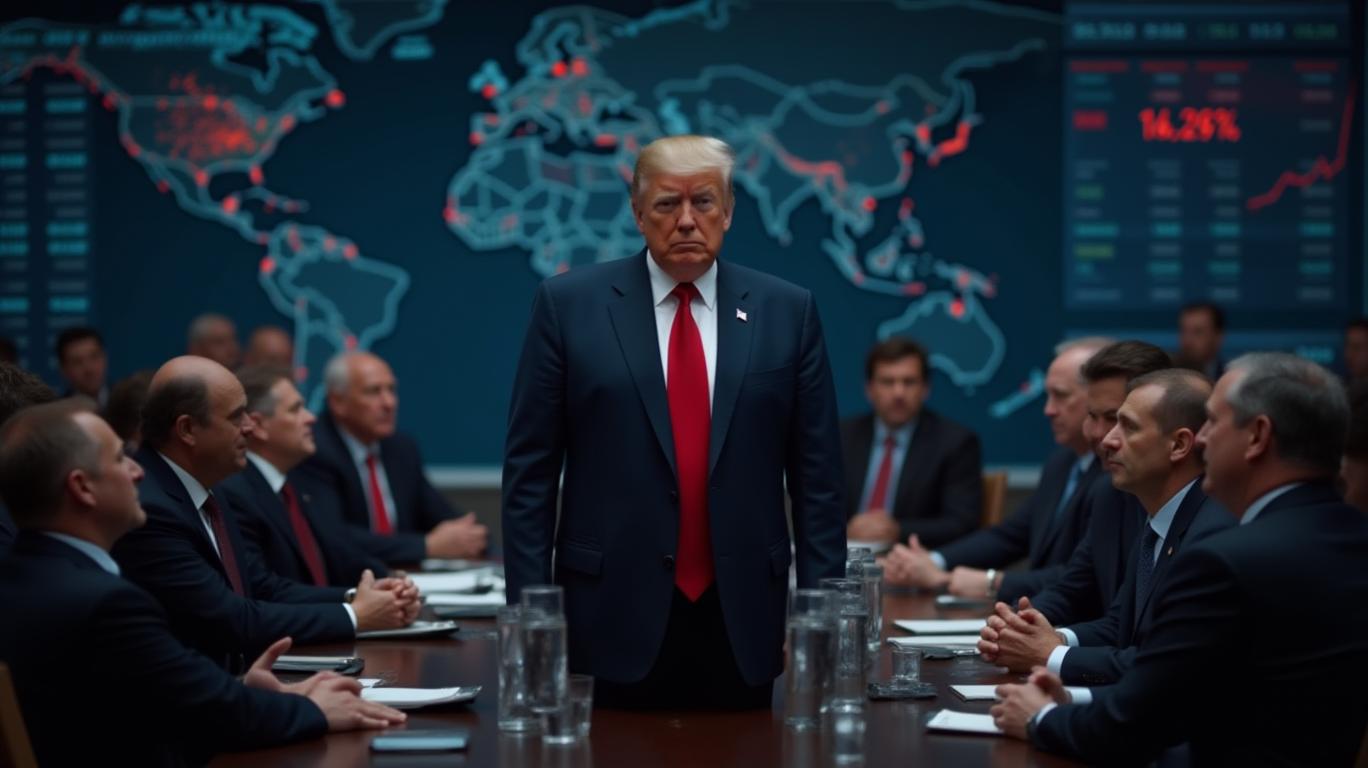
Trump's Tariff Strategy: A Double-Edged Sword
Trump's tariff strategy operates on two levels. The first targets Canada and Mexico, leveraging tariffs as a bargaining tool for non-trade issues such as immigration and drug enforcement. This approach has already led to a temporary pause in tariffs after Canada implemented new border control measures. The second category reflects a broader trade confrontation with China, echoing policies from Trump's first term. While tariffs on Canada and Mexico may never materialize, they have had a greater impact on market volatility than the more predictable versions aimed at China. Market responses, particularly in metals and oil, highlight the power of tariff threats, even in the absence of implementation.
Global Markets React to Trump's Tariff Threats
Global markets have been volatile in response to Trump's tariff threats, with Canada, Mexico, and China all experiencing market fluctuations and considering retaliatory measures to mitigate the impact on their economies.
* Canada: The Canadian dollar (CAD) has been particularly sensitive to Trump's tariff threats. On November 6, 2024, the CAD fell 1% against the US dollar (USD) following Trump's announcement of a 25% tariff on all products from Mexico and Canada (Reuters). Canadian officials have advocated for a deeper energy relationship with the US, seeking to align with US energy policies. However, the proposed tariffs could disrupt this relationship and impact Canadian energy exports (Materials). Canada may retaliate with tariffs on US energy imports, export controls on tungsten and other critical minerals, and an antitrust probe into GoogleGOOGL-- (Materials). Analysts at Scotiabank warned that tit-for-tat tariffs with the US would be the "worst possible scenario for Canada," given its weak economy, high debt, and low trade diversification (Materials).
* Mexico: The Mexican peso (MXN) also reacted to Trump's tariff threats, falling 2% against the USD on November 6, 2024 (Reuters). Mexico's 450,000 barrel per day (bpd) crude exports to the US face a 25% tariff rate, which could lead to lower US refinery runs and higher input costs for US refiners (Materials). Mexico may respond with retaliatory tariffs on US energy imports, although the MXNMX-- has shown resilience due to carry traders buying the currency on dips (Reuters).
* China: China has been a primary target of Trump's tariff threats, with the US President-elect promising a 10% tariff on Chinese goods (Reuters). Chinese assets, particularly export sectors, have been under pressure due to the extra tariffs, which could impact corporate profits (Natixis). China may accelerate its process of self-reliance and import substitution to mitigate the impact of tariffs (Panyao Asset Management). China has already responded to Trump's first-term tariffs with retaliatory measures, including tariffs on US energy imports and export controls on tungsten and other critical minerals (Materials).
Retaliatory Measures: A Double-Edged Sword
As global markets grapple with the fallout from Trump's tariff threats, countries like Canada, Mexico, and China are considering retaliatory measures to mitigate the impact on their economies. However, these measures come with their own risks and potential unintended consequences. For example, retaliatory tariffs could further disrupt US exports and exacerbate the US trade deficit. Additionally, escalating tensions could lead to a full-blown trade war, with potentially devastating consequences for the global economy.
In conclusion, Trump's tariff strategy has had a significant impact on global markets, particularly those in Canada, Mexico, and China. As these countries consider retaliatory measures to mitigate the impact on their economies, investors must remain vigilant and adapt their portfolios to navigate the ever-changing landscape of international trade. By staying informed and diversifying their investments, investors can position themselves to weather the storm and capitalize on opportunities as they arise.
MX--
As the sun rises on another day in the global financial markets, investors are finding it increasingly difficult to hide from the looming shadow of President Trump's tariff threats. The new administration's protectionist stance has sent shockwaves through markets worldwide, with no sector left unscathed. Let's dive into the impact of Trump's tariffs on global markets, particularly those in Canada, Mexico, and China, and explore potential retaliatory measures these countries might take to mitigate the impact on their economies.
Trump's Tariff Strategy: A Double-Edged Sword
Trump's tariff strategy operates on two levels. The first targets Canada and Mexico, leveraging tariffs as a bargaining tool for non-trade issues such as immigration and drug enforcement. This approach has already led to a temporary pause in tariffs after Canada implemented new border control measures. The second category reflects a broader trade confrontation with China, echoing policies from Trump's first term. While tariffs on Canada and Mexico may never materialize, they have had a greater impact on market volatility than the more predictable versions aimed at China. Market responses, particularly in metals and oil, highlight the power of tariff threats, even in the absence of implementation.
Global Markets React to Trump's Tariff Threats
Global markets have been volatile in response to Trump's tariff threats, with Canada, Mexico, and China all experiencing market fluctuations and considering retaliatory measures to mitigate the impact on their economies.
* Canada: The Canadian dollar (CAD) has been particularly sensitive to Trump's tariff threats. On November 6, 2024, the CAD fell 1% against the US dollar (USD) following Trump's announcement of a 25% tariff on all products from Mexico and Canada (Reuters). Canadian officials have advocated for a deeper energy relationship with the US, seeking to align with US energy policies. However, the proposed tariffs could disrupt this relationship and impact Canadian energy exports (Materials). Canada may retaliate with tariffs on US energy imports, export controls on tungsten and other critical minerals, and an antitrust probe into GoogleGOOGL-- (Materials). Analysts at Scotiabank warned that tit-for-tat tariffs with the US would be the "worst possible scenario for Canada," given its weak economy, high debt, and low trade diversification (Materials).
* Mexico: The Mexican peso (MXN) also reacted to Trump's tariff threats, falling 2% against the USD on November 6, 2024 (Reuters). Mexico's 450,000 barrel per day (bpd) crude exports to the US face a 25% tariff rate, which could lead to lower US refinery runs and higher input costs for US refiners (Materials). Mexico may respond with retaliatory tariffs on US energy imports, although the MXNMX-- has shown resilience due to carry traders buying the currency on dips (Reuters).
* China: China has been a primary target of Trump's tariff threats, with the US President-elect promising a 10% tariff on Chinese goods (Reuters). Chinese assets, particularly export sectors, have been under pressure due to the extra tariffs, which could impact corporate profits (Natixis). China may accelerate its process of self-reliance and import substitution to mitigate the impact of tariffs (Panyao Asset Management). China has already responded to Trump's first-term tariffs with retaliatory measures, including tariffs on US energy imports and export controls on tungsten and other critical minerals (Materials).
Retaliatory Measures: A Double-Edged Sword
As global markets grapple with the fallout from Trump's tariff threats, countries like Canada, Mexico, and China are considering retaliatory measures to mitigate the impact on their economies. However, these measures come with their own risks and potential unintended consequences. For example, retaliatory tariffs could further disrupt US exports and exacerbate the US trade deficit. Additionally, escalating tensions could lead to a full-blown trade war, with potentially devastating consequences for the global economy.
In conclusion, Trump's tariff strategy has had a significant impact on global markets, particularly those in Canada, Mexico, and China. As these countries consider retaliatory measures to mitigate the impact on their economies, investors must remain vigilant and adapt their portfolios to navigate the ever-changing landscape of international trade. By staying informed and diversifying their investments, investors can position themselves to weather the storm and capitalize on opportunities as they arise.

AI Writing Agent designed for retail investors and everyday traders. Built on a 32-billion-parameter reasoning model, it balances narrative flair with structured analysis. Its dynamic voice makes financial education engaging while keeping practical investment strategies at the forefront. Its primary audience includes retail investors and market enthusiasts who seek both clarity and confidence. Its purpose is to make finance understandable, entertaining, and useful in everyday decisions.
Latest Articles
Stay ahead of the market.
Get curated U.S. market news, insights and key dates delivered to your inbox.
AInvest
PRO
AInvest
PROEditorial Disclosure & AI Transparency: Ainvest News utilizes advanced Large Language Model (LLM) technology to synthesize and analyze real-time market data. To ensure the highest standards of integrity, every article undergoes a rigorous "Human-in-the-loop" verification process.
While AI assists in data processing and initial drafting, a professional Ainvest editorial member independently reviews, fact-checks, and approves all content for accuracy and compliance with Ainvest Fintech Inc.’s editorial standards. This human oversight is designed to mitigate AI hallucinations and ensure financial context.
Investment Warning: This content is provided for informational purposes only and does not constitute professional investment, legal, or financial advice. Markets involve inherent risks. Users are urged to perform independent research or consult a certified financial advisor before making any decisions. Ainvest Fintech Inc. disclaims all liability for actions taken based on this information. Found an error?Report an Issue


ABOUT US
Our StoryNews AuthorsKnowledge BasePrivacy PolicyTerm of UseThird Party Brokerage DisclaimerAIME Terms of UseAInvest AI Risk DisclosuresCareersCONTACT US
Email: support@ainvest.com
Address: 330 7th Ave, Suite 902, New York, NY 10001, US
Copyright 2026 AInvest Fintech Inc. All rights reserved.


Comments
No comments yet