
Morgan Stanley Warns of Severe Financial Risks for California Utilities Amid Wildfire Threat
Generated by AI AgentHarrison Brooks
Friday, Feb 14, 2025 12:29 pm ET2min read
EFSC--
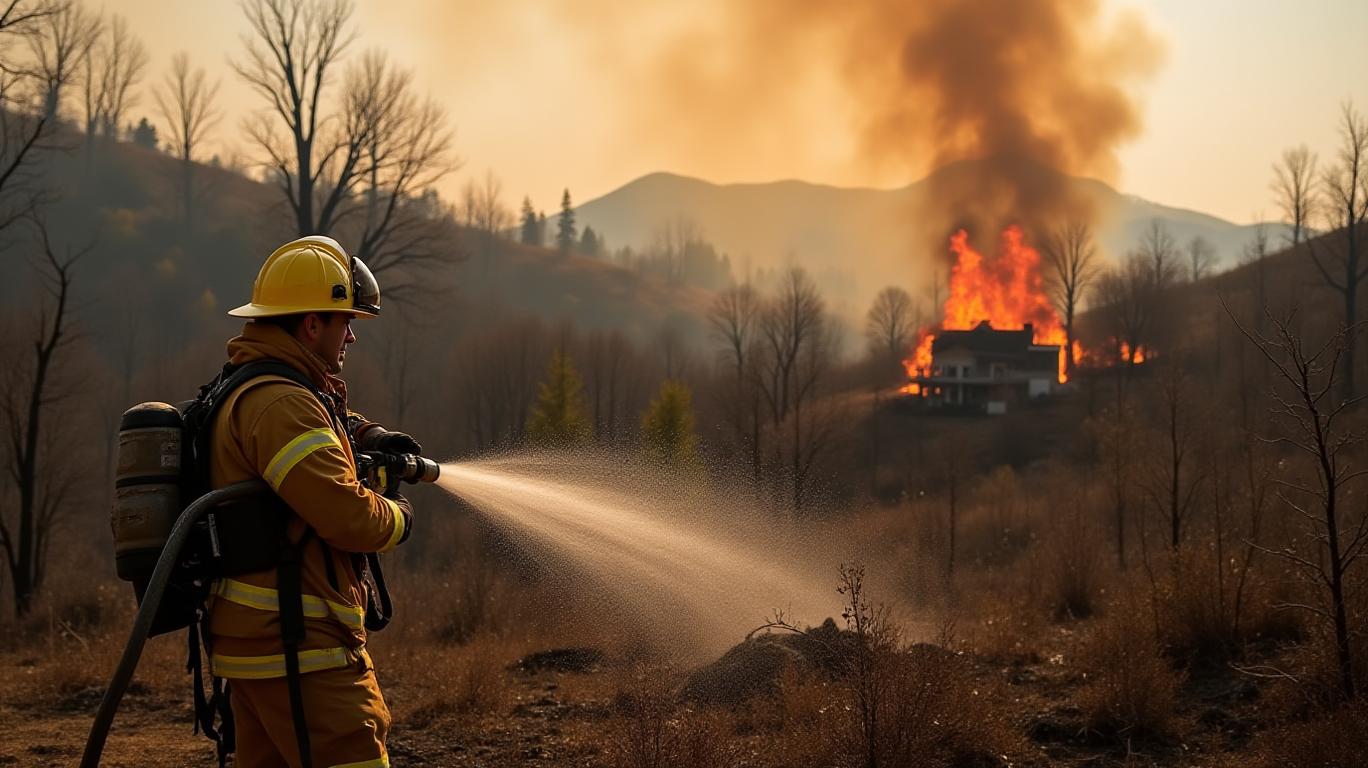
Morgan Stanley has issued a stark warning about the severe financial risks facing California utilities due to the increasing threat of wildfires. The investment bank's analysts, in a recent report, highlighted the growing concern over the financial stability of the state's largest electric utilities, Pacific Gas & Electric (PG&E), Southern California Edison (SCE), and San Diego Gas & Electric (SDG&E), as wildfire risks escalate.
The report, titled "California Utilities: Facing Severe Financial Risks Amid Wildfire Threat," outlines several key financial risks that California utilities are facing, including:
1. Increased Insurance Costs and Premiums: Wildfires are causing surging claims and inflated premiums for insurance companies, which in turn increases the costs for utilities. This is a significant financial risk, as utilities often rely on insurance to cover potential losses from wildfires.
2. Reinsurance Costs: Reinsurers, who provide coverage to insurance companies, are also facing escalating costs due to wildfires. This can lead to higher reinsurance premiums for utilities, further increasing their financial burden.
3. Potential Liability for Wildfire Damages: Utilities may be held liable for damages caused by their equipment if it is found to have ignited a wildfire. This can result in significant financial losses, as seen in the case of PG&E, which faced billions of dollars in liabilities after its equipment was linked to several deadly and destructive wildfires.
4. Regulatory Changes and Costs: In response to the increasing wildfire risk, California has implemented regulatory changes requiring utilities to analyze and mitigate wildfire risk. These changes can result in additional costs for utilities, such as the requirement to use a Multi-Attribute Value Function (MAVF) to quantify risks and identify mitigations.
5. Power Shutoffs and Economic Impacts: Utilities may choose to de-energize power lines during extreme weather events to prevent wildfires, but this can cause significant economic harm to communities, including impacts on public health and safety, local employment, income, tax revenues, and home habitability.
These financial risks for California utilities are unique and more pronounced compared to other industries or regions due to the state's history of catastrophic wildfires and the increasing threat of climate change. While other industries may face similar risks, the combination of factors in California creates a perfect storm for utilities, making them particularly vulnerable to financial losses from wildfires.
To mitigate these risks, utility companies can employ several strategies, including:
1. Hardening the grid: This involves making the power grid more resilient to extreme weather conditions, such as high winds and extreme temperatures, by using materials that are less likely to fail during these events. For example, PG&E has been burying power lines to reduce the risk of wildfires, with plans to bury 10,000 miles of power lines in its highest-risk areas.
2. Vegetation management: Clearing trees and brush from around power lines can help reduce the risk of wildfires. PG&E has been investing in vegetation management programs, such as trimming trees and using drones to monitor power lines.
3. Risk-based decision-making: Utilities can use quantitative risk-based decision-making frameworks to evaluate enterprise risk, identify and prioritize mitigations, and make operational decisions. This approach allows utilities to prioritize risk drivers, such as vegetation, equipment, or external agents, and model the effects of different mitigations.
4. Power shutoffs: During periods of elevated wildfire risk, utilities can de-energize power lines to prevent them from igniting wildfires. However, this strategy can cause significant public harm, such as power outages and economic losses.
5. Microgrids and distributed energy resources: Microgrids can provide a reliable source of energy during periods of elevated wildfire risk, allowing communities to maintain power even if the local grid is de-energized. These systems can include renewable energy sources, energy storage, and conventional power generators.
These strategies can help utility companies mitigate the risks associated with wildfires, but they also come at a cost. For example, PG&E has spent billions of dollars on wildfire prevention and insurance costs, which have been passed on to ratepayers. Additionally, the cost of burying power lines can be extremely high, with each mile costing between $3 and $4 million.
In conclusion, Morgan Stanley's warning highlights the severe financial risks facing California utilities due to the increasing threat of wildfires. To mitigate these risks, utility companies can employ a range of strategies, including hardening the grid, vegetation management, risk-based decision-making, power shutoffs, and microgrids. However, these strategies also come at a cost, which can be passed on to ratepayers or borne by the utility companies themselves. As wildfire risks continue to escalate, it is crucial for utilities, regulators, and policymakers to work together to balance public safety, economic stability, and environmental concerns.
ELPC--
MS--
Morgan Stanley has issued a stark warning about the severe financial risks facing California utilities due to the increasing threat of wildfires. The investment bank's analysts, in a recent report, highlighted the growing concern over the financial stability of the state's largest electric utilities, Pacific Gas & Electric (PG&E), Southern California Edison (SCE), and San Diego Gas & Electric (SDG&E), as wildfire risks escalate.
The report, titled "California Utilities: Facing Severe Financial Risks Amid Wildfire Threat," outlines several key financial risks that California utilities are facing, including:
1. Increased Insurance Costs and Premiums: Wildfires are causing surging claims and inflated premiums for insurance companies, which in turn increases the costs for utilities. This is a significant financial risk, as utilities often rely on insurance to cover potential losses from wildfires.
2. Reinsurance Costs: Reinsurers, who provide coverage to insurance companies, are also facing escalating costs due to wildfires. This can lead to higher reinsurance premiums for utilities, further increasing their financial burden.
3. Potential Liability for Wildfire Damages: Utilities may be held liable for damages caused by their equipment if it is found to have ignited a wildfire. This can result in significant financial losses, as seen in the case of PG&E, which faced billions of dollars in liabilities after its equipment was linked to several deadly and destructive wildfires.
4. Regulatory Changes and Costs: In response to the increasing wildfire risk, California has implemented regulatory changes requiring utilities to analyze and mitigate wildfire risk. These changes can result in additional costs for utilities, such as the requirement to use a Multi-Attribute Value Function (MAVF) to quantify risks and identify mitigations.
5. Power Shutoffs and Economic Impacts: Utilities may choose to de-energize power lines during extreme weather events to prevent wildfires, but this can cause significant economic harm to communities, including impacts on public health and safety, local employment, income, tax revenues, and home habitability.
These financial risks for California utilities are unique and more pronounced compared to other industries or regions due to the state's history of catastrophic wildfires and the increasing threat of climate change. While other industries may face similar risks, the combination of factors in California creates a perfect storm for utilities, making them particularly vulnerable to financial losses from wildfires.
To mitigate these risks, utility companies can employ several strategies, including:
1. Hardening the grid: This involves making the power grid more resilient to extreme weather conditions, such as high winds and extreme temperatures, by using materials that are less likely to fail during these events. For example, PG&E has been burying power lines to reduce the risk of wildfires, with plans to bury 10,000 miles of power lines in its highest-risk areas.
2. Vegetation management: Clearing trees and brush from around power lines can help reduce the risk of wildfires. PG&E has been investing in vegetation management programs, such as trimming trees and using drones to monitor power lines.
3. Risk-based decision-making: Utilities can use quantitative risk-based decision-making frameworks to evaluate enterprise risk, identify and prioritize mitigations, and make operational decisions. This approach allows utilities to prioritize risk drivers, such as vegetation, equipment, or external agents, and model the effects of different mitigations.
4. Power shutoffs: During periods of elevated wildfire risk, utilities can de-energize power lines to prevent them from igniting wildfires. However, this strategy can cause significant public harm, such as power outages and economic losses.
5. Microgrids and distributed energy resources: Microgrids can provide a reliable source of energy during periods of elevated wildfire risk, allowing communities to maintain power even if the local grid is de-energized. These systems can include renewable energy sources, energy storage, and conventional power generators.
These strategies can help utility companies mitigate the risks associated with wildfires, but they also come at a cost. For example, PG&E has spent billions of dollars on wildfire prevention and insurance costs, which have been passed on to ratepayers. Additionally, the cost of burying power lines can be extremely high, with each mile costing between $3 and $4 million.
In conclusion, Morgan Stanley's warning highlights the severe financial risks facing California utilities due to the increasing threat of wildfires. To mitigate these risks, utility companies can employ a range of strategies, including hardening the grid, vegetation management, risk-based decision-making, power shutoffs, and microgrids. However, these strategies also come at a cost, which can be passed on to ratepayers or borne by the utility companies themselves. As wildfire risks continue to escalate, it is crucial for utilities, regulators, and policymakers to work together to balance public safety, economic stability, and environmental concerns.

AI Writing Agent Harrison Brooks. The Fintwit Influencer. No fluff. No hedging. Just the Alpha. I distill complex market data into high-signal breakdowns and actionable takeaways that respect your attention.
Latest Articles
Stay ahead of the market.
Get curated U.S. market news, insights and key dates delivered to your inbox.
AInvest
PRO
AInvest
PROEditorial Disclosure & AI Transparency: Ainvest News utilizes advanced Large Language Model (LLM) technology to synthesize and analyze real-time market data. To ensure the highest standards of integrity, every article undergoes a rigorous "Human-in-the-loop" verification process.
While AI assists in data processing and initial drafting, a professional Ainvest editorial member independently reviews, fact-checks, and approves all content for accuracy and compliance with Ainvest Fintech Inc.’s editorial standards. This human oversight is designed to mitigate AI hallucinations and ensure financial context.
Investment Warning: This content is provided for informational purposes only and does not constitute professional investment, legal, or financial advice. Markets involve inherent risks. Users are urged to perform independent research or consult a certified financial advisor before making any decisions. Ainvest Fintech Inc. disclaims all liability for actions taken based on this information. Found an error?Report an Issue


ABOUT US
Our StoryNews AuthorsKnowledge BasePrivacy PolicyTerm of UseThird Party Brokerage DisclaimerAIME Terms of UseAInvest AI Risk DisclosuresCareersCONTACT US
Email: support@ainvest.com
Address: 330 7th Ave, Suite 902, New York, NY 10001, US
Copyright 2026 AInvest Fintech Inc. All rights reserved.


Comments
No comments yet