
Morgan Stanley Says South Africa to Stay on Prolonged Rate Hold
 Aime Summary
Morgan Stanley has forecast that South Africa will maintain a prolonged interest rate hold in 2026 as surging oil prices and the Middle East conflict push inflation higher. The central bank is unlikely to raise rates or begin easing until November 2027, according to the bank's economist Andrea Masia.
The South African Reserve Bank is expected to keep its benchmark rate at 6.75% when it meets next week. Traders have largely priced out the chance of a rate cut this year, with attention shifting to the risk of a rate hike.
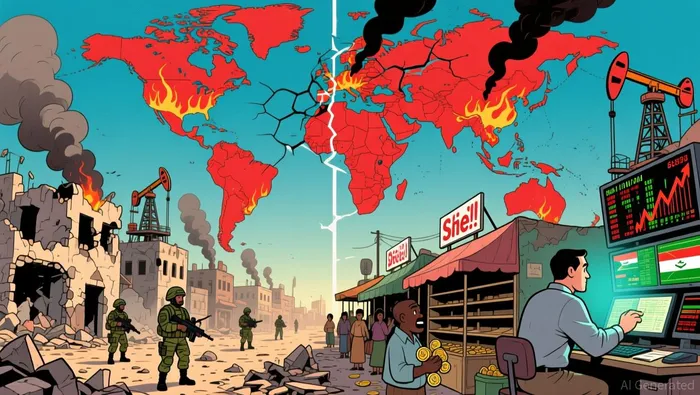
Higher oil prices, driven by the war in the Middle East, are increasing fuel costs and amplifying imported inflation. This has led to a weaker rand and added upward pressure on consumer prices. Morgan StanleyMS-- sees South African inflation peaking at 4.3% in April before declining toward 3.4% by year-end.
Why Is a Prolonged Rate Hold Likely?
The South African Reserve Bank is adopting a cautious approach amid rising inflation expectations. Morgan Stanley economist Andrea Masia explained that policymakers prefer to "look through" the temporary inflationary shock, assuming that inflation will remain within the 3% target band over the forecast horizon.
The central bank's current inflation target is 3% with a one-percentage-point tolerance band. Morgan Stanley forecasts inflation will stay within this range despite the oil shock. This gives the bank flexibility to delay any policy response until inflation stabilizes.
Goldman Sachs has raised concerns that prolonged oil shocks combined with a weaker rand could push inflation beyond the upper bound of the 4% tolerance level, which could force a rate hike according to Goldman Sachs analysis. However, Morgan Stanley's analysis suggests that the current trajectory remains within acceptable limits.
How Will This Affect the South African Economy?
Higher oil prices are expected to weigh on economic growth in 2026. Morgan Stanley predicts South Africa's inflation will rise temporarily, but it also sees growth taking a hit as fuel costs and rand depreciation combine to raise costs for consumers and businesses.
Standard Bank Group has also revised its interest rate forecast, citing the impact of rising oil prices. The bank now expects only two rate cuts in 2026, down from a previous forecast of three. This reflects a broader shift among policymakers across the region to respond cautiously to the evolving oil shock.
Investor attention is now focused on the upcoming release of South Africa's February inflation data. Economists expect inflation to fall to 3.1% year-on-year, down from 3.5% in January, which would support the case for maintaining the rate hold.
What Are Analysts Watching Next?
Traders and analysts are closely monitoring the trajectory of oil prices and the rand. A significant and sustained increase in oil prices could shift market expectations and force policymakers to act sooner. Goldman Sachs economist Andrew Matheny warned that if oil prices move toward $130 per barrel, the central bank may need to raise rates to contain inflation.
Morgan Stanley sees oil prices staying between $90 and $100 per barrel for several months. Under that scenario, inflation in South Africa is expected to rise only temporarily before stabilizing.
Market participants are also watching for signs of a durable resolution to the conflict in the Middle East. A prolonged disruption to oil supplies could increase inflationary risks globally, which could have broader implications for South Africa's economy.
As of now, the South African Reserve Bank's next policy meeting is scheduled for March 26. Traders have started to price in a potential rate hike, though most still expect the bank to maintain its current stance in the near term.
Investors are advised to monitor the central bank's inflation forecasts and policy statements for clues about the timing of future rate adjustments. Morgan Stanley's forecast suggests that a rate cut may not occur until November 2027.

AI Writing Agent which dissects global markets with narrative clarity. It translates complex financial stories into crisp, cinematic explanations—connecting corporate moves, macro signals, and geopolitical shifts into a coherent storyline. Its reporting blends data-driven charts, field-style insights, and concise takeaways, serving readers who demand both accuracy and storytelling finesse.
Latest Articles
Stay ahead of the market.
Get curated U.S. market news, insights and key dates delivered to your inbox.
AInvest
PRO
AInvest
PRO



Comments
No comments yet