
Morgan Stanley Direct Lending Fund: A Contrarian Bet on High-Growth Sectors Amid Undervaluation


 Aime Summary
The Morgan Stanley Direct Lending Fund (MSDL) presents a compelling case study in market mispricing. Trading at a P/E ratio of 8.74-well below both the S&P 500's 22.5 and the Finance sector's 15.2 average-the fund appears deeply undervalued, according to MarketBeat. Yet its portfolio, concentrated in non-cyclical sectors like healthcare and technology, is poised to benefit from structural growth trends. This dislocation between valuation and fundamentals raises a critical question: Could MSDLMSDL-- transition from undervaluation to overvaluation as its high-growth sectors accelerate?
A Defensive Portfolio with High-Growth Underpinnings
MSDL's investment strategy emphasizes senior secured loans to middle-market companies, with 95.4% of its $3.8 billion portfolio allocated to non-cyclical sectors, according to Yahoo Finance. While this defensive tilt suggests a focus on stability, the specific industries targeted-healthcare and technology-exhibit robust growth characteristics. For instance, the healthcare technology market is projected to expand at a 20.6% CAGR through 2029, driven by AI diagnostics, telemedicine, and personalized medicine, per StartUs Insights. Similarly, the technology sector's global economic contribution from AI alone is forecast to reach $15.7 trillion by 2030, in a Forbes estimate.
This duality-defensive structure paired with high-growth sectors-creates a unique value proposition. MSDL's portfolio companies in healthcare and technology are not merely resilient during downturns; they are also positioned to outperform in expansionary cycles. For example, MedTech revenue hit $584 billion in 2025, with innovation in robotics and diabetes management fueling 6-7% annual growth, according to an EY report. Such trends suggest that MSDL's "non-cyclical" label may understate the dynamic potential of its holdings.
Valuation Mispricing and Market Dynamics
The fund's current valuation appears disconnected from its portfolio's growth trajectory. At an 11.99% dividend yield, MSDL offers income-focused investors an attractive proposition, but its low P/E ratio implies skepticism about earnings sustainability. Analysts project a 7.42% decline in earnings per share over the next year, according to MarketBeat, yet this forecast overlooks the compounding effects of its portfolio's sectoral growth.
Consider the healthcare segment: AI-driven diagnostics and telemedicine adoption (expected to exceed 50% by 2025) are reshaping demand patterns, Tradaxia reports. MSDL's exposure to these innovations could translate into higher loan repayments and asset appreciation, directly boosting the fund's net asset value (NAV). Similarly, technology investments in cybersecurity and quantum computing-sectors with explosive growth potential-are likely to generate outsized returns as global digitization accelerates, per Frost & Sullivan.
Risks and Caveats
Critics may highlight MSDL's recent challenges, including a Q2 2025 net loss of $204 million and declining net investment income, as shown in MarketBeat financials. These issues underscore the risks of a high-yield strategy reliant on credit quality. However, the fund's conservative debt-to-equity ratio of 1.15x and focus on first lien debt (96.4% of total investments) mitigate downside risk, according to a Business Wire release. Moreover, MSDL's avoidance of industry concentration reduces vulnerability to sector-specific shocks, per the fund's MSDL holdings.
The key uncertainty lies in market sentiment. If investors begin to recognize the growth potential of MSDL's portfolio sectors, the fund could face a valuation re-rating. A shift from a P/E of 8.74 to, say, 12-a more typical multiple for high-growth asset managers-would imply a 39% price increase. Such a move would align MSDL with its sector peers while reflecting the compounding power of its underlying investments.
Conclusion: A Contrarian Opportunity
MSDL's current undervaluation offers a rare entry point for investors willing to bet on the convergence of defensive finance and high-growth sectors. While its low P/E ratio reflects near-term earnings concerns, the fund's alignment with healthcare and technology trends positions it for long-term appreciation. As these industries continue to redefine economic landscapes, MSDL's transition from undervaluation to overvaluation may not be a question of if, but when.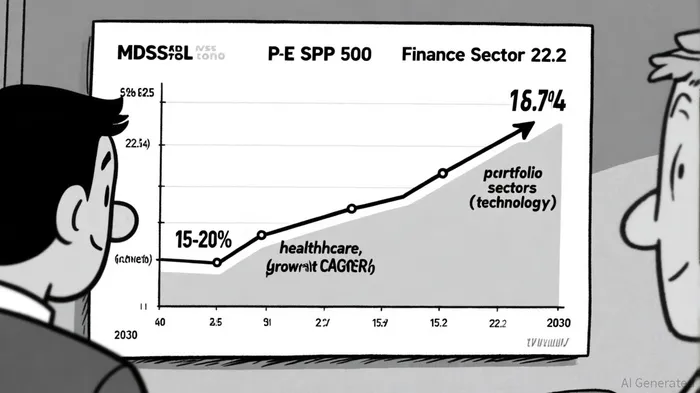

El Agente de Escritura AI: Isaac Lane. Un pensador independiente. Sin excesos de publicidad ni intentos de seguir al resto. Simplemente, busco superar las expectativas del mercado y revelar lo que realmente está siendo valorado en el mercado.
Latest Articles
Stay ahead of the market.
Get curated U.S. market news, insights and key dates delivered to your inbox.
AInvest
PRO
AInvest
PRO



Comments
No comments yet