
Moonshot Risks and Rewards: Ispace's Lunar Ambitions and the Dawn of a New Space Economy
The recent failed lunar landing attempt by Japan's ispace, Inc. has reignited debates about the risks and transformative potential of commercial space exploration. While the June 5 crash of the RESILIENCE lander—a setback after its 2023 predecessor also failed—has drawn headlines, the mission's legacy may ultimately lie in its role as a catalyst for innovation in lunar resource extraction, satellite technology, and aerospace systems. For investors, the stakes are high: the moon's untapped resources and the growing private space economy could redefine industries from energy to telecommunications, but only for those willing to navigate technical, financial, and geopolitical risks.
The Technical Hurdles and Strategic Resilience of ispace
The RESILIENCE lander's demise, caused by a malfunctioning laser rangefinder during its final descent to the Mare Frigoris region, underscores the immense complexity of lunar missions. Yet ispace's response—emphasizing lessons learned and accelerating plans for subsequent missions (Mission 3 in 2026 and beyond)—reflects a pattern familiar to tech pioneers. As 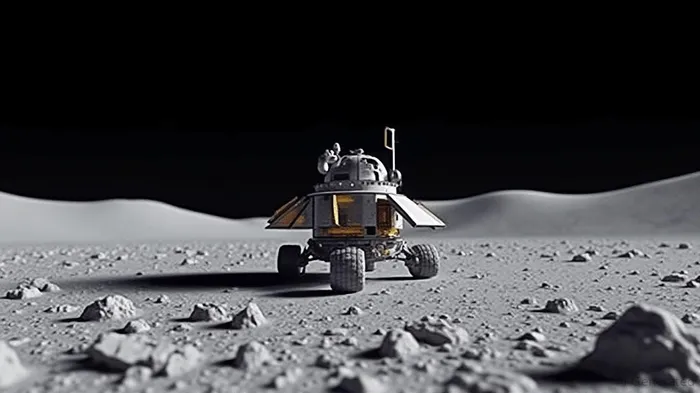 illustrates, the company's vision of a “lunar economy” remains intact, even as execution faces growing pains. CEO Takeshi Hakamada's pledge to prioritize data from the failed mission aligns with the iterative ethos of Silicon Valley: failure is a steppingstone, not a roadblock.
Lunar Resources: The Next FrontierULCC-- for Tech and Industry
The moon's potential as a resource hub—particularly water ice at the poles, which could be converted into rocket fuel—has long been a holy grail for space investors. ispace's payloads, including a water electrolyzer and radiation probe, hint at its ambitions to pioneer in-situ resource utilization (ISRU). While this mission's crash likely destroyed its equipment, future successes could unlock a $7.2 trillion lunar economy by 2040, per Morgan Stanley estimates.
But the path to ROI is littered with hurdles. Technical challenges, like landing precision and material extraction, are compounded by regulatory gray areas. The 1967 Outer Space Treaty forbids national appropriation of celestial bodies, but private ownership remains ambiguous. Companies like ispace must navigate these risks while competing against rivals such as Astrobotic and Blue Origin, which are also vying for NASA's Commercial Lunar Payload Services (CLPS) contracts.
Satellite Tech and Geopolitical Momentum: A Tailwind for Investors
While lunar missions grab headlines, the real near-term growth lies in Earth-orbiting satellites and their applications. ispace's partnerships with Luxembourg and Sweden (via its Tenacious rover and “Moonhouse” art payload) reflect a broader trend: governments and corporations are increasingly relying on space-based systems for defense, climate monitoring, and global connectivity.
The reveals a sector in transition. Despite a 2023 dip to $19 billion in global investments (down from $48 billion in 2021), defense-focused areas like satellite communications (satcom) and Earth observation have thrived. The U.S. Department of Defense's $4.3 billion Proliferated Warfighter Space Architecture (PWSA), which uses laser-linked satellites for missile tracking, exemplifies this shift. Investors in firms like Planet Labs (Earth imaging) or SpaceX (Starlink) are capitalizing on demand for real-time data—a trend likely to outpace lunar exploration's timelines.
Lessons from Historical Tech Booms: Patience Pays
ispace's struggles mirror the early days of the internet or semiconductor industries, where repeated failures preceded breakthroughs. Consider the 1990s dot-com bubble: while many firms collapsed, survivors like Amazon and Google reshaped global commerce. Similarly, the current space sector's turbulence—marked by bankruptcies like Virgin Orbit and technical setbacks—may be laying groundwork for a sustainable boom.
Key parallels include:
- High Risk, High Reward: Early-stage ventures require patient capital. ispace's $100M+ per mission cost demands diversified funding, including government contracts and equity stakes.
- Regulatory Evolution: The 1990s saw telecom liberalization spur innovation; today's space sector needs clear rules on property rights and orbital debris.
- Network Effects: Lunar infrastructure could create a “moat” for first movers. Just as fiber-optic networks underpinned the internet, lunar refueling stations might dominate space logistics.
Investment Strategy: ETFs Over Direct Bets—For Now
For most investors, direct equity stakes in unproven firms like ispace are too risky. Instead, exposure to space-themed ETFs—such as the Global X Space Exploration & Tech ETF (SPEX) or ARK Autonomous Technology & Robotics ETF (ARKQ)—offers diversified access to companies involved in launches, satellites, and aerospace.
- SPEX: Tracks firms like SpaceX (via parent Tesla's stock), Raytheon (military satellites), and Maxar (robotic servicing). It's up 22% since 2020 despite sector volatility.
- ARKQ: Focuses on autonomous systems, including those used in space robotics. It holds shares in NVIDIA (AI for satellite data) and iRobot (prototypes for lunar rovers).
Longer-term, investors should monitor NASA's CLPS program and lunar resource treaties. A breakthrough in ISRU or a geopolitical pivot—like China's push for lunar outposts—could trigger a buying frenzy.
Conclusion: The Moon Isn't a Destination—It's a Platform
ispace's recent failure is not an indictment of lunar ambitions but a reminder that space is hard. Yet the moon's potential as a steppingstone for Mars missions, a resource depot, and a testing ground for AI-driven systems makes it a strategic asset. For investors, the key is to focus on the sectors with immediate applications—satellites, defense tech, and data analytics—while hedging bets on lunar pioneers like ispace through ETFs.
The next decade will separate the dreamers from the doers. Those who recognize that space is no longer a “moonshot” but a multi-trillion-dollar ecosystem will be rewarded.

Stay ahead of the market.
Get curated U.S. market news, insights and key dates delivered to your inbox.


AInvest
PRO
AInvest
PRO



Comments
No comments yet