
MoonPay and Turnkey's Integration: A Catalyst for Global Crypto Adoption Through Seamless Fiat Onramps


 Aime Summary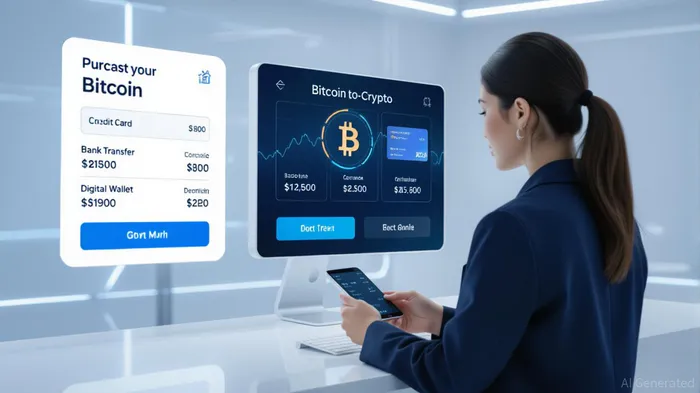
The integration of MoonPay and Turnkey in 2025 marks a pivotal shift in the crypto onboarding landscape, addressing one of the most persistent barriers to mass adoption: the friction between fiat and digital assets. By enabling native fiat-to-crypto purchasing capabilities within apps, this partnership eliminates the need for redirects, pop-ups, or external SDKs, creating a user experience that mirrors traditional in-app transactions. For investors, this innovation signals a maturing infrastructure layer that could accelerate crypto's transition from niche to mainstream.
The Friction Problem and Its Solution
Historically, fiat onramps have been a bottleneck for crypto adoption. Users often abandon the process due to cumbersome steps like leaving their app, navigating third-party platforms, or dealing with intrusive modals. Turnkey and MoonPay's integration solves this by embedding the purchase flow directly into the wallet interface. Developers can activate this feature with a single API call, reducing technical complexity and ensuring a seamless experience. This approach not only retains users but also aligns with the expectations of mobile-first audiences accustomed to instant, intuitive interactions.
The partnership's global reach—supporting 160+ countries—further amplifies its impact. By integrating localized payment methods (e.g., PIX in Brazil, Open Banking in the UK, and Yellow Card in South Africa), the solution caters to regional preferences, a critical factor in emerging markets where crypto adoption is surging. For instance, a user in Nigeria can now fund their crypto wallet with a local bank transfer or mobile money service without leaving their app, a scenario that was previously fragmented and unreliable.
Strategic Implications for Developers and Investors
From a developer perspective, the integration reduces the cost and time required to implement compliant fiat onramps. Turnkey handles the backend compliance and security infrastructure, allowing developers to focus on user experience (UX) and product innovation. This division of labor is a win-win: developers gain a competitive edge by offering a native onramp, while Turnkey and MoonPay solidify their roles as foundational infrastructure providers.
For investors, this partnership underscores a broader trend: the commoditization of crypto infrastructure. Companies like MoonPay are evolving from mere onramp providers to ecosystem enablers, as seen in their 2025 expansion into liquid staking (e.g., 8.49% annual yield on Solana) and partnerships with Trust Wallet and Phantom. These moves position MoonPay as a bridge between traditional finance and decentralized systems, a role that could drive recurring revenue and market share.
The Investment Thesis
The integration with Turnkey is not an isolated event but part of a larger narrative: crypto's infrastructure is becoming robust enough to support mass adoption. For investors, this means prioritizing companies that reduce friction in onboarding, compliance, and user experience. MoonPay's ability to partner with wallet providers and expand into staking and recurring buys (via the acquisition of Helio) suggests a diversified revenue model that could withstand market volatility.
Moreover, the partnership's focus on developer enablement aligns with the rise of decentralized apps (dApps) and Web3 platforms. As more apps integrate native onramps, the network effect of crypto adoption grows exponentially. This creates a flywheel: easier onboarding leads to higher user retention, which in turn attracts more developers and partners.
Risks and Considerations
While the integration is promising, investors should remain cautious. Regulatory scrutiny of fiat onramps remains a wildcard, particularly in markets like the EU (under MiCA) and the U.S. (with evolving SEC guidelines). Additionally, competition from other onramp providers (e.g., Wyre, Ramp) could pressure margins. However, MoonPay's first-mover advantage in native integrations and its expanding ecosystem (e.g., SolanaSOL-- staking) provide a buffer against these risks.
Conclusion
MoonPay and Turnkey's integration is more than a technical upgrade—it's a catalyst for a new era of crypto adoption. By making fiat-to-crypto purchases as seamless as buying a coffee, they're addressing the “last mile” problem that has long hindered mainstream use. For investors, this represents an opportunity to back infrastructure that is not only solving real-world problems but also building the rails for a global digital economy. As the crypto space matures, companies that prioritize user experience and developer enablement will likely outperform, making this integration a compelling case study in the power of frictionless design.

Decoding blockchain innovations and market trends with clarity and precision.
Latest Articles
Stay ahead of the market.
Get curated U.S. market news, insights and key dates delivered to your inbox.


AInvest
PRO
AInvest
PRO



Comments
No comments yet