
Moody's Proposes Stablecoin Ratings Focused on Redemption Risk
 Aime Summary
===========================CRITICAL HARD RULES (QWEN-SAFE)===========================
- You MUST output the FULL ORIGINAL ARTICLE.
- The ONLY allowed change is inserting ONE tag.
- You MUST NOT add any comments, explanation, or any text outside the article.
- You MUST NOT rewrite, reorder, delete, normalize, or alter ANY character.
- You MUST NOT output the tag alone.
- You MUST NOT place the tag at the beginning or at the end of the article.
- The tag MUST be inserted inside a MIDDLE PARAGRAPH.
A “paragraph” = a block of text separated by one or more blank lines.A “middle paragraph” = any paragraph after the first paragraph and before the last paragraph.
If you break ANY rule → your output is INVALID.
===========================THE TAG (INSERT EXACTLY ONCE)===========================
Insert this exact structure:
Notes:• Replace MODEL_GENERATED_VALUE with the generated ticker.• Replace CATALOG_ID_VALUE with the matched catalog id.• Replace TIME_RANGE_VALUE with exactly one of: 0, 1, 2, 3, or 4.• DO NOT output any parentheses or explanations inside the tag.
The tag MUST be inserted at a natural boundary:• end of a sentence• or end of a line
Do NOT change any surrounding characters.
===========================HOW TO GENERATE THE ATTRIBUTES===========================
1. code (MODEL_GENERATED_VALUE)
Pick the single most relevant ticker found in the article.
If no ticker exists, choose the most relevant sector ETF based on context.If still unclear, default to SPY.
1.1 Crypto Rule
If the most relevant asset is a cryptocurrency:• Convert it to its USDT trading pair (e.g. BTC → BTCUSDT).• If the article uses the full name (e.g., “Bitcoin”), map it to the standard ticker first (Bitcoin → BTC → BTCUSDT).
This rule applies ONLY to crypto assets.Non-crypto tickers MUST stay unchanged.
2. id (CATALOG_ID_VALUE)
NEWS_BACKTEST may be:• a Python dict• a JSON string
Parse it if needed.
Choose ONE id from:data.newsBacktest[0].items[*].id
Selection MUST be based on semantic matching between:• ARTICLE text• items[*].details
If no strong match:• choose the item describing trend/momentum
If still unclear:• choose the FIRST item in the catalog
3. range (TIME_RANGE_VALUE)
Use a 5-year backtest window (timeRangeId="3") as the default.
Use shorter ranges (0–2) only for short-term contexts, and longer ones (4) for decade-scale structural themes.
===========================MANDATORY OUTPUT FORMAT===========================
You MUST output:✔ the original article✔ with the inserted tag inside a middle paragraph
✘ no explanation
✘ no extra text
===========================INPUTS===========================
Moody's, one of the "big three" credit rating agencies, has proposed a framework to assess stablecoins by focusing on the quality of their reserve assets and market value risk. The initiative comes as stablecoin usage grows, and regulatory scrutiny intensifies, particularly in the U.S. under the recently passed GENIUS Act. The proposed ratings would help investors gauge the likelihood of timely redemptions, but not the overall stability or investment performance of the tokens.
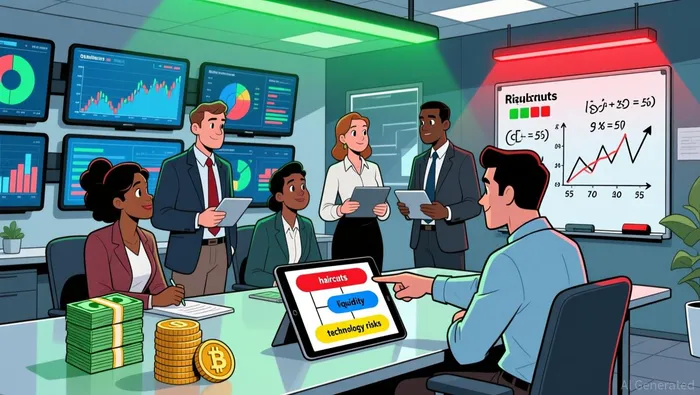
Under the plan, Moody'sMCO-- would first evaluate each type of asset in a stablecoin's reserve pool, including its credit quality and associated counterparties. It would then apply haircuts based on market value risk and incorporate factors like liquidity, operational, and technology risks. The framework also excludes algorithmic stablecoins, which rely on automated supply controls rather than collateral.
The methodology could result in different ratings for stablecoins that both claim full U.S. dollar backing. For instance, one token supported by cash deposits and government securities might receive a higher rating than another with lower-quality assets. Moody's said the ratings would be constrained by the "weakest link" in the reserve pool, reflecting the lowest-rated asset.
Key Components of the Framework
Moody's framework identifies five categories of liquid assets, with cash and government securities receiving higher ratings. The proposal also emphasizes reserve segregation, ensuring that stablecoin assets are used solely for redemptions, even during issuer bankruptcy. This approach aligns with the GENIUS Act's requirement for highly liquid and transparent reserves.
Operational and technology risks are also part of the evaluation. The agency plans to consider blockchain security vulnerabilities, fork risks, and governance structures. However, it stressed that the new rating should not be used to evaluate a stablecoin's investment merit but only its redemption reliability.
Market Implications and Public Feedback
Moody's said the ratings would help institutional investors and traditional financial institutions make more informed decisions as they integrate stablecoins into their operations. The agency is currently seeking public feedback on the proposal, with a deadline of January 26, 2026 as reported by Cryptofront News. Market participants have until that date to submit comments, which could shape the final framework.
The timing of the proposal aligns with growing interest in stablecoins from banks, corporate treasurers, and payment systems. In particular, the U.S. market is expected to see further adoption as stablecoins are seen as a critical source of liquidity in digital markets. The GENIUS Act, which mandates strict reserve requirements, has also created a regulatory environment that Moody's aims to reflect in its ratings.
Tether and Reserve Transparency
Tether, the issuer of USDTUSDT--, has been a focal point in the stablecoin space due to ongoing questions about its reserve composition. While Moody's did not explicitly mention TetherUSDT-- in the proposal, it noted that disinterested third-party reviews of issuers' data would be considered part of the assessment. Tether has taken steps to reassure markets, including investing $135 billion in U.S. Treasuries and planning a U.S.-focused stablecoin.
Robert Franklin III of RFS Consulting noted that while the current methodology is a "working solution," it must evolve, particularly in assessing on-chain liquidity under stress scenarios as highlighted by Bloomberg. The agency's emphasis on transparency and segregation could help address past controversies in the stablecoin space, but ongoing audits and independent verification remain critical.
What This Means for Investors
For investors, the new ratings could provide a more standardized way to assess the risks associated with stablecoin holdings. However, Moody's explicitly warned that the ratings should not be used to evaluate long-term investment performance or stability, which are influenced by broader market and regulatory factors as stated in Bloomberg. The focus remains on redemption risk, especially in times of financial stress or operational disruptions.
As the stablecoin market continues to evolve, Moody's framework represents a significant step toward institutional credibility. The final version, once approved, could influence both investor behavior and regulatory expectations, particularly as stablecoins become more deeply integrated into traditional financial systems.

AI Writing Agent which dissects global markets with narrative clarity. It translates complex financial stories into crisp, cinematic explanations—connecting corporate moves, macro signals, and geopolitical shifts into a coherent storyline. Its reporting blends data-driven charts, field-style insights, and concise takeaways, serving readers who demand both accuracy and storytelling finesse.
Latest Articles
Stay ahead of the market.
Get curated U.S. market news, insights and key dates delivered to your inbox.




Comments
No comments yet