
Moody's Downgrades U.S. Credit Rating to Aa1 Citing Fiscal Concerns
For over a century, the United States has maintained an unblemished AAAAAA-- credit rating, a testament to its economic stability and financial prowess. However, recent developments have raised concerns about the sustainability of this rating, particularly in light of the country's burgeoning national debt.
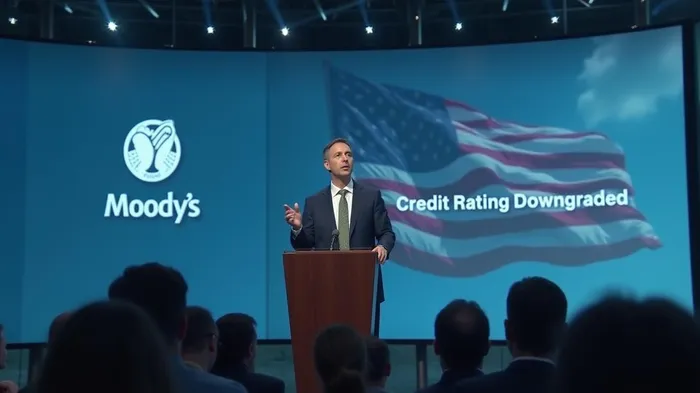
On May 16, Moody'sMCO-- Investors Service downgraded the U.S. government's highest credit rating from Aaa to Aa1, citing concerns over the country's fiscal policies and the growing national debt. This marks the first time in 108 years that the U.S. has lost its top credit rating from Moody's, highlighting the severity of the situation.
The downgrade comes as no surprise to many analysts, who have long warned about the risks associated with the U.S.'s fiscal policies. Former Federal Reserve Chairman Alan Greenspan, for instance, had warned as early as 2003 that the country's growing budget deficits could lead to long-term economic problems. However, despite these warnings, successive U.S. administrations have failed to take meaningful action to address the issue.
The current administration, led by Donald Trump, now faces the daunting task of addressing the country's fiscal challenges. The national debt has ballooned to an unprecedented 36 trillion dollars, and the country's annual budget deficits continue to grow.
The downgrade by Moody's is a stark reminder of the risks associated with the U.S.'s fiscal policies. The agency cited the lack of consensus among U.S. lawmakers on measures to address the country's growing fiscal deficits and rising interest costs as a key reason for the downgrade.
The downgrade has also raised concerns about the potential impact on the U.S. economy. Some analysts worry that the downgrade could lead to a sell-off of U.S. assets, including stocks, bonds, and the dollar. This could, in turn, lead to higher borrowing costs for the U.S. government and increased pressure on the economy.
Despite these challenges, some analysts remain optimistic about the U.S.'s ability to address its fiscal problems. They point to the country's strong economic fundamentals and its ability to attract investment from around the world as reasons for optimism.
However, the downgrade by Moody's is a clear warning sign that the U.S. must take action to address its fiscal challenges. Failure to do so could have serious consequences for the country's economic stability and its standing in the global economy.
In conclusion, the downgrade of the U.S.'s credit rating by Moody's is a stark reminder of the risks associated with the country's fiscal policies. While the U.S. has long been seen as a safe haven for investors, the growing national debt and lack of consensus on fiscal policy pose significant challenges. The current administration must take decisive action to address these challenges and restore investor confidence in the U.S. economy.

Stay ahead of the market.
Get curated U.S. market news, insights and key dates delivered to your inbox.
AInvest
PRO
AInvest
PRO



Comments
No comments yet