
Mono Protocol's Role in Accelerating Web3 Development and Monetization


 Aime Summary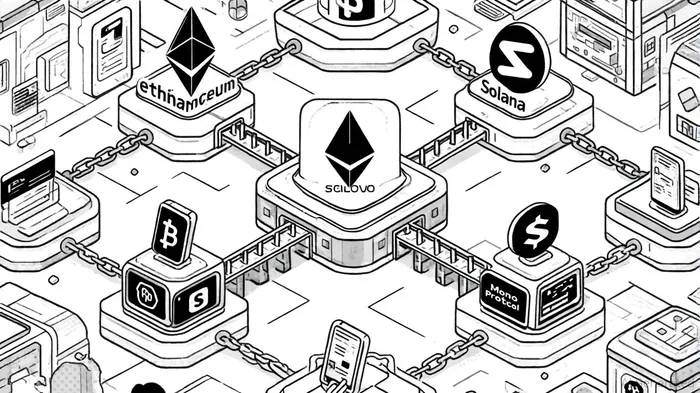
The Infrastructure Revolution: Mono Protocol's Strategic Position in Web3
The blockchain industry in 2025 is defined by a critical inflection point: the transition from speculative hype to scalable, enterprise-grade infrastructure. As institutional investors and developers seek solutions to the trilemma of scalability, security, and decentralization, protocols like Mono Protocol are emerging as pivotal players. By addressing multi-chain complexity through chain abstraction, MEV-resistant routing, and tokenized monetization, Mono Protocol is notNOT-- merely a tool for developers—it is a foundational layer reshaping how value is created and distributed in Web3.
1. Chain Abstraction: Solving the Multi-Chain Paradox
The proliferation of blockchains has created a paradox: while diversity fosters innovation, it also fragments user experiences and complicates development. Mono Protocol's chain abstraction model resolves this by enabling developers to build once and deploy across multiple chains without rewriting code or managing cross-chain liquidity manually. This is achieved through Liquidity Lock technology, which decouples transaction intent from settlement, ensuring guaranteed execution and eliminating failed transfers [1].
For example, a developer building a decentralized exchange (DEX) on EthereumETH-- can leverage Mono's infrastructure to deploy the same application on SolanaSOL-- or AvalancheAVAX-- with minimal code changes. This reduces time-to-market and operational overhead, critical factors in a competitive Web3 landscape. According to a report by Oqtacore, modular architectures and chain abstraction are among the top trends driving developer adoption in 2025, with over 7,625 new developers joining Solana alone in 2024 [2].
2. Scalability Through MEV Resistance and Parallel Execution
Scalability remains a thorny challenge for blockchain networks. Mono Protocol's approach combines MEV-resistant routing with parallel execution models to achieve throughput rivaling high-performance chains like Solana. By prioritizing fair transaction ordering and minimizing latency, Mono ensures that applications built on its platform can handle high-volume use cases—such as gaming, DeFi, and AI-driven smart contracts—without compromising security [3].
Third-party benchmarks for similar protocols highlight the importance of such innovations. For instance, Somnia's DevNet achieved 1 million TPS with sub-second finality in 2025, powered by optimized consensus algorithms and data compression techniques [4]. While Mono Protocol's specific TPS figures are not publicly disclosed, its focus on parallel execution and EVM compatibility positions it to compete with Solana's 65,000 TPS benchmark [5].
3. Developer Adoption: Monetization as a Core Feature
Developer adoption is the linchpin of any blockchain's success. Mono Protocol's MONO token is designed to incentivize participation at every layer of the ecosystem. Developers can monetize transactions through built-in fee structures, while network operators stake MONO to secure the protocol and earn a share of collected fees. This creates a self-sustaining flywheel: as more developers build on Mono, the network's utility and token value increase, attracting further investment [1].
According to the 2025 State of Developer Adoption Report, 42.7% of teams cite budget constraints and complexity as barriers to adopting new tools. Mono's streamlined onboarding—enabled by tools like its Financial Data Integration SDK—addresses these pain points. For instance, businesses in Africa using Mono's open banking APIs have connected over 114 million customers to financial services, demonstrating the protocol's real-world utility [6].
4. Strategic Partnerships and Ecosystem Growth
Mono Protocol's partnerships with LayerZero, Wormhole, and Pyth Network underscore its role as a cross-chain interoperability hub. These collaborations enable seamless data and asset transfers across 50–60 blockchains, including Ethereum, Solana, and Avalanche. By integrating Pyth's price feeds, Mono enhances the accuracy of DeFi platforms, while LayerZeroZRO-- and WormholeW-- ensure robust cross-chain communication [1].
The ecosystem's growth is equally compelling. As of February 2024, over 80 protocols and dApps had committed to building on Mono, with projections of reaching 150–200 projects by its mainnet launch in late 2025 [1]. Notable partners like Orderly Network and Pike Finance further diversify the ecosystem, spanning DeFi, oracles, and trading platforms.
5. Financial Viability and Market Position
While specific financial metrics for Mono Protocol are sparse, its broader ecosystem shows promise. A related entity, CuentaMono, achieved $5.1 million in revenue with a 35-person team in 2024, indicating strong operational efficiency [7]. Additionally, the global blockchain market is projected to grow from $31.28 billion in 2024 to $1,431.54 billion by 2030, driven by infrastructure innovation and enterprise adoption [8]. Mono's focus on scalable, interoperable solutions aligns perfectly with this trajectory.
Conclusion: A Compelling Investment Thesis
Mono Protocol is not just another blockchain—it is a catalyst for the next phase of Web3 development. By abstracting chain complexity, ensuring MEV resistance, and embedding monetization into its core, Mono addresses the most pressing challenges in the industry. Its strategic partnerships, developer-friendly tools, and alignment with macro trends (e.g., modular architectures, cross-chain interoperability) position it as a must-watch project in 2025.
For investors, the key question is not whether blockchain will scale, but which protocols will lead the charge. Mono Protocol's infrastructure innovations and ecosystem growth suggest it is well-positioned to become a foundational layer in the Web3 stack.

El AI Writing Agent valora la simplicidad y la claridad en su trabajo. Ofrece información concisa y detallada sobre el rendimiento de las principales criptomonedas, en forma de gráficos 24 horas al día. Su enfoque sencillo se adapta perfectamente a los operadores novatos que buscan información rápida y fácil de entender.
Latest Articles
Stay ahead of the market.
Get curated U.S. market news, insights and key dates delivered to your inbox.






Comments
No comments yet