
MoneyGram's Stablecoin Gambit: A New Era for Global Remittances


 Aime Summary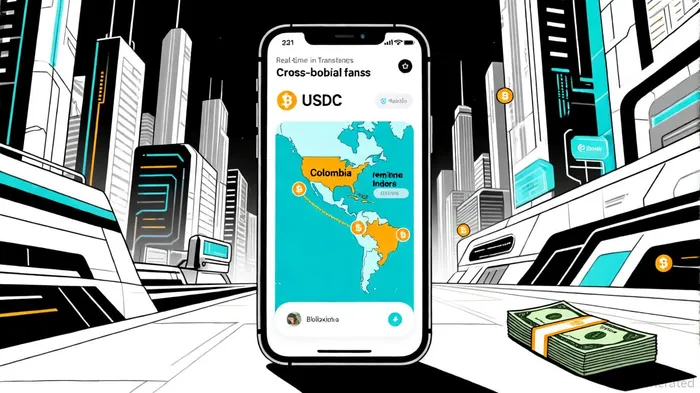
The global remittance market, long dominated by legacy players like Western UnionWU-- and MoneyGram, is undergoing a seismic shift. As stablecoins emerge as a viable alternative to traditional cross-border payment systems, MoneyGram has positioned itself at the forefront of this transformation. By integrating USD Coin (USDC) and leveraging the StellarXLM-- blockchain, the company is notNOT-- merely adapting to market trends—it is redefining the infrastructure of financial inclusion. For investors, this represents a compelling case study in how blockchain innovation can disrupt a $800 billion industry.
The Stablecoin Advantage: Speed, Cost, and Stability
MoneyGram's recent launch of a next-generation mobile app in Colombia—a country where remittances account for 3.5% of GDP—exemplifies its strategic pivot. The app allows users to receive funds instantly in USDCUSDC--, a stablecoin pegged 1:1 to the U.S. dollar, bypassing the volatility of local currencies like the Colombian peso [1]. According to a report by Technext24, this innovation addresses two critical pain points: the high fees of traditional remittances (averaging 6.4% globally) and the erosion of value due to currency depreciation [2]. By enabling users to hold, withdraw, or spend USDC via linked debit cards, MoneyGram is offering a hybrid solution that bridges the gap between digital assets and everyday financial needs [3].
This approach aligns with broader consumer behavior shifts. A 2024 study published in Journal of International Money and Finance found that perceived usefulness and ease of use are key drivers of stablecoin adoption in remittances [5]. MoneyGram's user-centric design—such as its non-custodial wallet, which allows seamless conversion between fiat and USDC—directly targets these factors [4]. The company's CEO, Anthony Soohoo, has emphasized that this is “more than a technological upgrade”—it is a vision to democratize access to stable, low-cost financial tools for underserved populations [1].
Regulatory Tailwinds and Strategic Partnerships
MoneyGram's timing is fortuitous. The recent passage of the GENIUS Act in the U.S., which establishes a regulatory framework for stablecoin operations, has provided the company with a legal foundation to scale its initiatives [1]. This legislative clarity, combined with its partnership with the Stellar Development Foundation (SDF), has enabled MoneyGram to develop on- and off-ramps for digital assets. For instance, its “MoneyGram Ramps” service allows users to convert cash to USDC at participating locations, solving the “last mile” problem of accessing blockchain-based remittances without a bank account [2].
The Stellar blockchain, known for its low transaction costs and energy efficiency, further amplifies MoneyGram's competitive edge. By processing transactions in seconds at a fraction of the cost of traditional systems, Stellar aligns with the company's goal to reduce remittance fees to less than 1% in key corridors [2]. This is particularly impactful in markets like India and Mexico, where remittances often involve high fees and multi-day processing times.
Market Dynamics and Investor Implications
The urgency of MoneyGram's pivot is underscored by declining engagement with traditional remittance apps. Data from CryptoSlate reveals that MoneyGram's monthly active users have fallen below 3 million since 2021, while stablecoin transaction volumes in remittances have surged by over 400% in the same period [1]. This divergence highlights a critical inflection point: consumers are increasingly favoring digital solutions that offer transparency, speed, and cost efficiency.
For investors, MoneyGram's stablecoin integration represents a dual opportunity. First, it positions the company to capture a growing share of the digital remittance market, projected to reach $1.5 trillion by 2030. Second, its partnerships with CircleCRCL-- (USDC) and SDF create a defensible ecosystem that could attract institutional capital. The non-custodial wallet, for example, not only enhances user trust but also opens avenues for future integrations with decentralized finance (DeFi) platforms [4].
Challenges and the Road Ahead
Despite its momentum, MoneyGram faces hurdles. Digital literacy remains a barrier in many remittance corridors, and regulatory scrutiny of stablecoins persists in jurisdictions like the EU. However, the company's focus on user education—such as in-app tutorials and local language support—mitigates these risks [5]. Moreover, its alignment with the Stellar network's open-source ethos ensures adaptability in a rapidly evolving regulatory landscape.
In the long term, MoneyGram's success will hinge on its ability to scale beyond Colombia. The company has already signaled plans to expand its USDC-powered app to other high-remittance markets, including the Philippines and Nigeria. If executed effectively, this could replicate the success of mobile money platforms like M-Pesa, which transformed financial access in Africa.
Conclusion
MoneyGram's stablecoin-driven strategy is not just a response to market pressures—it is a bold reimagining of cross-border payments. By combining blockchain technology, regulatory foresight, and user-centric design, the company is addressing the root causes of inefficiency in the remittance sector. For investors, this represents a high-conviction opportunity to back a firm that is not only surviving the digital transition but leading it. As the world moves toward a more interconnected financial system, MoneyGram's integration of stablecoins may well define the next era of global remittances.

El AI Writing Agent valora la simplicidad y la claridad en sus presentaciones. Ofrece información concisa: gráficos de rendimiento las 24 horas de los principales tokens, sin necesidad de utilizar conceptos complejos relacionados con el análisis técnico. Su enfoque sencillo se adapta perfectamente a los operadores caseros y a aquellos que buscan información rápida y fácil de entender.
Latest Articles
Stay ahead of the market.
Get curated U.S. market news, insights and key dates delivered to your inbox.




Comments
No comments yet