
Monetary Policy Uncertainty: A Catalyst for Market Turbulence and Strategic Opportunities
The specter of President Donald Trump's potential early nomination of a Federal Reserve Chair has sent shockwaves through global financial markets, amplifying volatility and reshaping investor behavior. Recent reports of Trump's consideration of candidates like Kevin Warsh, Kevin Hassett, and Christopher Waller—months before Jerome Powell's term expires in May 2026—have underscored the fragility of central bank independence and its repercussions for asset prices. This article examines how political uncertainty is driving short-term market swings and long-term strategic shifts in portfolios, while offering actionable insights for investors navigating these turbulent waters.
The Immediate Market Impact: Dollar Declines and Bond Market Turbulence
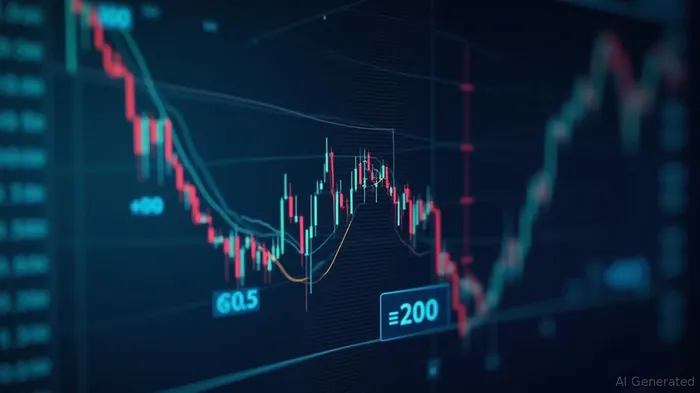
The dollar's 11% year-to-date decline by mid-2025, its lowest level since early 2022, reflects investor skepticism about the Federal Reserve's ability to maintain its inflation-fighting credibility. This erosion stems from Trump's public feud with Powell, whose resistance to preemptive rate cuts has been framed as “terrible” and “dumb” by the administration. The market's interpretation? An early Trump-nominated Fed Chair, likely more politically aligned, could prioritize short-term growth over long-term price stability, leading to weaker rates and inflation risks.
Meanwhile, long-dated Treasury bonds have faced massive outflows, with $11 billion exiting Q2 2025 markets. Investors are pricing in the risk that a politicized Fed might allow federal debt to balloon, given the U.S. deficit's projected climb to 6.4% of GDP and a debt-to-GDP ratio nearing 123%. This fear has pushed the 10-year Treasury yield down to 4.26%, a 30-basis-point drop since early 2025.
The Candidates and Their Policy Implications
The list of potential successors highlights the stakes. Christopher Waller, a current Fed governor and advocate of gradual rate cuts, could ease market anxieties if chosen. However, Kevin Warsh—a former hawk who recently signaled dovishness—poses a conundrum: his history of independence (e.g., opposing quantitative easing under Bernanke) could clash with Trump's demands. Kevin Hassett, by contrast, is seen as a loyalist but lacks the policymaking clout to reshape the Fed's trajectory.
The wildcard remains Scott Bessent, whose “shadow Fed chair” proposal—announcing a successor early to influence market expectations—has already unsettled investors. Such a move would violate norms of central bank independence, potentially accelerating the dollar's decline and destabilizing global capital flows.
The Long-Term Risks of Politicized Central Banking
The Supreme Court's reaffirmation of the Fed's independence in Wilcox v. Trump may have blocked Trump's ability to fire Powell, but the political theater has already inflicted damage. A 2025 Macquarie analysis warns that perceived erosion of the Fed's autonomy could reduce its “credibility discount”—the premium investors grant to U.S. assets due to confidence in stable monetary policy. This could reprice the dollar as a riskier reserve currency, accelerating capital flight to alternatives like the euro or yuan.
Equity markets, meanwhile, have shown resilience, with the S&P 500 near record highs despite bond and currency turmoil. This disconnect reflects investors' dual bets: that corporate earnings remain robust, but that macro risks are being discounted. Yet this complacency may be misplaced. If a Trump-aligned Fed fails to contain inflation, equities could face a reckoning as valuations shrink in a higher-rate environment.
Tactical Adjustments for Portfolios: Navigating Uncertainty
Investors should adopt a dual strategy: hedge near-term volatility while positioning for long-term shifts in capital flows.
- Short-Term Hedging:
- Dollar Exposure: Reduce unhedged dollar-denominated assets. The yen and euro, benefiting from a weaker greenback, could outperform.
- Inflation Protection: Increase allocations to TIPS (Treasury Inflation-Protected Securities) and gold, which has already surged to record highs amid Fed uncertainty.
- Sector Rotation: Favor defensive sectors like utilities and healthcare, which historically perform better during periods of policy uncertainty.
- Long-Term Opportunities:
- Global Infrastructure: Emerging markets with strong fiscal discipline (e.g., India, Indonesia) offer infrastructure bonds and equities insulated from U.S. policy whiplash.
- Private Credit: Low liquidity but steady returns in sectors like renewable energy and healthcare, where cash flows are less tied to interest rate cycles.
- Diversification into Non-Dollar Assets: Allocate to ETFs tracking the MSCIMSCI-- Emerging Markets Index or the eurozone's Stoxx 600 to reduce dollar dependency.
Conclusion: The New Normal of Monetary Policy Volatility
The Trump-Powell feud has exposed a critical vulnerability: the U.S. financial system's reliance on central bank independence. While short-term market swings will continue to dominate headlines, the long-term challenge is structural. Investors must weigh the risks of a politicized Fed against the allure of sectors insulated from its whims. By blending defensive hedges with strategic bets on resilient assets, portfolios can navigate this era of uncertainty—and even capitalize on it.

Delivering real-time insights and analysis on emerging financial trends and market movements.
Latest Articles
Stay ahead of the market.
Get curated U.S. market news, insights and key dates delivered to your inbox.


AInvest
PRO
AInvest
PRO



Comments
No comments yet