
Monero (XMR) Surges Amid $282M Social Engineering Scam and Regulatory Headwinds
 Aime Summary
Monero surged to $800 on January 14, 2026, due to a $282 million social engineering scam involving stolen BitcoinBTC-- and LitecoinLTC-- being converted into untraceable XMRXMR-- according to Bitget. Dubai banned privacy tokens, including MoneroXMR-- and ZcashZEC--, within the Dubai International Financial Centre (DIFC) to align with global anti-money laundering (AML) standards as reported. The increased demand for privacy coins, regulatory pressures, and liquidity challenges are shaping Monero's trajectory, with derivatives platforms like Hyperliquid offering exposure as spot markets remain absent according to Yellow.
Monero (XMR) reached an all-time high of $800 on January 14, 2026, as attackers used the privacy coin to launder $282 million stolen via a social engineering scam targeting a hardware wallet according to Bitget. The attackers converted Bitcoin and Litecoin into XMR using cross-chain protocols like THORChain, exploiting Monero's anonymity features and lower liquidity to obscure transaction details as reported. This sudden increase in demand for XMR led to a 70% price surge, highlighting the risks and opportunities tied to privacy-focused assets.
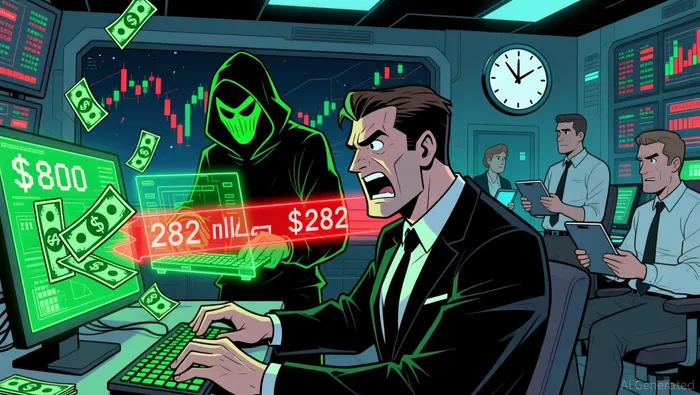
The incident underscores a broader trend: the growing use of privacy coins for illicit activities, which has drawn regulatory attention. In response, Dubai's Financial Services Authority (DFSA) banned privacy tokens like Monero and Zcash within the Dubai International Financial Centre (DIFC) according to reports. The move was justified as a step toward aligning with global anti-money laundering (AML) standards, particularly those set by the Financial Action Task Force (FATF). The DFSA also prohibited the use of crypto-mixing services, which are often linked to illicit activity.
Despite these regulatory headwinds, privacy coins like Monero have seen increased trading activity on derivatives platforms. Hyperliquid's launch of XMR/USDC perpetual contracts in early January coincided with Monero reaching $797, as traders sought leveraged exposure amid the absence of spot markets on major exchanges according to Yellow. With regulatory scrutiny intensifying and market demand shifting toward more transparent assets, the future of privacy coins remains uncertain, but their role in illicit finance has already sparked significant policy responses.
What Caused Monero's Recent Surge?
Monero's price jumped to $800 following a $282 million social engineering scam that targeted a hardware wallet according to Bitget. Attackers quickly converted Bitcoin and Litecoin into XMR using cross-chain protocols like THORChain as reported. This conversion was facilitated by Monero's strong anonymity features, which hide sender and recipient addresses along with transaction amounts according to Yellow. The low liquidity of XMR also allowed the sudden spike in demand to significantly influence the price. Analysts have highlighted that such events pose risks not only for investors but also for the broader cryptocurrency ecosystem, which is already under increased regulatory scrutiny.
What Regulatory Challenges Do Privacy Coins Face?
Dubai's recent ban of privacy tokens like Monero and Zcash within the DIFC reflects a growing global consensus on the need for transparency in financial transactions as reported. The DFSA argued that privacy tokens obscure key transaction details, making it nearly impossible to comply with international AML and FATF standards. The ban extends to any trading, promotion, or use of privacy coins in investment funds and derivatives. Additionally, crypto-mixing services and transaction obfuscation tools are now prohibited for DFSA-regulated firms. This regulatory stance is in line with broader trends in the European Union, where privacy coins have increasingly been excluded from regulated markets.
What Role Do Derivatives Play in Monero's Market?
With spot markets for privacy coins like Monero largely unavailable on major exchanges due to regulatory pressures, derivatives platforms have become central to XMR's price discovery according to Yellow. Hyperliquid's launch of XMR/USDC perpetual contracts in early January 2026 provided traders with leveraged exposure to Monero as the price approached $800. The perpetual contract listing led to a 13% increase in trading volume, demonstrating sustained interest in XMR despite the lack of traditional spot liquidity. This shift underscores the evolving nature of crypto markets, where derivatives are increasingly used to manage exposure to assets that face regulatory restrictions or limited availability.

Blending traditional trading wisdom with cutting-edge cryptocurrency insights.
Latest Articles
Stay ahead of the market.
Get curated U.S. market news, insights and key dates delivered to your inbox.


AInvest
PRO
AInvest
PRO



Comments
No comments yet