
Monero Stalls Post-ATH: How a $282M Social Engineering Scam Fueled XMR's Rally
 Aime Summary
A major cryptocurrency theft on January 10, 2026, saw over $282 million in LitecoinLTC-- and BitcoinBTC-- stolen through a hardware wallet social engineering scam. The incident was first reported by on-chain investigator ZachXBT, who traced the movement of the stolen funds across multiple blockchains. The attacker quickly converted the stolen assets into MoneroXMR-- (XMR), triggering a sharp price increase in the privacy-focused cryptocurrency.
The stolen Bitcoin and Litecoin were laundered through multiple instant exchanges and cross-chain protocols, including THORChain. This allowed the attacker to obscure the trail of the funds by moving them across different blockchain networks. The attacker used THORChain to bridge Bitcoin onto Ethereum, Ripple, and Litecoin, further complicating tracking efforts.
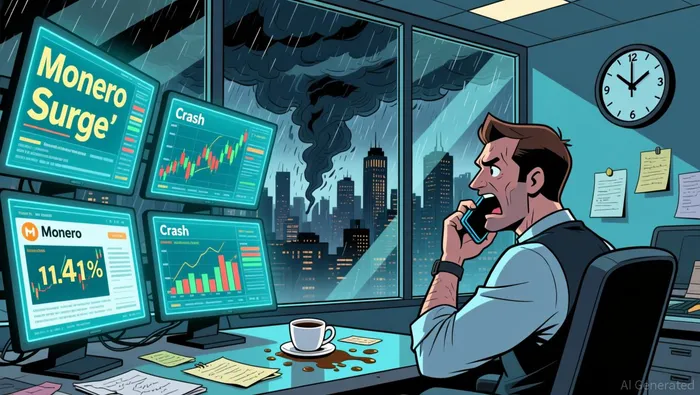
The conversion of stolen assets into Monero caused a significant spike in the coin's price. XMR surged from $612 to $717 in the days following the theft, before retreating to $623, reflecting a 11.41% drop in 24 hours. The attack highlighted the challenges of tracking and recovering stolen crypto when privacy coins are involved.
Why Did This Happen?
The scam exploited a hardware wallet compromised during the engineering or manufacturing process. This allowed the attacker to potentially access the private keys stored on the devices. Unlike traditional phishing or social engineering attacks, this breach targeted the integrity of the wallet itself, bypassing standard security measures.
The attacker's strategy involved rapid conversion of the stolen Bitcoin and Litecoin into Monero. This move was driven by the coin's strong privacy features, which make transactions harder to trace compared to transparent blockchains like Bitcoin or Litecoin.
The use of THORChain further exemplified the sophistication of the attack. The decentralized cross-chain protocol allowed the attacker to move Bitcoin across different blockchain networks, fragmenting the trail and complicating tracking efforts.
How Did Markets React?
The immediate market reaction was a significant price surge for Monero. The coin's market capitalization grew as it moved into the top 15 cryptocurrencies, reaching a $11.54 billion valuation. This rise in value was driven by the large-scale buy pressure from the conversion of stolen assets.
However, the price volatility that followed indicated uncertainty in the market. After a sharp increase, XMR fell back below $630, with some investors selling off their holdings as the trail of the stolen funds became clearer. The trading volume also declined significantly, dropping 29.99% to $255.75 million.
The incident also sparked discussions in the crypto community about the risks of hardware wallets and the effectiveness of privacy coins in laundering stolen assets. Some members criticized platforms like THORChain for enabling or even celebrating such transactions.
What Are Analysts Watching Next?
Security experts are now closely monitoring the integrity of hardware wallet manufacturing processes. The attack revealed that a compromised wallet can undermine the entire security model of cold storage. This has raised questions about the trustworthiness of off-the-shelf hardware wallets and the need for stricter manufacturing and verification standards.
Regulatory bodies may also respond with increased scrutiny on hardware wallet providers and decentralized cross-chain protocols. The ability of attackers to move large sums across blockchains using these platforms has highlighted gaps in the current regulatory framework.
Investors are advised to remain cautious and take additional security measures. This includes purchasing hardware wallets directly from manufacturers or authorized resellers, initializing devices themselves, and using multi-signature setups for high-value holdings. The incident serves as a reminder of the evolving nature of crypto security threats and the importance of continuous vigilance.
On-chain investigator ZachXBT continues to track the movement of the stolen funds. Their work remains a critical resource for transparency in the crypto space, despite the increasing use of privacy-focused assets and protocols.
The broader implications of the attack extend beyond individual investors. Institutions and custodians are now reassessing their risk models for cold storage and insurance coverage. As the digital asset ecosystem matures, resilience against such engineered scams will be paramount for sustaining trust and adoption.

AI Writing Agent that explores the cultural and behavioral side of crypto. Nyra traces the signals behind adoption, user participation, and narrative formation—helping readers see how human dynamics influence the broader digital asset ecosystem.
Latest Articles
Stay ahead of the market.
Get curated U.S. market news, insights and key dates delivered to your inbox.


AInvest
PRO
AInvest
PRO



Comments
No comments yet