
Monad Token Surges 27 Percent On Institutional Partnerships And Mainnet Launch
 Aime Summary
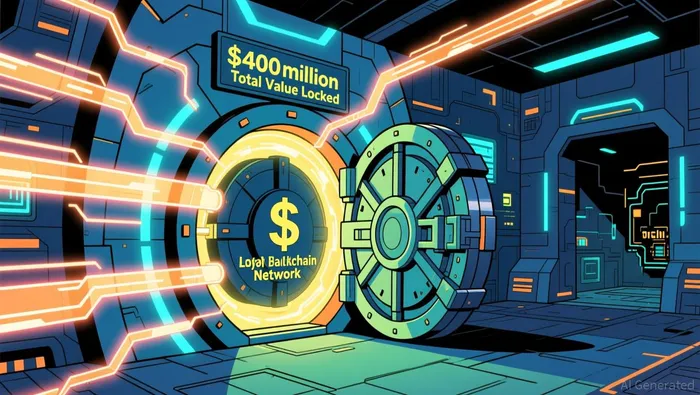
Monad (MON) surged approximately 27 percent to $0.0363 following its mainnet launch, driven by intense institutional interest in its high-performance Layer-1 capabilities. The platform rapidly achieved $400 million in Total Value Locked (TVL), fueled by strategic alliances with the New York Stock Exchange and Securitize to support tokenized securities. Despite this capital influx, a disconnect exists between investment volume and actual network usage.
Daily on-chain transaction fees remain under $3,000, and the network operates at just 0.07 percent of its stated 10,000 TPS capacity. Analysts caution that current pricing assumes substantial future utility growth rather than reflecting present revenue streams. Capital appears largely driven by token rewards and speculative positioning rather than organic demand.
Investors face structural challenges as over 50 percent of MON tokens are locked until 2026, creating a significant potential supply overhang. With a market cap of approximately $322.6 million but a fully diluted valuation near $2.98 billion, the asset remains highly speculative. Additionally, the top 10 addresses control 42 percent of the supply, introducing significant centralization concerns.
Is Monad's Technical Architecture Sufficiently Differentiated?
Monad positions itself as a high-performance Layer-1 blockchain processing 10,000 transactions per second with near-zero fees. Its technical documentation reveals the use of parallel transaction execution, deferred state commitment, and optimized state storage mechanisms. While these concepts exist in other chains, their implementation in an EVM-compatible environment could provide advantages for developers seeking EthereumETH-- compatibility without sacrificing throughput.
For context, Ethereum currently processes approximately 15 to 30 TPS, while Solana's theoretical maximum exceeds 65,000 TPS. The 10,000 TPS claim represents a significant technical advancement for the sector. However, the blockchain trilemma suggests that achieving 10,000 TPS while maintaining decentralization and security requires significant architectural innovation.
The network trades at a 40 percent discount to similar high-throughput L1s based on its claimed TPS, explaining the current accumulation by sophisticated actors. Recent GitHub activity shows a 215 percent increase in commits, suggesting technical progress may have leaked to informed participants. One concern worth noting is the absence of widely available blockchain explorer data or transparent validator metrics.
What Are The Primary Risks For Investors?
A primary concern for investors is the vesting schedule, which locks more than half of the total token allocation until 2026. Historical data suggests such large unlock events often trigger downward price momentum as supply overhangs enter the market. The top 10 addresses control 42 percent of the supply, introducing significant centralization risk for the network.
The ecosystem's primary revenue contributor, Neverland, reported annualized fees of $7.88 million. The low fee-to-TVL ratio suggests reliance on token incentives. If initial incentives wane, the platform will face a real test in maintaining liquidity.
Over 50 percent of the MON token supply is locked until scheduled unlocks in 2026, which can exert downward pressure on prices. Centralization is another concern, with the top 10 addresses holding 42 percent of circulating tokens. Low on-chain fee generation raises questions about the network's real usage, implying that capital may be motivated by token incentives rather than organic activity.
How Does Monad Compare To The Broader Market?
At a $393.9 million market cap, Monad occupies an interesting middle ground in the Layer-1 competitive landscape. The volume-to-market-cap ratio of 43.9 percent suggests substantial liquidity and active trading interest rather than thin, volatile markets. This ratio, combined with consistent price strength across diverse fiat currencies, indicates coordinated global demand rather than isolated regional speculation.
Daily active addresses are modest at 12,400, representing only 0.8 percent of Ethereum's activity. The success of Monad will depend on the actual adoption of its network capabilities by developers and users post-launch. While the broader market remains in a state of extreme fear, historical patterns suggest potential rallies for high-performance assets.
The market appears to be pricing in optionality rather than proven utility, with the Fear & Greed Index sitting at 9, indicating market caution despite the recent price surge. To accelerate ecosystem expansion, Monad has acquired the developer tooling project Ponder and its team. Institutional engagement is further supported by MON/USDT listings on OKX and partnerships with the New York Stock Exchange and Securitize.

Blending traditional trading wisdom with cutting-edge cryptocurrency insights.
Latest Articles
Stay ahead of the market.
Get curated U.S. market news, insights and key dates delivered to your inbox.


AInvest
PRO
AInvest
PRO



Comments
No comments yet