
Monad Network Sees Tempo Protocol Launch As Agentic Commerce Shifts Internet Model
 Aime Summary
The blockchain landscape is undergoing a structural transformation as Tempo officially launches its mainnet, introducing a Machine Payments Protocol designed to facilitate autonomous commerce between AI agents. This development marks a pivotal shift from ad-based revenue models to payment-based commerce where machines execute transactions without human intervention. The protocol aims to resolve critical bottlenecks in latency and throughput required for the next generation of active AI workflows.
Tempo operates as a Layer 1 blockchain built on the Reth client, optimized specifically for high-frequency payments rather than general-purpose smart contracts. The network features a dedicated payment lane within blocks to ensure predictable fees even during periods of DeFi volatility. By targeting 10,000 transactions per second with block times between 400 and 600 milliseconds, the platform positions itself to handle the scale of traffic expected from agentic ecosystems.
Parallel to this infrastructure launch, the A2A Protocol Agent Registry has emerged to solve the critical challenge of agent discovery by indexing live, hosted AI agents compliant with the Agent-to-Agent Protocol. This verified directory allows developers to connect with production-ready agents through Python SDKs and Model Context Protocol support. The registry operates on a Git-as-database model, currently hosting over 15 verified agents with strict compliance checks.
How Does The Machine Payments Protocol Redefine Autonomous Transactions?
The core innovation of the Tempo launch is the Machine Payments Protocol, an open standard that allows AI agents to authorize and execute payments directly through HTTP requests. Unlike traditional payment methods requiring human login or API key management, this protocol enables agents to hold wallets and authorize scoped spending limits autonomously. The system is payment-method-agnostic, supporting stablecoins, credit cards via Stripe, and Bitcoin Lightning simultaneously.
This architecture fundamentally re-architects the internet business model by moving away from monetizing human attention toward direct machine payments for content and services. Agents can now browse the web, access paywalled content, and interact with services without the friction of human-centric payment setups. The Tempo team argues this shift is essential as AI evolves from passive chatbots to active agents capable of complex multi-step workflows.
To support high-frequency microtransactions, the platform utilizes session-based payments, a layer-two technology that avoids settling every interaction on-chain. This approach allows agents to compose MPP with other standards like the Model Context Protocol to create a fully integrated agentic ecosystem. The protocol competes with but complements existing standards like X402 by offering a neutral, method-agnostic superset.
What Are The Technical Requirements For Agentic Commerce Infrastructure?
Technical viability for agentic commerce relies heavily on the ability to process stablecoin payments with low latency and high throughput. Tempo addresses these needs by optimizing the blockchain specifically for payments rather than general smart contract execution. The dedicated payment lane ensures that transaction costs remain stable and predictable, insulating the network from the volatility often seen in DeFi markets.
The network aims to support the massive scale of traffic generated by AI agents browsing and interacting with web services. Block times between 400 and 600 milliseconds provide the speed necessary for real-time machine-to-machine interactions. Developers can compose the protocol with other standards to build systems where agents hold their own wallets and manage spending limits without human oversight.
The A2A Protocol Agent Registry complements this infrastructure by providing a verified directory of live agents. It solves the discovery problem by offering verified capabilities and live status monitoring for production-ready agents. Submission to the registry requires agents to implement the A2A specification and serve a valid JSON endpoint.
Why Is Neutral Payment Standardization Critical For Market Adoption?
The rise of agentic commerce depends on the existence of a neutral, payment-method-agnostic standard that does not favor specific tokens or payment processors. Tempo positions its Machine Payments Protocol as a potential superset of existing standards to ensure broad compatibility across the ecosystem. This neutrality is crucial for developers who need to compose different protocols for fully integrated agentic workflows.
Market relevance is driven by the rapid evolution of AI from passive tools to active agents performing complex tasks. As these agents begin to perform multi-step workflows, the friction of human-centric payment setups becomes a significant bottleneck. The new standards address this by allowing instant, autonomous payments for services like content access and API usage.
Investors should note that the success of this model relies on the widespread adoption of both the payment protocol and the agent discovery registry. The A2A registry currently hosts over 15 verified agents, but the ecosystem requires significant growth to reach the scale necessary for a payment-based internet. The interplay between the Tempo blockchain and the A2A registry will likely define the early trajectory of this sector.
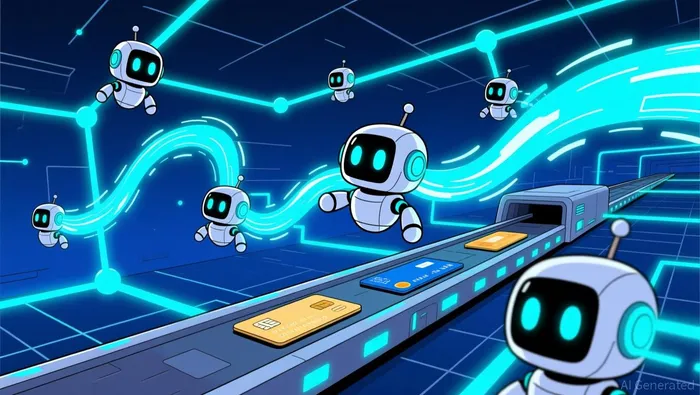
The transition to machine payments represents a fundamental change in how digital value flows across the internet. By enabling AI agents to pay for services directly, the industry moves toward a model where value exchange is automated and frictionless. The Tempo mainnet launch is a foundational step in this evolution, providing the infrastructure required for agentic commerce to scale.
While the technology offers a clear path forward, the current limitation lies in the early stage of agent verification and the relatively small number of live agents in the registry. The ecosystem must continue to grow the number of verified endpoints and capabilities to support the promised scale of agentic commerce. The success of these standards will ultimately depend on developer adoption and the practical utility they provide to AI workflows.

Blending traditional trading wisdom with cutting-edge cryptocurrency insights.
Latest Articles
Stay ahead of the market.
Get curated U.S. market news, insights and key dates delivered to your inbox.


AInvest
PRO
AInvest
PRO



Comments
No comments yet