
Monad Navigates Blockchain Evolution Amid Messari's 2026 Crypto Thesis
 Aime Summary
Blockchain Technology Evolution and Future Trends
- Blockchain technology is advancing with key protocol upgrades and enterprise adoption, including Ethereum's Pectra upgrade and Solana's AI features.
- Messari's 2026 thesis indicates crypto is shifting from speculation to real-world system integration.
- Layer 2 solutions and cross-chain integrations are enhancing global digital asset operations according to reports.
- AI agents and DePIN revenue are emerging as major drivers of on-chain activity according to analysis.
Monad (JGGL) operates in a rapidly transforming blockchain landscape where technological innovation intersects with economic recalibration. The sector faces pivotal changes as outlined in Messari's 2026 cryptocurrency thesis, which signals a maturation beyond speculative trading. Major networks are implementing significant upgrades while new paradigms like AI-driven agents gain traction. These developments create both pressure and opportunity for layer-1 protocols including Monad.
How Is Blockchain Technology Evolving in 2026?
Blockchain infrastructure is undergoing substantial enhancements across major networks. Ethereum's upcoming Pectra upgrade focuses on security improvements and user experience refinements. SolanaSOL-- continues integrating artificial intelligence capabilities to optimize network performance and expand use cases. Cross-chain interoperability solutions are gaining prominence, enabling seamless asset transfers between different blockchain ecosystems. These technical advancements support broader institutional adoption and enterprise applications.
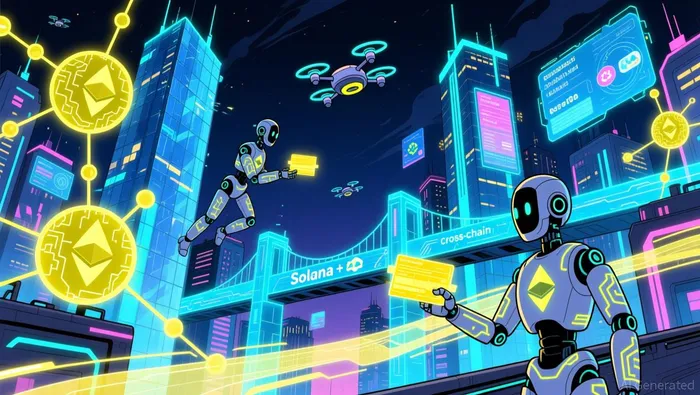
Ripple's strategic partnerships are extending the utility of digital assets like XRPXRP-- and RLUSD across payment systems according to industry reports. LayerLAYER-- 2 scaling solutions reduce transaction costs while increasing throughput for decentralized applications. This evolution positions blockchain as foundational technology for global financial infrastructure. Network effects and developer activity remain critical growth indicators across major protocols.
What Challenges Do L1 Blockchains Like Monad Face?
Messari's analysis highlights structural concerns regarding layer-1 blockchain valuations according to market research. Many L1 tokens show potential overvaluation relative to their actual utility and revenue generation. Economic models face sustainability questions without diverse fee mechanisms or real-world demand drivers. This creates valuation headwinds for projects like Monad that operate in the competitive L1 landscape.
The transition from speculative trading to system-level integration requires fundamental repositioning according to industry experts. Protocols must demonstrate concrete utility beyond token price appreciation to justify market positions. Monetization strategies and fee structures need reevaluation against enterprise adoption timelines. These market dynamics necessitate adaptable tokenomics for long-term viability.
What Emerging Trends Could Reshape Crypto's Future?
Artificial intelligence agents are projected to become significant on-chain participants according to Messari's research. These autonomous entities could drive substantial network activity through automated transactions and smart contract interactions. Their emergence might reshape demand patterns for blockchain resources, favoring protocols with high throughput and low latency. This represents a potential growth vector for networks like Monad.
DePIN projects are gaining attention by generating verifiable revenue from physical infrastructure services according to market analysis. Equity perpetual contracts are emerging as innovative derivatives blending traditional finance with crypto mechanisms. These developments indicate crypto's expansion into tangible economic sectors. Successful protocols will likely integrate these use cases while demonstrating sustainable fee generation beyond token issuance.
Token incentives require alignment with provable value creation in the current market phase according to industry experts. Projects focusing on real-world utility and measurable economic activity may outperform those relying solely on speculation. The convergence of blockchain with AI and physical infrastructure marks a maturation point for the industry.

Blending traditional trading wisdom with cutting-edge cryptocurrency insights.
Latest Articles
Stay ahead of the market.
Get curated U.S. market news, insights and key dates delivered to your inbox.






Comments
No comments yet