
Monad (MON) Faces Post-Launch Volatility Amid High FDV Debate
 Aime Summary
Monad's token structure with high FDV and low float has sparked debate about its sustainability and risk to retail investors, with Arthur Hayes cautioning about potential sharp downturns.
Category Labs plans to repurchase MON tokens on the open market in the first half of 2026, indicating a strategic move to manage token supply and potentially boost market confidence.
Gearbox has partnered with ChainlinkLINK-- to improve DeFi security on the Monad platform, aiming to provide more reliable and robust smart contract capabilities for developers and users.
Monad's mainnet launch on November 24, 2025, led to a 71% surge in its token price, with the current price near $0.042. This has prompted speculation about whale activity as a key driver of the price movement. Arthur Hayes, a well-known critic in the crypto space, has raised concerns about the high FDV model used by projects like Monad. According to Hayes, such structures expose retail investors to significant downside risks and could lead to sharp downturns.
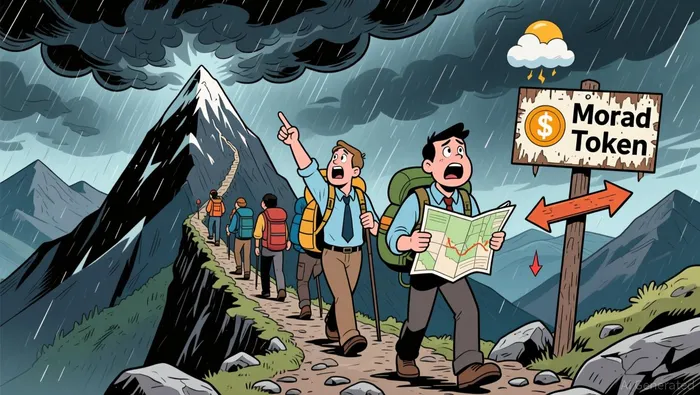
The token sale accompanying the mainnet launch exceeded its $187 million target by 115%, indicating strong initial interest in the project. However, the high FDV and low float structure may create unrealistic expectations and increased volatility. Investors are now watching whether whale activity can sustain the price or if a deeper correction is imminent.
Category Labs, the entity behind Monad, has announced plans to repurchase MON tokens on the open market in the first half of 2026. This move is part of a strategy aimed at managing token supply and potentially increasing market confidence. The company has signaled its belief in the token's long-term value and its commitment to supporting the ecosystem.
Gearbox has also joined forces with Chainlink to enhance DeFi security on the Monad platform. This partnership aims to integrate high-quality data and oracle services into the ecosystem, which will improve the reliability and functionality of smart contracts. By leveraging Chainlink's infrastructure, Gearbox and Monad hope to provide developers and users with a more secure and scalable environment for DeFi applications.
What Are the Implications of High FDV Models for Retail Investors?
High FDV (Fully Diluted Valuation) models have become a point of debate in the crypto community. These models often reflect a token's total market value based on the assumption that all tokens are in circulation, which may not be the case immediately post-launch. For projects like Monad, the high FDV and low float structure can create an environment of heightened volatility, making it challenging for retail investors to navigate the market. Arthur Hayes' concerns highlight the risks associated with such models, as they can lead to sharp price corrections and significant losses for investors who may not be prepared for the volatility.
Retail investors are increasingly aware of the risks associated with high FDV models and are taking a more cautious approach to investing in such projects. This awareness is driving demand for more transparent and sustainable tokenomics, which could shift the focus of future token projects toward more balanced and investor-friendly structures.
How Are Strategic Partnerships and Token Repurchases Affecting MON's Market Dynamics?
Strategic partnerships and token repurchase initiatives are playing a crucial role in shaping the market dynamics of the MON token. The collaboration between Gearbox and Chainlink is a prime example of how partnerships can enhance the security and functionality of a blockchain platform. By integrating Chainlink's oracle services, Gearbox and Monad are aiming to provide a more secure and robust environment for DeFi applications.
Token repurchase strategies, such as the one announced by Category Labs, are also influencing investor sentiment and market confidence. The move to repurchase MON tokens on the open market is seen as a positive signal by many investors, indicating the company's belief in the token's long-term value. This strategy could help stabilize the price and reduce volatility, which is particularly important in a market characterized by high FDV and low float structures.
The broader impact of these strategies on the MON token will depend on various factors, including market demand, investor confidence, and the overall performance of the blockchain ecosystem. As more projects adopt similar strategies, the market may see a shift toward more sustainable and investor-friendly models, which could lead to greater stability and growth in the long run.
What Trends Are Shaping the Broader Crypto Ecosystem?
The broader crypto ecosystem is showing signs of growth and innovation, driven by technological advancements, regulatory developments, and increasing institutional adoption. One notable trend is the rise of tokenized assets, particularly on platforms like SolanaSOL--, where stablecoin transfers have reached significant volumes. For instance, USDC minting on Solana has reached $24 billion in 2025, highlighting the growing importance of tokenized assets in the market.
In addition to tokenized assets, decentralized exchanges (DEXs) are also contributing to the growth of the crypto market. Hyperliquid, a decentralized exchange, has generated over $1 billion in annualized revenue with just 11 employees, demonstrating the efficiency and scalability of DEXs. The firm's lean operation model has enabled $10 billion in daily trading volume, underscoring the potential for continued growth in this sector.
Regulatory developments are also shaping the crypto landscape, with projects like RippleRLUSD-- and CardanoADA-- facing challenges and opportunities. Ripple's collaboration with TRM Labs' Beacon Network to combat crypto crime is an example of how regulatory actions can influence the direction of projects. The SEC's decision to defer Ripple's XRP-based ETFs until October highlights the importance of regulatory clarity in the crypto market.
Overall, the combination of technological innovation, regulatory developments, and market trends is creating a dynamic environment for the crypto ecosystem. As projects continue to evolve and adapt to these changes, the market is likely to see increased adoption, improved security, and greater institutional participation in the coming months.

La combinación de la sabiduría tradicional en el comercio con las perspectivas más avanzadas sobre las criptomonedas.
Latest Articles
Stay ahead of the market.
Get curated U.S. market news, insights and key dates delivered to your inbox.






Comments
No comments yet