
Monad Gains Momentum as Core Infrastructure and AI-Driven Systems Shape Financial Evolution
 Aime Summary
- Monad's relevance is tied to the growing recognition of the need for real-time financial infrastructure and AI integration.
- Legacy systems are increasingly inadequate for modern financial demands, prompting a strategic shift toward intelligent, unified architectures.
- AI frameworks like OpenClaw and DeFi security enhancements are reshaping how digital assets function and are governed.
Financial infrastructure is at a pivotal inflection point as traditional, batch-based systems prove increasingly misaligned with real-time demands driven by digital currencies, tokenization, and AI supervision according to recent analysis. This misalignment has sparked a renewed focus on the concept of an 'intelligent core'—a unified architecture designed to process and integrate data seamlessly while embedding AI capabilities by design as research shows.
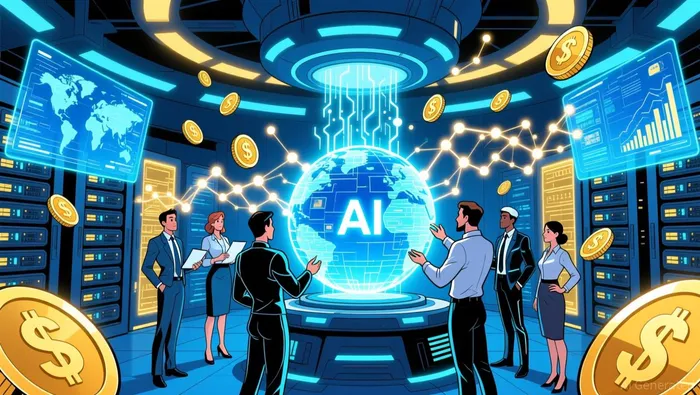
The need for such a transformation is underscored by the growing reliance on real-time settlement, AI-driven supervision, and tokenized assets across global financial ecosystems. This shift is not merely a technological upgrade but a fundamental rethinking of how data and systems interact to support modern financial operations according to industry reports.
Beyond infrastructure, the financial landscape is also evolving with the emergence of AI frameworks like OpenClaw, which allow AI agents to perform real-world tasks, and the proliferation of DeFi protocols implementing novel risk-mitigation strategies as detailed in technical documentation. These developments signal a broader trend toward automation, efficiency, and real-time execution in both traditional and decentralized finance according to industry analysis.
What is the strategic importance of an intelligent core in modern finance?
The concept of an intelligent core is gaining traction as a foundational shift in financial architecture. Unlike incremental upgrades to legacy systems, an intelligent core is designed from the ground up to support real-time processing, AI integration, and seamless data flow according to financial experts. This architecture is particularly crucial in markets where digital currencies and tokenized assets are becoming the norm.
The limitations of batch-based systems are becoming more pronounced in a landscape where financial transactions settle in seconds and AI-driven supervision is maturing. Incremental upgrades to these systems often add complexity without addressing underlying inefficiencies as industry analysis indicates. An intelligent core aims to resolve these limitations by rethinking the entire infrastructure around speed, scale, and adaptability.
This shift has implications beyond internal systems, influencing the broader financial ecosystem as institutions adopt more agile and intelligent technologies. As AI becomes embedded into core operations, the ability to process and act on data in real time will become a competitive differentiator according to market research.
How are AI and DeFi innovations reshaping digital asset ecosystems?
AI and DeFi are playing a dual role in reshaping digital asset ecosystems. On one hand, AI frameworks like OpenClaw are enabling automation and task execution beyond text generation, opening new possibilities for AI-driven workflows as noted in industry reports. On the other, DeFi protocols are responding to security challenges with new risk management tools like AaveAAVE-- Shield, which aim to prevent high-impact swaps and improve transparency according to security analysis.
OpenClaw's rapid adoption highlights its potential to streamline operations in both traditional and decentralized finance. Its open-source nature and low deployment barriers have contributed to its popularity, but its adoption also raises concerns around security, cost, and regulatory compliance as industry sources report.
Meanwhile, DeFi protocols like Aave continue to refine their risk management strategies in response to incidents such as the USR stablecoin depegging. While Aave confirmed no exposure to this event, it is implementing Aave Shield to address liquidity gaps and prevent future incidents according to protocol updates. These measures reflect a growing awareness of the need for standardized risk frameworks in DeFi as security analysis shows.
What are the key risks and limitations in the current financial infrastructure evolution?
Despite the momentum behind intelligent infrastructure and AI-driven systems, several risks and limitations persist. The deployment of AI frameworks in financial systems introduces new vulnerabilities, including the potential for autonomous decision-making to lead to unintended consequences according to regulatory warnings. Additionally, the rapid pace of innovation can outstrip regulatory frameworks, creating compliance challenges as industry reports indicate.
DeFi, while more decentralized, is not immune to systemic risks. The USR depegging incident exemplifies how a single vulnerability can destabilize a stablecoin and impact broader protocols. While Aave confirmed no exposure to this event, the incident underscores the need for stronger security measures and more transparent governance models according to security analysis.
Moreover, the liquidity dynamics in institutional markets remain a concern, with sustained outflows from US-listed BitcoinBTC-- ETFs creating downward pressure and a liquidity trap as market data shows. These outflows reflect a structural shift in institutional demand and contribute to a broader bearish trend in institutional-driven markets according to market analysis.
The evolution of financial infrastructure is driven by a combination of technological innovation, regulatory shifts, and market demand. While these changes are reshaping how digital assets are created, managed, and traded, they also introduce new challenges that require careful consideration and strategic alignment.

La combinación de la sabiduría tradicional en el comercio con las perspectivas más avanzadas sobre las criptomonedas.
Latest Articles
Stay ahead of the market.
Get curated U.S. market news, insights and key dates delivered to your inbox.


AInvest
PRO
AInvest
PRO



Comments
No comments yet