
MON Surges Amid Strategic Alliances in Tokenized Finance
 Aime Summary
Monad’s MON token has surged 15% in April 2026 due to strategic alliances with the NYSE and Securitize, aiming to develop a 24/7 platform for tokenized securities. The platform now holds $327.54M TVL and $654.42M in bridged assets, but daily on-chain fees remain under $3,000.
OKX’s listing of MON/USDT is expected to boost liquidity and price stability for the token. This move aligns with broader industry trends favoring projects with real-world applications.
The NYSE’s involvement adds institutional legitimacy and opens new avenues for market expansion. These partnerships aim to bridge traditional and digital finance, enhancing institutional credibility and market adoption.
Why is the TVL on Monad significant for investors?
Total value locked (TVL) on Monad has grown to over $355 million, with assets bridged to the chain climbing to $654.42 million. This growth is supported by strategic partnerships with the NYSE and Securitize for a 24/7 tokenized securities platform.
Despite the TVL growth, the MON token's fully diluted valuation (FDV) has dropped by 50% from its $4.7 billion peak to $2.2 billion. On-chain fee generation remains under $3,000 daily, raising concerns about real user engagement.
More than 50% of the MON token supply is locked until 2026, which could pose risks for price stability following unlocks.
What challenges does Monad face with its tokenized finance strategy?
While the TVL growth is significant, low daily fee revenue and concerns about token usage raise questions about the network's long-term sustainability and performance.
The introduction of MON/USDT on OKX is expected to improve liquidity and attract institutional interest in tokenized finance, but it may also introduce volatility during the initial trading period.
The NYSE collaboration aims to build blockchain infrastructure for tokenized securities, enhancing regulatory credibility and market adoption.
The OKX listing has introduced tighter spreads and increased trading depth, which could attract both retail and institutional investors.
What are the implications of tokenized real-world assets (RWAs) in 2026?
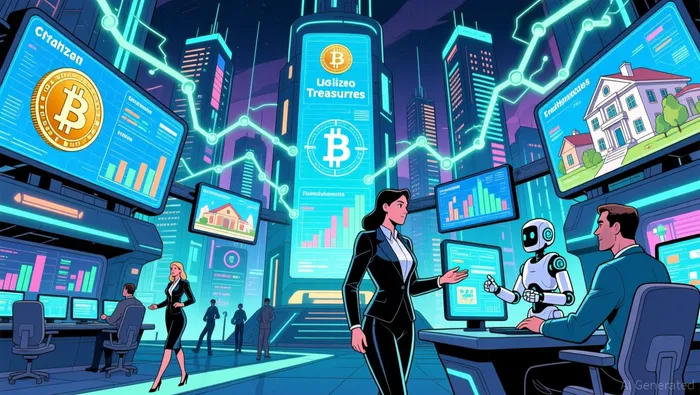
Tokenized real-world assets (RWAs) span a growing range of financial categories, each with distinct yield profiles, liquidity characteristics, risk structures, and regulatory treatment. Major categories in 2026 include US Treasuries, equities and ETFs, private credit, commodities (mainly gold), real estate, and bonds.
For example, tokenized US Treasuries provide high liquidity and income through accruing or rebasing tokens, while tokenized real estate offers rental yields and property appreciation but is illiquid and subject to valuation risks.
These insights help investors evaluate which RWA categories align with their risk-return preferences.
Institutional support and real-world applications are crucial for the adoption and success of tokenized assets in 2026.
The NYSE and Securitize partnerships aim to develop a 24/7 platform for tokenized securities, addressing growing demand for blockchain-based financial instruments.

Blending traditional trading wisdom with cutting-edge cryptocurrency insights.
Latest Articles
Stay ahead of the market.
Get curated U.S. market news, insights and key dates delivered to your inbox.


AInvest
PRO
AInvest
PRO



Comments
No comments yet