
MON AI-Driven Blockchain Upgrades and Agent Economy Innovations
 Aime Summary
Monad hosted an AI Hackathon to showcase projects like Anime AI Studio and AgentVerse, demonstrating how AI can perform autonomous on-chain operations. The project executed a hard fork to improve scalability and security, temporarily halting deposits and withdrawals, and launched the Nitro accelerator funding initiative according to reports. zerohash integrated support for Monad and USDC.Monad, offering partners scalable, high-speed infrastructure for stablecoin-powered payments and global commerce as documented.
Monad hosted an AI Hackathon to accelerate the integration of artificial intelligence with blockchain technology, featuring projects like Anime AI Studio and AgentVerse. These applications demonstrated how AI agents can perform autonomous on-chain operations, including creating animated media and facilitating machine-to-machine interactions. The event attracted a wide range of developers and infrastructure partners, highlighting growing enthusiasm for AI-powered blockchain applications.
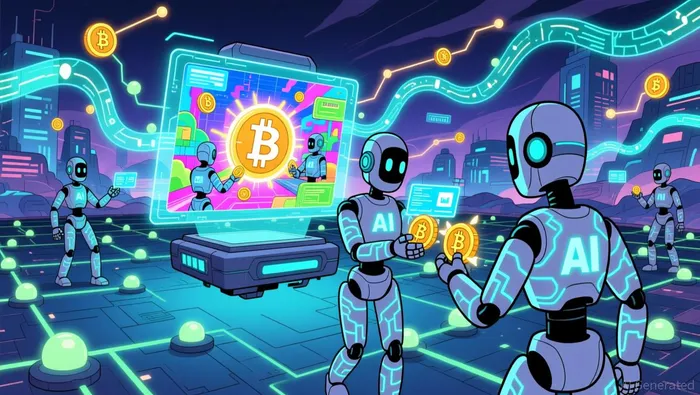
Winning projects from the AI Hackathon presented real-world applications for decentralized computing and agent code management. The event underscored the transformative role of AI in the blockchain sector and received institutional support, including a prize pool exceeding $40,000.
To enhance its AI capabilities, Monad executed a hard fork to improve scalability and introduce new features, temporarily pausing deposits and withdrawals. This upgrade is part of a broader strategy to foster the AI agent economy, with a focus on autonomous trading and decentralized systems. The hard fork was accompanied by the launch of the Nitro accelerator initiative, offering up to $500,000 in funding for new crypto projects within the ecosystem.
The project also launched the AI Blueprint Program in December 2025, institutionalizing its focus on decentralized reasoning networks and autonomous agent clusters. This allows AI developers to treat crypto networks as essential infrastructure rather than speculative assets.
How is Monad advancing the AI agent economy?
Monad is advancing the AI agent economy through its AI Hackathon, network upgrades, and infrastructure initiatives. The Rebel in Paradise AI Hackathon concluded on March 21, 2026, with major LLM vendors participating and demonstrating practical applications of Monad's architecture in areas like decentralized cloud computing and agent code management.
The hard fork executed alongside the hackathon improved scalability and security, supporting the development of AI agents that can operate without human intervention. This addresses key friction points in the agent economy, such as the need for high-frequency, low-latency interactions.
What role do new protocols and partnerships play in agentic commerce?
New protocols and partnerships are playing a pivotal role in shaping agentic commerce by enabling autonomous transactions and reducing friction in machine-to-machine interactions. The Tempo mainnet introduced a Machine Payments Protocol designed for autonomous commerce between AI agents, allowing agents to hold wallets and authorize scoped spending limits without human login or API key management.
zerohash's integration of support for Monad and USDC.Monad has provided partners with a high-speed, scalable blockchain underpinning for stablecoin-powered payments. This partnership simplifies global payments and commerce by abstracting technical and regulatory complexities.
The Tempo blockchain, alongside the A2A Protocol Agent Registry, is redefining the traditional internet business model by shifting the focus from human attention to machine-based commerce. This infrastructure supports the evolution of AI from passive tools to active agents capable of executing complex workflows.
What are the implications for future blockchain infrastructure and adoption?
The integration of AI with blockchain infrastructure has significant implications for the future of decentralized systems and adoption. AI agents are emerging as a new user base for crypto, as they lack the ability to open traditional bank accounts but can interact with decentralized systems.
Coinbase's x402 protocol allows AI agents to charge and pay for services without needing APIs or credit cards, using crypto wallets as universal keys for accessing services. This reduces friction in micro-payments and is supported by major platforms like AWS, Alchemy, and Messari.
The broader industry is adapting to this shift, with companies like MoonPay and Paradigm focusing on 'agent-first' product design. Stablecoins are also being considered as a natural fit for AI-driven micro-payments due to their low transaction costs.
The success of Monad's AI Hackathon, hard fork, and other initiatives demonstrates the project's commitment to fostering a dynamic ecosystem for AI-powered on-chain activities. These developments are driving significant innovation and reshaping the future of finance and commerce through autonomous agents and decentralized systems.

Blending traditional trading wisdom with cutting-edge cryptocurrency insights.
Latest Articles
Stay ahead of the market.
Get curated U.S. market news, insights and key dates delivered to your inbox.


AInvest
PRO
AInvest
PRO



Comments
No comments yet