
Molson Coors' Q1 Earnings Miss: Navigating Strategic Adjustments in a Shifting Beverage Landscape
The first quarter of 2025 brought sobering results for Molson Coors Beverage Company (MCBC), with a significant earnings miss that underscores the challenges facing the global beverage industry amid shifting consumer preferences and macroeconomic headwinds. While the company has unveiled strategic adjustments to address these pressures, investors must weigh the risks of a prolonged downturn against the potential for resilience through premiumization and operational discipline.
The Numbers Tell a Troubling Story
Molson Coors reported a 11.3% year-over-year decline in Q1 net sales to $2.3 billion, driven by a 14.3% drop in financial volume and currency headwinds. Earnings were equally bleak: U.S. GAAP net income fell 41.8% to $121 million, while underlying pretax income plummeted 49.5% to $131 million. These figures reflect not just weak demand but also margin compression, as COGS per hectoliter rose 6.1% in constant currency due to inflation and volume deleverage.
The Americas segment, which accounts for 82% of sales, saw brand volume decline 7.4% in the U.S., with Canada also softening. EMEA&APAC struggled with competitive pressures, posting a 9.8% drop in brand volume. Management attributed the underperformance to declining consumer confidence, macroeconomic uncertainty, and a one-day reduction in trading days—a reminder that even minor operational shifts can amplify volatility in a pressured environment.
Strategic Adjustments: A Focus on Premiumization and Cost Control
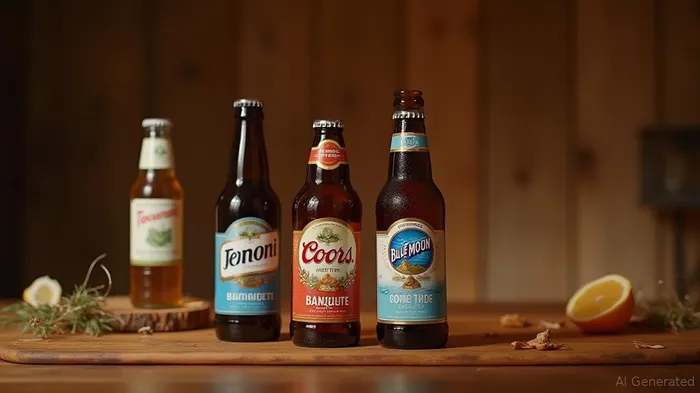
In response to these challenges, Molson Coors has doubled down on its premiumization strategy, emphasizing brands like Peroni (a key player in the craft beer boom) and Blue Moon, which management projects will enter the top 10 U.S. beer brands by volume. The company also highlighted progress in integrating its 8.5% stake in Fever-Tree, a move aimed at expanding its non-alcoholic offerings and capitalizing on the booming ready-to-drink (RTD) market.
On the cost front, Molson is reducing discretionary spending, scaling back capital projects, and accelerating hedging programs to mitigate inflation and tariff risks. While integration fees for Fever-Tree added $30 million to MG&A expenses, the company has slashed its full-year capital expenditure guidance by $100 million, signaling a pivot toward cash preservation.
Risks and Uncertainties: Leadership Transition and Macro Volatility
The most immediate concern is the impending retirement of CEO Gavin Hattersley by year-end. While leadership transitions can create uncertainty, investors will scrutinize whether Molson's board has a clear succession plan to maintain continuity during a critical period of strategic execution.
Equally pressing are external factors: geopolitical risks, trade policy shifts, and consumer confidence remain precarious. Molson's net debt-to-EBITDA ratio rose to 2.47x, a 0.18x increase from a year ago, underscoring the strain of its high leverage amid falling cash flows. The company's decision to maintain its dividend (up 6.8% to $0.47/share) while slowing share repurchases suggests a priority on liquidity over shareholder returns—a prudent but cautious stance.
Investment Implications: A Wait-and-See Approach with Selective Opportunities
For investors, Molson Coors presents a complex calculus. On one hand, its premiumization bets and non-alcoholic expansion align with long-term trends favoring quality and health-conscious beverages. Peroni's growth and the Fever-Tree partnership, if successful, could stabilize margins over time.
On the other hand, the company's Q1 underperformance and revised guidance—now projecting low single-digit declines in sales and pretax income—highlight execution risks. The beverage industry's sensitivity to consumer spending means Molson's recovery hinges on a stabilization of macro conditions and a rebound in volume metrics, particularly in the U.S. and Europe.
Conclusion: Resilience Requires Time and Discipline
Molson Coors' Q1 results are a stark reminder of the beverage industry's vulnerability to external shocks. While its strategic moves—premiumization, cost discipline, and non-alcoholic diversification—offer a path forward, the company's success will depend on navigating leadership changes, managing debt, and regaining consumer trust in a cost-conscious environment.
For investors, Molson's stock—down roughly 15% year-to-date—presents a contrarian opportunity if premium brands outperform and macro conditions stabilize. However, with the company's balance sheet stretched and near-term visibility dimmed by its revised guidance, patience may be the most prudent strategy. The beverage sector's resilience will ultimately be tested not just by Molson's adjustments but by its ability to adapt to a world where every sip is increasingly scrutinized.
Investment thesis: Hold for now, with a focus on premium brand performance and macroeconomic signals. Reiterate caution on debt but monitor closely for margin improvements in H2 2025.

Stay ahead of the market.
Get curated U.S. market news, insights and key dates delivered to your inbox.


AInvest
PRO
AInvest
PRO



Comments
No comments yet