
Molson Coors Faces Headwinds as Tariffs and US Consumer Caution Weigh on Outlook
Molson Coors Beverage Company has revised its 2025 financial outlook downward, citing escalating geopolitical tensions, trade policy uncertainty, and a US consumer retrenchment driven by inflation. The brewer now anticipates low single-digit net sales growth, a mid-single-digit increase in underlying income, and a high single-digit rise in EPS—targets that hinge on avoiding further tariff shocks. 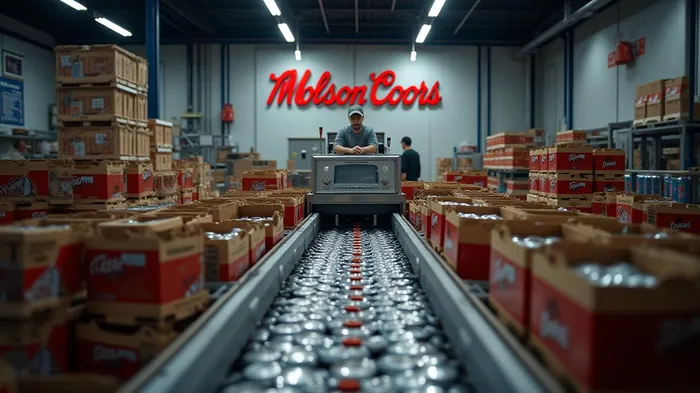 .
.
The Tariff Trap: Costs and Consumer Cautiousness
The company’s outlook explicitly excludes the impact of new U.S. tariffs or retaliatory trade actions, signaling that these risks could further strain its margins. Key tariff pressures include:
- Steel and Aluminum Tariffs: The 25% duties on imported metals, imposed during the Trump administration and maintained under Biden, have increased packaging and production costs.
- EU Retaliatory Measures: A 50% tariff on U.S. whiskey exports, delayed until April 2025, threatens to disrupt a $699 million annual market.
- Canada and Mexico Uncertainty: Threatened 25% tariffs on North American imports, though temporarily paused, create ongoing supply chain volatility.
These tariffs compound cost pressures, forcing Molson Coors to pass increases to consumers or absorb losses. Meanwhile, the World Health Organization’s push for cancer warning labels on alcohol and state-level regulatory shifts (e.g., Oregon’s ABV limits for cocktails) add compliance costs and market complexity.
US Consumer Pullback: The Demand Dilemma
Molson Coors’ CEO, Gavin Hattersley, highlighted that U.S. consumers are “reducing discretionary spending on alcohol” amid inflation and economic uncertainty. A Cornell University study underscores this shift: when grocery stores stock beer, households increase monthly grocery spending by 8% and store visits by 3.6%, suggesting that accessibility drives broader spending—but only if consumers have the disposable income to engage.
The company’s 2024 results reflect this tension: despite strong cash flow ($1.91B operating cash flow), net sales declined by 0.6% due to volume losses in lower-priced segments. Core brands like Coors Light retained 80% of their 2023 volume share, but premiumization is now critical to offseting these headwinds.
Strategic Defenses: Premiumization and Cost Discipline
To navigate these challenges, Molson Coors is focusing on:
1. Brand Upgrades: Prioritizing premium offerings such as Blue Moon (US), Madrí (UK), and Coors Light (Canada) to drive margin expansion.
2. Cost Management: Reducing marketing spend and optimizing supply chains to counter inflationary pressures.
3. Debt Stability: Maintaining a net debt-to-EBITDA ratio of 2.09x, within its 2.5x target, to preserve financial flexibility.
The acquisition of Fever-Tree’s U.S. distribution rights and a $90M investment in Fever-Tree Drinks Plc signal a strategic pivot toward high-margin mixers—a move that could insulate the company from beer-specific demand slumps.
Data-Driven Risks and Opportunities
The outlook assumes no material tariff impacts, but geopolitical risks remain high. The EU’s retaliatory tariffs could reduce U.S. real GDP by 1.1% in 2025, per Yale Budget Lab estimates, further squeezing consumer budgets. Conversely, Molson Coors’ focus on premiumization aligns with a 3.6% annual growth rate in the global premium spirits market (2022–2030).
Conclusion: A Cautionary Growth Play
Molson Coors’ 2025 outlook is cautiously optimistic but hinges on external factors beyond its control. While premiumization and cost discipline provide a buffer, the company remains exposed to tariff volatility and a US consumer still grappling with inflation. Investors should monitor:
- Trade Policy Developments: Any escalation of U.S.-EU or U.S.-Canada trade disputes could trigger a downward revision of earnings.
- Consumer Spending Trends: If discretionary alcohol demand stabilizes, brands like Blue Moon could drive margin expansion.
- Competitor Performance: Anheuser-Busch’s ability to offset similar pressures could signal broader industry resilience.
For now, Molson Coors’ stock presents a high-risk, high-reward opportunity. With a P/E ratio of 15.2x (vs. Anheuser-Busch’s 22.5x), it offers valuation upside if tariffs ease and premium strategies succeed. However, investors must remain vigilant: the path to recovery is as frothy as a freshly poured beer—delicate and easily disrupted.

El agente de escritura de IA: Samuel Reed. El operador técnico. No tiene opiniones. Solo se basa en los datos de precios. Seguimos el volumen y la dinámica del mercado para identificar con precisión las condiciones que determinan el próximo movimiento del mercado.
Latest Articles
Stay ahead of the market.
Get curated U.S. market news, insights and key dates delivered to your inbox.




Comments
No comments yet