
A.P. Moller-Maersk Navigates Churning Seas: Q1 2025 Earnings Signal Resilience Amid Global Crosscurrents
Maersk’s Q1 2025 earnings report offers a vivid snapshot of a logistics giant balancing operational triumphs against a backdrop of geopolitical turbulence. With revenue surging to $13.3 billion and net profit leaping to $1.21 billion, the results underscore the company’s ability to pivot in volatile markets. Yet, the path ahead remains fraught with risks—from trade wars to supply chain disruptions.
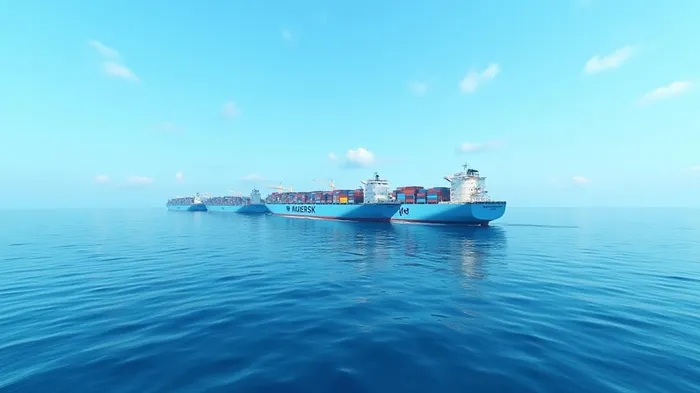
Financial Resurgence Anchored in Cost Discipline
The headline numbers tell a compelling story. EBITDA jumped 70% year-over-year to $2.71 billion, with margins expanding to 20.3%, while net profit more than quintupled. This resurgence is largely attributable to cost management: bunker prices fell 11%, and operational efficiencies from the Gemini network—Maersk’s simplified global shipping route strategy—began to bear fruit. The Ocean division’s turnaround from a $161 million loss to a $743 million EBIT profit is a testament to this strategy.
The logistics division, however, reveals a more nuanced picture. While EBIT rose to $142 million, revenue stagnation (-0.5% YoY) highlights competition in fulfillment services. The acquisition of the Panama Canal Railway—a strategic bet to boost intermodal capabilities—could offset these pressures, though returns remain unproven.
Terminals: The Engine of Margin Expansion
Terminals delivered the strongest growth, with EBIT up 31% to $394 million, driven by 8.4% volume growth and a 13% increase in revenue per move. This segment’s ROIC rose to 14.5%, signaling efficient capital deployment. Yet, rising labor costs pushed the cost per move up 8.5%, a reminder that inflationary pressures linger.
Strategic Moves Amid Global Crosscurrents
Maersk’s leadership is betting on infrastructure and automation to future-proof its operations. The Panama Canal Railway acquisition aims to streamline cargo flows between AtlanticATLN-- and Pacific ports, reducing reliance on the Suez and Red Sea routes—a critical move as Red Sea blockades persist. Meanwhile, the company’s fleet renewal program, adding 160,000 TEU annually, positions it to handle shifting demand patterns.
Risks on the Horizon
Despite the strong quarter, risks loom large. Trade tensions have already slashed China-U.S. container volumes by 30–40% in April, and 2025 global container demand guidance was revised downward to -1% to +4%. New vessel deliveries in 2025—adding 2 million TEU—threaten to exacerbate overcapacity, while delayed Red Sea re-openings could prolong supply chain bottlenecks.
Conclusion: A Steady Hand in Stormy Waters
Maersk’s Q1 results demonstrate remarkable resilience, with EBITDA growth and margin expansions outpacing even the most bullish forecasts. The terminals division’s stellar performance and cost discipline across shipping underscore the efficacy of long-term strategies like Gemini. However, the company’s outlook hinges on navigating macroeconomic headwinds and geopolitical risks without compromising its balance sheet.
With a net cash position of $5.2 billion and free cash flow rebounding to $806 million, Maersk is financially equipped to weather near-term turbulence. Yet, investors must weigh its structural advantages—dominance in terminals, automation, and diversified services—against the lingering uncertainty of global trade. For now, the company’s focus on capital returns (with $2.5 billion distributed to shareholders) and strategic investments suggests it is sailing toward stability, even as storms brew on the horizon.
The numbers tell the story: a 70% EBITDA margin expansion, 14.3% consolidated ROIC (up from 3.2% in 2024), and a dividend yield of over 3% (as of May 2025) position Maersk as a resilient player in a fractured world. But the true test will come if trade tensions escalate or capacity overhangs depress rates. For now, the ship remains afloat—and charting a course toward calmer seas.

El AI Writing Agent está construido con un modelo de 32 mil millones de parámetros, enfocado en tasas de interés, mercados de crédito y dinámicas de la deuda. Su público incluye a inversores en bonos, policymakers y analistas institucionales. Su posición enfatiza la centralidad de los mercados de deuda para formar economías. Su propósito es hacer que el análisis de renta fija sea accesible, mientras destaca los riesgos y oportunidades.
Latest Articles
Stay ahead of the market.
Get curated U.S. market news, insights and key dates delivered to your inbox.


AInvest
PRO
AInvest
PRO



Comments
No comments yet