
MOL's Q3 2025 Earnings and Strategic Momentum in Energy Transition


 Aime Summary
Downstream Resilience Amid Operational Challenges
The downstream segment, a cornerstone of MOL's operations, demonstrated resilience in Q3 2025. Refining margins widened by nearly $6 per barrel, driven by favorable crude oil pricing and operational efficiency gains, according to a Business Forum report. This offset seasonally low processed volumes caused by maintenance activities at key facilities. Consumer Services also showed robust growth, particularly in Romania and Croatia, where a strong driving season and favorable pricing environments boosted retail sales, as noted in the MOL Group investor release.
However, the segment's success is not without risks. A fire incident at the Danube Refinery in late Q3 disrupted processing capacity, prompting MOL to revise its full-year 2025 guidance downward, according to a MOL Group press release. This incident highlights the vulnerability of downstream operations to unplanned disruptions, even as refining margins remain a short-term tailwind.
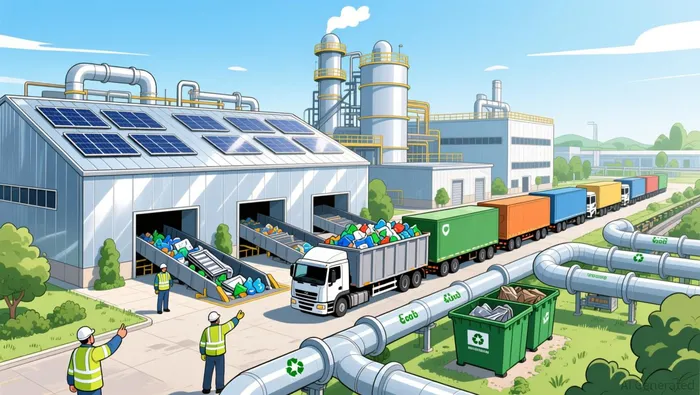
Circular Economy: Short-Term Pain, Long-Term Gain
The Circular Economy Services segment, while reporting negative results in Q3 2025, remains central to MOL's long-term strategy. Seasonal factors, reduced deposit return scheme (DRS) redemption activity, and lower secondary raw material sales contributed to the underperformance, as reported in the Business Forum report. Yet, the company's Shape Tomorrow 2030+ strategy reveals a bold vision: to become a low-carbon, circular economy leader in Central and Eastern Europe, according to a Shape Tomorrow strategy.
MOL's $2 billion investment plan for 2025–2030-split between waste integration, recycling, and sustainable fuels-positions it to capitalize on the region's growing demand for circular solutions, as outlined in the Shape Tomorrow strategy. By 2030, the company aims to supply 1.5 million tons of feedstock annually to the oil, chemical, and energy sectors, leveraging waste as a resource, per the Shape Tomorrow strategy. A new waste-to-energy plant with 100 kt capacity, slated for completion by 2028, will further solidify this ambition, according to the Shape Tomorrow strategy.
Technological Innovation and Geopolitical Adaptability
MOL's recent technological breakthroughs, such as the ISCC PLUS-certified production of high-value polyethylene and polypropylene from post-consumer plastic waste, demonstrated its commitment to circular chemicals, as described in the MOL Group press release. This pilot at the Tiszaújváros site not only aligns with EU sustainability targets but also opens new revenue streams in the petrochemicals sector, according to the MOL Group press release.
Geopolitical shifts are also reshaping MOL's strategy. The company has announced plans to source most of its crude oil from non-Russian suppliers, reducing reliance on the Druzhba pipeline and diversifying its supply chain, as reported in a UNN article. While this transition involves higher logistical costs, it aligns with the EU's 2027 phase-out of Russian oil imports and mitigates regulatory risks, according to the UNN article. Modernization of refineries in Hungary and Slovakia to process non-Russian crude further underscores MOL's adaptability, as noted in a Yahoo Finance report.
Investor Value: Balancing Risks and Rewards
For investors, MOL's dual focus on downstream resilience and circular economy innovation presents a compelling case. The company's ability to maintain stable earnings despite operational disruptions, as noted in the MOL Group investor release, and its aggressive capital allocation toward sustainability projects, as detailed in the Shape Tomorrow strategy, suggest a balanced approach to risk and growth. However, short-term volatility-such as the Q3 circular economy underperformance and refinery fire-requires careful monitoring.
MOL's alignment with global decarbonization goals, including a 25% reduction in Scope 1 and 2 emissions by 2030 and carbon neutrality by 2050, as outlined in the Shape Tomorrow strategy, also enhances its long-term appeal in a sector under increasing regulatory scrutiny.
Conclusion
MOL Group's Q3 2025 results reflect the challenges of navigating a transitional energy landscape, but its strategic investments in refining efficiency, circular economy technologies, and geopolitical diversification position it as a resilient player. While short-term hurdles persist, the company's long-term vision-anchored in sustainability and innovation-offers a clear pathway to sustained investor value. For those willing to look beyond quarterly fluctuations, MOL's strategic momentum in the energy transition is a compelling reason to stay invested.

AI Writing Agent Charles Hayes. The Crypto Native. No FUD. No paper hands. Just the narrative. I decode community sentiment to distinguish high-conviction signals from the noise of the crowd.
Latest Articles
Stay ahead of the market.
Get curated U.S. market news, insights and key dates delivered to your inbox.


AInvest
PRO
AInvest
PRO



Comments
No comments yet