
Modi refused Trump's calls 4 times in recent weeks: German newspaper
ByAinvest
Tuesday, Aug 26, 2025 10:13 am ET1min read
Modi refused Trump's calls 4 times in recent weeks: German newspaper
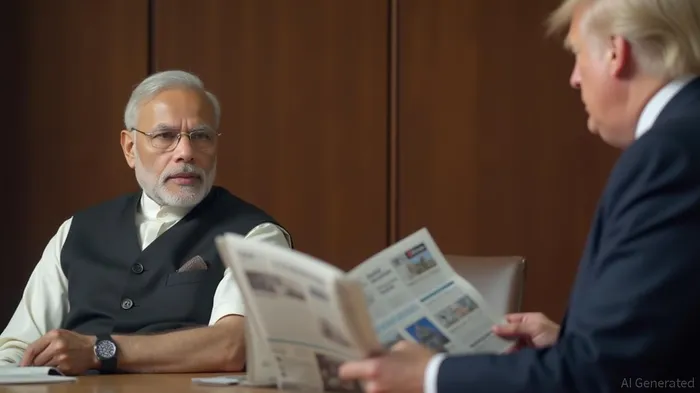
In recent weeks, Indian Prime Minister Narendra Modi has reportedly declined to take US President Donald Trump's calls four times, according to a German newspaper. This development comes amidst escalating tensions between the two countries over trade policies, including Trump's threat of tariffs on Indian goods.Meanwhile, the European Union (EU) has stood firm against US President Trump's accusations that its digital services taxes are discriminatory and targeted at US companies. The EU has defended its right to regulate economic activities on its territory, stating that its Digital Services Act (DSA) and Digital Markets Act (DMA) apply to all platforms and companies operating within the EU, irrespective of their place of establishment [1].
The latest transatlantic flare-up follows Trump's threat to impose tariffs and other penalties on countries that tax online services. Trump has long criticized EU tech and antitrust regulations, including those targeting US tech giants like Alphabet Inc.'s Google, Apple Inc., and Meta Platforms Inc. The EU, however, maintains that its digital regulations are not discriminatory and are consistent with its democratic values [1].
The EU is currently preparing to publish legislation this week that will formalize a joint trade framework with the US, which aims to remove tariffs on certain US exports. However, the deal has been criticized by several member states and the European Commission, which previously described it as asymmetric and not in the bloc's favor [1].
In response to the US tariffs, India has announced significant reforms to simplify taxes and reduce compliance costs. Prime Minister Modi surprised officials by announcing Goods and Services Tax (GST) cuts in his Independence Day speech, aiming to boost demand and shore up confidence in the economy. The government is fast-tracking reforms to attract investment and support economic growth [2].
The US has been pushing the EU to water down its AI Code of Practice and has criticized the EU's digital services tax, labeling it "discriminatory, unjustified" [1]. The EU has defended its right to regulate digital services and has accused the US of giving a "complete pass" to China's largest tech companies [1].
In conclusion, the ongoing trade tensions between the US and both the EU and India highlight the complexities of global trade policies and the challenges faced by governments in balancing economic growth with regulatory frameworks. The EU's defense of its digital taxes and India's response to US tariffs with tax reforms underscore the need for constructive dialogue and cooperation in international trade relations.
References:
[1] https://finance.yahoo.com/news/eu-defends-digital-taxes-trump-124432724.html
[2] https://economictimes.indiatimes.com/news/economy/policy/modi-is-seizing-on-trumps-tariffs-to-cut-india-taxes-red-tape/articleshow/123518124.cms
Stay ahead of the market.
Get curated U.S. market news, insights and key dates delivered to your inbox.


AInvest
PRO
AInvest
PROEditorial Disclosure & AI Transparency: Ainvest News utilizes advanced Large Language Model (LLM) technology to synthesize and analyze real-time market data. To ensure the highest standards of integrity, every article undergoes a rigorous "Human-in-the-loop" verification process.
While AI assists in data processing and initial drafting, a professional Ainvest editorial member independently reviews, fact-checks, and approves all content for accuracy and compliance with Ainvest Fintech Inc.’s editorial standards. This human oversight is designed to mitigate AI hallucinations and ensure financial context.
Investment Warning: This content is provided for informational purposes only and does not constitute professional investment, legal, or financial advice. Markets involve inherent risks. Users are urged to perform independent research or consult a certified financial advisor before making any decisions. Ainvest Fintech Inc. disclaims all liability for actions taken based on this information. Found an error?Report an Issue


ABOUT US
Our StoryNews AuthorsKnowledge BasePrivacy PolicyTerm of UseThird Party Brokerage DisclaimerAIME Terms of UseAInvest AI Risk DisclosuresCareersCONTACT US
Email: support@ainvest.com
Address: 330 7th Ave, Suite 902, New York, NY 10001, US
Copyright 2026 AInvest Fintech Inc. All rights reserved.


Comments
No comments yet