
MMT Token's Sudden Price Surge: Decoding Blockchain Governance and Market Sentiment Catalysts


 Aime Summary
Governance Innovation: veMMT and Deflationary Mechanisms
At the heart of MMT's recent momentum is its governance model, which introduces the vote-escrowed MMT (veMMT) framework. This mechanism allows long-term holders to lock their tokens in exchange for governance rights, fee-sharing privileges, and access to exclusive yield opportunities. By incentivizing token retention, veMMT aligns user incentives with the protocol's long-term health.
Momentum Finance has further bolstered token value through a buyback program, using 100% of protocol fees to repurchase MMT from markets. These tokens are then redistributed to veMMT stakers, Title Deed holders, and WAGMI participants, creating a deflationary cycle. According to a MEXC report, this strategy aims to reduce circulating supply while rewarding active participants, a critical factor in stabilizing price dynamics post-TGE.
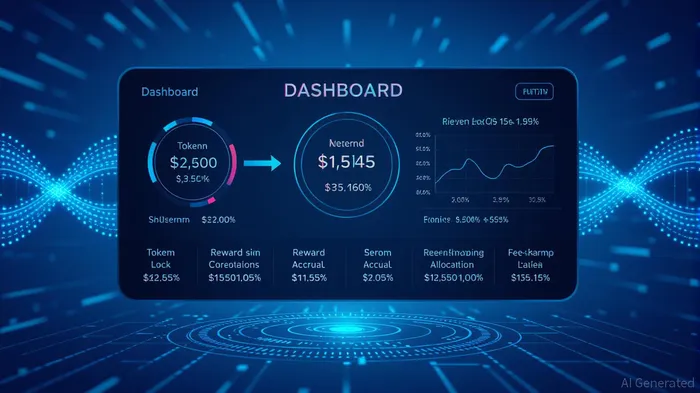
The launch of a dedicated veMMT dashboard has also enhanced transparency, enabling users to track locking periods and reward accruals in real time. Such tools notNOT-- only democratize governance but also foster trust-a rare commodity in decentralized finance (DeFi).
Market Sentiment: Institutional Backing and Cross-Chain Ambitions
Market sentiment for MMT has been fueled by a confluence of institutional interest and strategic partnerships. The token's IDO, which raised $14.5 million across all rounds, attracted heavyweights like Coinbase Ventures, OKX Ventures, and Circle, signaling confidence in its utility as the liquidity engine of the SuiSUI-- blockchain's Move ecosystem, as the MEXC report notes.
Cross-chain integration has further amplified optimism. MMT's collaboration with Wormhole and LiFi enables seamless asset transfers across multiple blockchains, addressing a key pain point in DeFi. As stated by the MEXC report, these integrations position MMT to capture a larger share of the growing cross-chain liquidity market, which is projected to expand as Sui's ecosystem matures.
Institutional participation has also played a role. While the MFS Multimarket Income Trust (NYSE:MMT) is a separate entity, the broader MMT acronym's association with blockchain innovation has likely attracted investors seeking exposure to governance-driven tokens. For instance, 1607 Capital Partners LLC's 84.7% stake increase in the traditional MMT fund in Q2 2025 may have indirectly influenced perceptions of the blockchain variant, as noted in a MarketBeat alert.
Volatility and Risks: A Cautionary Note
Despite the bullish narrative, MMT's trajectory has been anything but smooth. The token's 61% price drop in seven days post-TGE highlights the risks of speculative trading and market timing. Analysts attribute this to a combination of profit-taking and broader macroeconomic uncertainty, including interest rate volatility and regulatory scrutiny, as the MEXC report notes.
Smart contract vulnerabilities and phishing scams have also marred the token's reputation. While Momentum Finance has emphasized security audits, the decentralized nature of blockchain projects means risks remain inherent. As one expert notes, "MMT's success hinges on sustained DEX activity and adoption of its yield optimization vaults-metrics that are still unproven at scale," as the MEXC report states.
Conclusion: A Balancing Act
MMT's price surge reflects a broader trend in blockchain governance: the shift from speculative hype to utility-driven value. The veMMT model and buyback program demonstrate a commitment to aligning incentives, while cross-chain partnerships open new revenue streams. However, the token's volatility and reliance on macroeconomic conditions mean investors must weigh these innovations against the risks.
For now, MMT remains a case study in how governance innovation can catalyze market sentiment-but also a reminder that the crypto space is as much about execution as it is about vision.

Blending traditional trading wisdom with cutting-edge cryptocurrency insights.
Latest Articles
Stay ahead of the market.
Get curated U.S. market news, insights and key dates delivered to your inbox.


AInvest
PRO
AInvest
PRO



Comments
No comments yet