
The U.S. Mint Ends Penny Production: Implications for Collectors, Inflation, and the Cash Economy


 Aime Summary
The End of the Penny: A Costly Relic
The U.S. Mint's official announcement in 2025 cited the penny's production cost exceeding its face value as a primary driver for its retirement. According to a report by USA Today, , a figure that underscores the inefficiency of maintaining low-denomination coins in an era of electronic payments. The Treasury Department also noted .
For collectors, the end of penny production transforms the coin into a finite asset. The final batch of pennies, marked with an omega symbol, will be auctioned, creating a surge in demand for these "end-of-era" pieces. Pre-1982 Lincoln cents, composed of 95% copper, also gain intrinsic value over modern zinc-based pennies, making them prime candidates for numismatic investment. According to the Atlanta Fed, the market will now face new pricing dynamics.
Rounding Rules and the "Cash Inflation" Conundrum
With the penny's removal, cash transactions now face rounding adjustments. The Atlanta Fed's analysis highlights symmetric rounding rules: amounts ending in 1–2 cents round down, while 3–4 cents round up. This system, while practical, introduces a "rounding tax" for consumers. If the nickel is also phased out, , further complicating cash-based commerce.
For investors, these rounding adjustments signal a shift in consumer behavior and retail operations. Businesses may need to adjust pricing strategies to mitigate rounding impacts, potentially favoring prices ending in 0 or 5 cents. This could reduce the demand for low-denomination coins, accelerating the de-coinizing trend.
Numismatics as a Strategic Asset Class
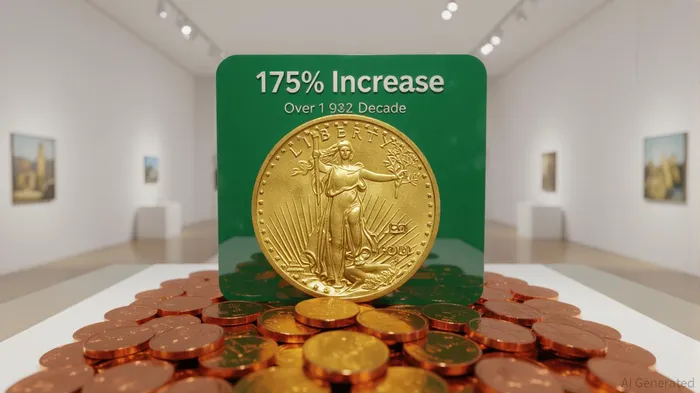
The phase-out of the penny has reignited interest in rare coins as a hedge against inflation and a store of value. The global coin collection market, , is driven by younger collectors and digital platforms. Rare coins have outperformed traditional assets in recent years: for instance, rare coins , . Historical parallels, , demonstrate the potential for numismatic assets to deliver outsized returns.
Investors should prioritize coins with scarcity, historical significance, and high-grade condition. Pre-1982 pennies, wartime-era coins, and limited-edition bullion pieces are particularly attractive. emphasize distinguishing between bullion (value tied to metal content) and numismatic coins (value tied to rarity and demand), advising collectors to leverage online marketplaces and local dealers for strategic acquisitions.
Corporate Strategies in a De-Coinizing Economy
The de-coinizing trend mirrors broader corporate strategies to optimize profitability. For example, Enthusiast Gaming's 2024 shift from low-margin video platforms to high-margin operations , illustrating how businesses prioritize efficiency over revenue growth. Similarly, Global Net Lease's $3 billion asset sales in 2024 reflect a de-leveraging strategy to reduce debt, aligning with the Mint's cost-cutting rationale. According to a financial analysis, this shift is part of a broader trend toward financial optimization.
The Future of Cash and Digital Convergence
As the U.S. moves toward a cashless society, numismatics and cash-based assets will evolve. The European Central Bank's streamlined coin distribution and Belgium's elimination of 1- and 2-cent coins offer models for efficiency. Meanwhile, blockchain authentication and digital collectibles are emerging as tools to verify provenance and enhance liquidity in the numismatic market. Investors must balance traditional strategies with technological innovation to capitalize on this hybrid landscape.
Conclusion: Positioning for the Post-Penny Era
The U.S. Mint's decision to retire the penny is notNOT-- merely a symbolic end but a catalyst for rethinking value in a digital age. For collectors, rare coins offer a tangible, inflation-resistant asset class. For businesses, rounding rules and cash adaptations will reshape retail dynamics. Investors who recognize the interplay between numismatics, cash-based assets, and macroeconomic trends will be well-positioned to thrive in a de-coinizing economy. As the final pennies enter auction, the next chapter of American monetary history-and its investment opportunities-begins.

Delivering real-time insights and analysis on emerging financial trends and market movements.
Latest Articles
Stay ahead of the market.
Get curated U.S. market news, insights and key dates delivered to your inbox.


AInvest
PRO
AInvest
PRO



Comments
No comments yet