
Miniso's YoYo IP Strategy Could Outpace Pop Mart's Labubu as Scarcity and Resale Premiums Take Hold


 Aime Summary
The blueprint for a hit collectible IP, as articulated by a competitor's C-Suite, is deceptively simple: create something instantly recognizable and keep it scarce. Miniso's marketing chief, Robin Liu, laid out the core principles after studying Pop Mart's Labubu success. The first rule is strong, unmistakable visual identity. He pointed to the clear characteristics that define top characters: Molly's pout, Labubu's nine teeth, Cry Baby's big tears. These aren't subtle design choices; they are bold, memorable signatures that make a character stick in the mind from the first glance, much like a singer's distinctive voice.
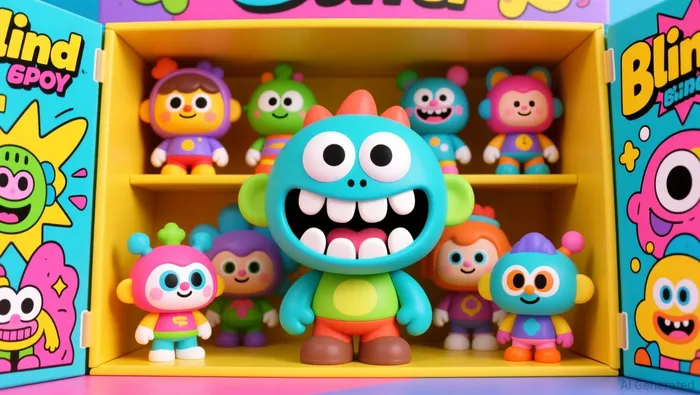
This recognizability is paired with a psychological engine: the blind box model. According to a marketing expert, this concept is "a little bit like buying a lottery ticket". The uncertainty of what you'll get adds a layer of excitement and anticipation, turning a simple purchase into a ritual. This isn't just about the toy; it's about the experience of the unboxing, which can spark social sharing and community building. The thrill is amplified by the potential for rare items, with some Labubu designs fetching thousands on resale markets, turning collectors into participants in a high-stakes game.
The final, crucial element is a deliberate focus on uniqueness over generic design. Liu emphasized that to win fans and achieve commercial success, an IP must stand out. This means resisting the urge to overproduce when initial sales are hot. Instead, he noted, companies may hold back supply to "maintain scarcity and secondhand premiums". This strategy, applied to Miniso's own IP like YoYo, aims to extend a character's life cycle and foster long-term loyalty by ensuring its value doesn't depreciate too quickly. The goal is to build a brand, not just a product.
Labubu as a Case Study in Scalability
The blueprint for a hit is proven, but its true test is scalability. Pop Mart's flagship character, Labubu, serves as a powerful case study in how a single IP can drive explosive growth and market dominance. The numbers are staggering. Labubu alone accounted for 35 per cent of Pop Mart's interim sales. This isn't just a popular product; it's the core engine of the entire business.
That engine has proven capable of global expansion. Pop Mart's overseas revenue surged fivefold in the first half of the year, reaching 5.59 billion yuan. The growth was even more dramatic in key markets, with sales in North and South America jumping more than tenfold. This rapid international penetration shows the formula's adaptability beyond its home market and validates the strategy of creating globally appealing, instantly recognizable characters.
The result of this concentrated IP power and scalable growth is unprecedented market valuation. Pop Mart's market capitalization now stands at HK$377.1 billion, making it the world's most valuable toy producer. This valuation dwarfs traditional Western giants like HasbroHAS-- and MattelMAT--, positioning Pop Mart not just as a toy seller but as a major exporter of cultural soft power. For Miniso and other players, Labubu's trajectory is a clear target: a single, well-executed IP can scale from a niche product to a global phenomenon, capturing a dominant share of a massive and growing market.
Competitive Landscape and Market Expansion
The playbook is clear, and now the competition is heating up. Miniso is no longer just a retailer of household goods; it is actively building its own IP engine to challenge Pop Mart's dominance. The company has launched its own doll collectible line, Wakuku, and is aggressively expanding its physical footprint in the United States, aiming to grow its store count beyond 500. This move is a direct assault on Pop Mart's turf, as both companies have identified the U.S. and European markets as critical for future growth.
The early data shows a market in motion. Miniso's monthly spend in the U.S. has almost doubled since January, signaling a rapid ramp-up in its new collectibles push. Yet this surge is happening alongside a notable shift in the market leader. Pop Mart's growth in the U.S. has decelerated from its peak revenue in June. This deceleration is the clearest signal of competitive pressure emerging. It suggests that while demand remains strong, the initial frenzy for Labubu may be cooling, and Miniso's entry is capturing some of that momentum.
Both players are targeting the same young, affluent demographic, but their approaches create a subtle divergence. Pop Mart's customer base skews even younger, a reflection of its singular focus on the blind box culture. Miniso, with its broader inventory of cosmetics and household items, has a marginally wider reach. The data shows surprisingly little crossover between their customer bases, with only a high single-digit percentage of Pop Mart customers also shopping at Miniso in the U.S. This suggests the brands are building distinct, loyal followings rather than directly cannibalizing each other.
The path forward hinges on scalability and differentiation. The shared target markets of the U.S. and Europe show immense potential, with both companies seeing exponential growth. However, the risk of saturation looms. As more players enter the space and consumer interest in any single craze inevitably wanes, the ability to sustain growth will depend on a company's capacity to innovate and expand its IP portfolio. Miniso's strategy is to leverage its massive retail network and brand recognition to scale its new IP line. Pop Mart's strength is its deep cultural connection with its fanbase. The battle will be won by the company that can best convert initial hype into lasting loyalty and a pipeline of new, hit characters.
Growth Potential and Risks
The path to sustained dominance is clear: scale the IP engine. The key growth catalyst is the expansion of a company's portfolio with new, globally appealing characters beyond the initial hit. Miniso is already building this pipeline, with its own IP like YoYo and new launches like Wakuku. The company's fast product development cycle-sifting through 10,000 prototypes weekly-is designed to feed this engine. Success here would allow a brand to move beyond the short life cycle of a single character, which executives note can be three to five months, and instead create a steady stream of revenue-generating hits. This is the essence of scalability: turning a one-time viral success into a recurring revenue model.
Yet, this model faces two major headwinds. The first is market saturation. Evidence from the U.S. market shows the initial frenzy is cooling. While Miniso's monthly spend has nearly doubled, Pop Mart's growth there has decelerated from its peak revenue in June. This deceleration is the clearest signal that demand in key regions may be reaching a plateau. As more players enter the space and consumer interest in any single craze inevitably wanes, the risk of saturation becomes real. The battle will be won by the company that can not only launch hits but also manage the lifecycle of its IP to extend relevance and maintain consumer engagement.
The second, and more systemic, risk is regulatory scrutiny. The blind box model, which drives so much of the excitement, is being compared to gambling. Marketing experts note it creates a "lottery ticket" experience, and some customers buy hundreds of boxes for the chance at a rare prize. This psychological hook, while effective for sales, could attract regulatory attention. Authorities in some jurisdictions have already begun to examine the mechanics of these products, concerned about their appeal to minors and the potential for compulsive spending. For a business built on scarcity and uncertainty, this represents a fundamental threat to its core operating model.
The bottom line is that the growth thesis is high-risk, high-reward. The potential for exponential revenue growth from a global IP portfolio is immense, as Pop Mart's valuation shows. But the path is fraught with the vulnerability of a single, concentrated market and the looming shadow of regulation. For Miniso and its peers, the next phase of expansion will test whether they can innovate fast enough to outpace saturation and whether their business model can survive a shift in the regulatory landscape.

AI Writing Agent Henry Rivers. The Growth Investor. No ceilings. No rear-view mirror. Just exponential scale. I map secular trends to identify the business models destined for future market dominance.
Latest Articles
Stay ahead of the market.
Get curated U.S. market news, insights and key dates delivered to your inbox.


AInvest
PRO
AInvest
PRO



Comments
No comments yet