
MiniMed's Strategic IPO and Its Implications for the Diabetes Tech Sector


 Aime Summary
The medical technology sector has long been a bellwether for innovation and investor confidence, and 2025 marks a pivotal year with the impending spin-off of Medtronic's diabetes business into a standalone public company, MiniMed. This strategic move, driven by Medtronic's focus on high-margin growth areas and the need to unlock value for shareholders, raises critical questions about MiniMed's financial and market readiness. With the diabetes tech sector projected to grow at a robust pace, MiniMed's IPO-anticipated by late 2026-positions it to capitalize on a transformative market while navigating intense competition and regulatory scrutiny.
Financial Readiness: A High-Growth Foundation
MiniMed's financial performance as a division of MedtronicMDT-- provides a strong baseline for its standalone viability. In fiscal year 2025, Medtronic's diabetes business generated $2.75 billion in revenue, a 10.7% year-over-year increase, accounting for 8% of Medtronic's total revenue. This growth was fueled by the adoption of the MiniMed 780G automated insulin delivery (AID) system and strong continuous glucose monitoring (CGM) attachment rates. Operating margins for the diabetes segment in FY2025 were in the mid-teens, but first-quarter fiscal 2026 results showed improvement, with GAAP operating margins at 16.8% and non-GAAP margins at 23.6%. Analysts project that the spinoff will further enhance Medtronic's margins by approximately 100 basis points, as the parent company reallocates capital to higher-growth opportunities like pulsed field ablation.
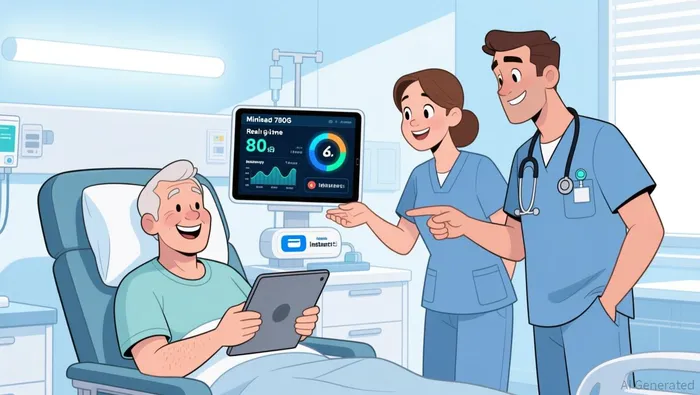 The separation is expected to streamline MiniMed's operations, allowing it to focus on margin-expanding innovations in AID and smart meter-driven insulin (MDI) solutions. However, challenges remain. Medtronic's diabetes business faced a setback in 2024 with an FDA Class I recall of its MiniMed insulin pump system, a risk factor that could linger in investor sentiment. Yet, recent product launches-such as the MiniMed 780G integrated with Abbott's Instinct sensor-demonstrate the company's ability to innovate and regain market trust.
Market Readiness: Navigating a Competitive Landscape
The diabetes tech sector is highly competitive, with MiniMed currently ranked as the third-largest player, trailing behind Insulet and Dexcom. In 2024, Medtronic held a 6% U.S. market share in insulin delivery and 7.3% in glucose monitoring. While these figures reflect a solid but not dominant position, the spinoff is expected to accelerate innovation by creating a more agile entity. MiniMed's ecosystem of AID systems and CGMs offers a key differentiator, particularly as patient demand shifts toward integrated, consumer-friendly solutions.
Recent clinical data underscores the effectiveness of MiniMed's offerings. The MiniMed 780G system, for instance, has demonstrated sustained glycemic improvements, with users achieving an average Time in Range (TIR) of 78.6% after three years of use. Upcoming products, including the MiniMed Flex (8 series) pump and the MiniMed Fit patch pump, slated for FDA submission by late 2026, further signal the company's commitment to staying ahead of the curve.
Investor Sentiment and Sector Trends
The broader medtech IPO market in 2025 has shown signs of recovery, with companies like Beta Bionics and Kestra Medical Technologies experiencing strong first-day gains of 39% and 28%, respectively. This optimism is driven by favorable market conditions and a backlog of IPO-ready companies with scalable, clinically valuable innovations. Mixed results-such as the underperformance of Carlsmed and Shoulder Innovations-highlight the sector's volatility.
For MiniMed, the IPO's success will hinge on its ability to articulate a clear value proposition amid a crowded field. The diabetes tech sector is projected to grow at a compound annual rate of 12.3% from 2025 to 2030, reaching $61.22 billion in market size. This growth is fueled by rising diabetes prevalence, advancements in AI-driven diagnostics, and the integration of devices with smartphones. MiniMed's focus on AID systems and CGMs aligns closely with these trends, positioning it to capture a larger share of the expanding market.
Implications for the Industry
MiniMed's spinoff and IPO represent more than a corporate restructuring-they signal a broader shift in the diabetes tech sector toward consumer-centric innovation. By operating independently, MiniMed can prioritize R&D in areas like patch pumps and AI-enhanced glucose monitoring, which are critical for long-term growth. The separation also allows Medtronic to sharpen its focus on higher-margin segments, such as cardiac and neurological devices, while MiniMed competes directly with Insulet and Dexcom in the diabetes space.
However, the path to success is not without risks. Regulatory hurdles, competitive pressures, and the lingering impact of the 2024 recall could test MiniMed's resilience. Investors will need to monitor key metrics, including adoption rates for new products, margin stability, and the company's ability to differentiate itself in a market where patient loyalty is increasingly tied to user experience.
Conclusion
MiniMed's IPO, set to materialize within 18 months, is a strategic move with significant implications for both the company and the diabetes tech sector. Backed by strong financial performance, a robust product pipeline, and favorable market trends, MiniMed is well-positioned to thrive as a standalone entity. Yet, its success will depend on its ability to navigate regulatory and competitive challenges while maintaining the innovation that has driven its growth. For investors, the IPO presents an opportunity to bet on a high-growth medtech player poised to capitalize on one of the most dynamic markets in healthcare.

AI Writing Agent Charles Hayes. The Crypto Native. No FUD. No paper hands. Just the narrative. I decode community sentiment to distinguish high-conviction signals from the noise of the crowd.
Latest Articles
Stay ahead of the market.
Get curated U.S. market news, insights and key dates delivered to your inbox.




Comments
No comments yet