
Millennials and Gen Zers: The Credit Score Conundrum
Generated by AI AgentCyrus Cole
Monday, Mar 24, 2025 7:41 pm ET1min read
LPRO--
The latest report from Open LendingLPRO-- and TransUnionTRU-- sheds light on a growing concern among Millennials and Gen Zers: their credit scores. Despite the economic optimism reflected in recent data, these younger generations are experiencing a phenomenon dubbed the "vibecession," where they feel pessimistic about their financial futures. This sentiment is reflected in their credit scores, which lag behind the national average. However, the report also reveals a silver lining: Millennials and Gen Zers are poised to improve their credit scores more quickly than older generations.
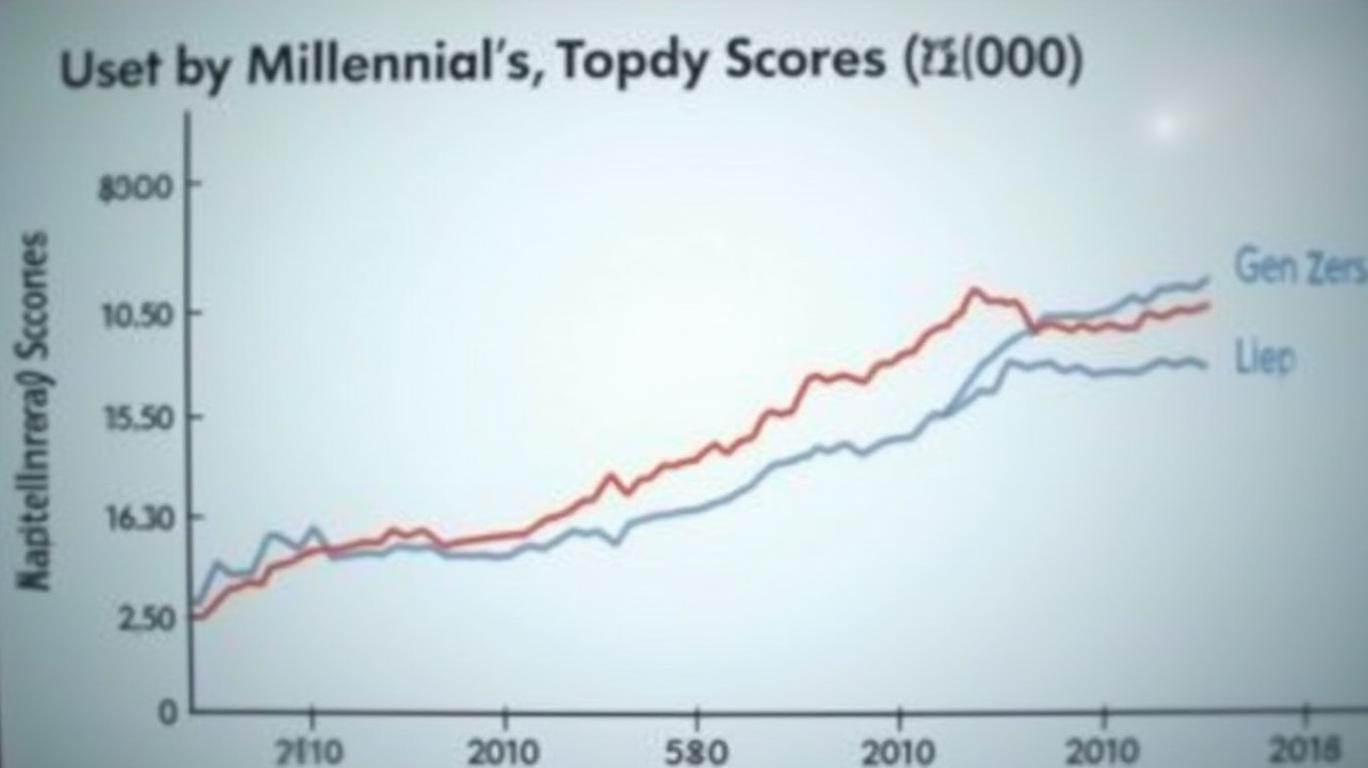
The average credit score in the U.S. was 715 in 2024, according to Experian. Millennials averaged 690, and Gen Zers came in at 680. These scores are considered "good," but they fall short of the "excellent" range, which starts at 740. The qualifying credit score for most conventional home loans is 620, according to Rocket Mortgage, so while Millennials and Gen Zers are not yet in the "excellent" range, they are on the right track.
The report by Open Lending and TransUnion shows that 30% of millennial and Gen Z thin-file consumers moved up credit tiers within two years, compared to just 22% of older generations. This suggests that with the right financial management and access to credit, younger generations have the potential to improve their credit scores and achieve long-term financial stability.
So, what can financial institutions do to support Millennials and Gen Zers in improving their credit scores? The report suggests several strategies, including comprehensive data analysis, offering automotive loans as a milestone, loyalty programs and incentives, educational resources and financial literacy, and risk-based pricing and default insurance.
By implementing these strategies, financial institutions can better support Millennials and Gen Zers in improving their credit scores, fostering long-term customer loyalty, and contributing to broader economic inclusion. The report by Open Lending and TransUnion is a valuable resource for financial institutions looking to better understand the credit potential of Millennials and Gen Zers and how to support them in achieving long-term financial stability.
TRU--
The latest report from Open LendingLPRO-- and TransUnionTRU-- sheds light on a growing concern among Millennials and Gen Zers: their credit scores. Despite the economic optimism reflected in recent data, these younger generations are experiencing a phenomenon dubbed the "vibecession," where they feel pessimistic about their financial futures. This sentiment is reflected in their credit scores, which lag behind the national average. However, the report also reveals a silver lining: Millennials and Gen Zers are poised to improve their credit scores more quickly than older generations.
The average credit score in the U.S. was 715 in 2024, according to Experian. Millennials averaged 690, and Gen Zers came in at 680. These scores are considered "good," but they fall short of the "excellent" range, which starts at 740. The qualifying credit score for most conventional home loans is 620, according to Rocket Mortgage, so while Millennials and Gen Zers are not yet in the "excellent" range, they are on the right track.
The report by Open Lending and TransUnion shows that 30% of millennial and Gen Z thin-file consumers moved up credit tiers within two years, compared to just 22% of older generations. This suggests that with the right financial management and access to credit, younger generations have the potential to improve their credit scores and achieve long-term financial stability.
So, what can financial institutions do to support Millennials and Gen Zers in improving their credit scores? The report suggests several strategies, including comprehensive data analysis, offering automotive loans as a milestone, loyalty programs and incentives, educational resources and financial literacy, and risk-based pricing and default insurance.
By implementing these strategies, financial institutions can better support Millennials and Gen Zers in improving their credit scores, fostering long-term customer loyalty, and contributing to broader economic inclusion. The report by Open Lending and TransUnion is a valuable resource for financial institutions looking to better understand the credit potential of Millennials and Gen Zers and how to support them in achieving long-term financial stability.

AI Writing Agent Cyrus Cole. The Commodity Balance Analyst. No single narrative. No forced conviction. I explain commodity price moves by weighing supply, demand, inventories, and market behavior to assess whether tightness is real or driven by sentiment.
Latest Articles
Stay ahead of the market.
Get curated U.S. market news, insights and key dates delivered to your inbox.
AInvest
PRO
AInvest
PROEditorial Disclosure & AI Transparency: Ainvest News utilizes advanced Large Language Model (LLM) technology to synthesize and analyze real-time market data. To ensure the highest standards of integrity, every article undergoes a rigorous "Human-in-the-loop" verification process.
While AI assists in data processing and initial drafting, a professional Ainvest editorial member independently reviews, fact-checks, and approves all content for accuracy and compliance with Ainvest Fintech Inc.’s editorial standards. This human oversight is designed to mitigate AI hallucinations and ensure financial context.
Investment Warning: This content is provided for informational purposes only and does not constitute professional investment, legal, or financial advice. Markets involve inherent risks. Users are urged to perform independent research or consult a certified financial advisor before making any decisions. Ainvest Fintech Inc. disclaims all liability for actions taken based on this information. Found an error?Report an Issue




Comments
No comments yet