
Millennials and the Consumer Economy: What Recent Data Means for Investors


 Aime Summary
The 2025 Consumer Landscape
The holiday season of 2025 was a mixed bag for American consumers. While record-breaking sales during Black Friday and Cyber Monday highlighted continued demand, the underlying sentiment was one of caution and financial strain. This duality is especially evident among millennials and Gen Z — generations that are reshaping how we spend, save, and shop. Understanding this shift is key for investors looking to navigate the evolving consumer landscape. Here's a closer look at the trends and data shaping this year's retail and spending behavior.
Understanding the 2025 Consumer Landscape
Inflation and economic uncertainty have kept Americans focused on essentials and value-driven purchases. Despite the $11.8 billion and $14 billion spent during Black Friday and Cyber Monday respectively, 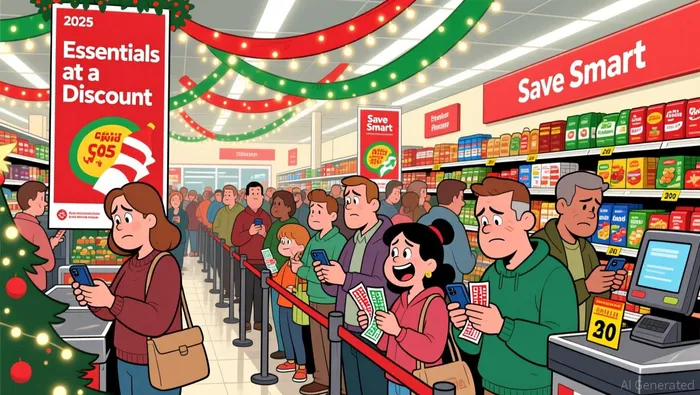 60% of U.S. shoppers reported feeling financially strained going into December. This tension between spending and caution is particularly pronounced among millennials and Gen Z, who are adjusting their habits to stretch their budgets. For example, 55% of boomers skipped Black Friday deals, but younger shoppers — especially Gen Z — were more likely to seek out value-driven alternatives.
Retailers have adapted by leaning into essential goods and low-cost strategies. CostcoCOST-- and WalmartWMT--, for instance, outperformed many of their competitors by emphasizing private-label brands and membership-based models. Costco's Kirkland Signature line continues to drive loyalty through a combination of quality and affordability, while Walmart has leveraged AI-driven personalization to attract price-conscious shoppers.
Shifting Spending and Shopping Behaviors
As of December 2025, more than 83% of consumers reported adjusting their shopping plans due to economic pressures, with inflation cited as the top driver. Millennials and Gen Z are leading this shift by opting for lower-cost alternatives to premium brands — for example, choosing Costco over more expensive options. Secondhand gifting is also rising in popularity, with 31% of Gen Z shoppers reported buying holiday gifts from thrift stores.
Price transparency is becoming a critical factor in brand loyalty. Specifically, 78% of Gen Z consumers showed higher brand loyalty when companies communicated pricing clearly. Meanwhile, cart abandonment rates increased, with 50% of consumers citing final costs — including taxes and fees — as a reason for leaving items in their carts. These trends signal a growing consumer demand for simplicity and predictability in pricing.
Retail Sector Winners and Strategic Moves
Dollar stores are seeing some of the biggest gains in 2025. Both Dollar Tree and Dollar General outperformed the stock of AI leader Nvidia, with Dollar Tree up 55% and Dollar General up 65% year-to-date. Dollar Tree reported 4.2% same-store sales growth and added 3 million new customers, with 60% of them earning over $100,000. This shift reflects the broader consumer trend of prioritizing essentials while managing tighter budgets.
In contrast, traditional retailers like Target saw same-store sales decline by 3.8%. This points to a sector-wide recalibration, with consumers favoring stores that offer frequent access to low-cost items over those relying on brand prestige.
What This Means for Investors
For investors, these trends suggest several key areas to watch. First, the demand for value-driven retail models is likely to persist, particularly in the dollar-store and membership-based retail segments. Companies that can deliver consistent, predictable pricing while maintaining quality will likely continue to see strong performance.
Second, brand loyalty is evolving. While brand recognition remains important, it's becoming secondary to pricing transparency and affordability — especially among younger generations. For example, the Qlik survey noted that 39% of consumers changed their shopping behavior due to inflation, and this shift is likely to be long-lasting.
Investors should also consider the role of personal finance and savings behavior. According to Fidelity's 2026 New Year's Financial Resolutions study, 64% of Americans are considering a financial resolution for the new year, with 44% planning to save more. Short-term savings goals are being prioritized over long-term ones — a trend that could influence consumer behavior in 2026.
Looking Ahead: Consumer Trends to Watch
The 2025 consumer landscape is marked by a mix of resilience and caution. Americans continue to spend on travel, experiences, and even hobbies, but essentials like groceries and healthcare are rising faster than incomes. Gen Z and millennials are adapting by seeking out value, shopping secondhand, and prioritizing financial planning. These behaviors reflect a generation that is both pragmatic and forward-thinking.
For retailers and financial services companies, the challenge will be to meet these evolving expectations with flexibility. Traditional lending products, for instance, are being questioned by millennials who want more adaptable financing options. This could open up opportunities for fintechs and digital-first lenders to step in with tailored solutions.
Ultimately, the story of 2025 is not just about spending — it's about how consumers are navigating a complex financial environment while trying to maintain their quality of life. For investors, staying attuned to these shifts — especially among millennials and Gen Z — will be key to identifying the next big opportunities in the consumer sector.

Delivering real-time insights and analysis on emerging financial trends and market movements.
Latest Articles
Stay ahead of the market.
Get curated U.S. market news, insights and key dates delivered to your inbox.
AInvest
PRO
AInvest
PRO



Comments
No comments yet