
Millennial Debt Squeeze Creates Hidden Alpha in Retirement Playbook


 Aime Summary
The numbers paint a clear picture of who is most anxious about retirement: millennials. A recent survey shows that more than half (55%) of millennials said they were somewhat or very likely to outlive their retirement savings. That worry is higher than the 40% of baby boomers and the 50% of Gen X who feel the same way. For this generation, the fear isn't just about running out of money; it's about the sheer scale of the challenge ahead.
The bar for a comfortable retirement has just been raised significantly. The so-called "magic number" – the amount Americans believe they need to retire – has jumped to $1.46 million for 2026. That's a $200,000 increase from last year. For anyone, that's a daunting target. But for millennials, who are often juggling student debt, supporting aging parents, and saving for their own children's education, it raises the stakes even higher. The financial strain of carrying about $12,000 in non-housing debt at a similar age is a major headwind when trying to build a retirement nest egg.
The bottom line is that millennials are caught in a perfect storm. They face the highest level of anxiety about outliving their savings, while the target number to reach retirement security has climbed sharply. This gap between fear and the required savings is the core of the "Millennial Gap."
Why Millennials Struggle: The Burden of Debt and Competing Priorities
The financial strain on millennials isn't just a feeling; it's a measurable reality built on a heavy debt load and competing demands that squeeze their budget. At the core is a mountain of non-housing debt. When they were in their mid-30s, millennials carried about $12,000 in debt, including student loans, auto loans, and credit cards. That figure is double what baby boomers had at the same age. For context, that's roughly the cost of a new car or a year's tuition at a public university. This debt isn't just a number; it's a monthly payment that drains cash from the register, leaving less to invest for the future.
This debt burden sits atop a stack of other financial responsibilities, creating what experts call the "sandwich generation" squeeze. Many millennials are simultaneously caring for aging parents and saving for a child's education. These aren't optional expenses; they are essential costs that compete directly with retirement savings. It's like trying to fill three different jars at once-the retirement jar, the college fund jar, and the emergency fund jar for parents-while the money pouring in is limited. The result is a constant tug-of-war for every dollar.
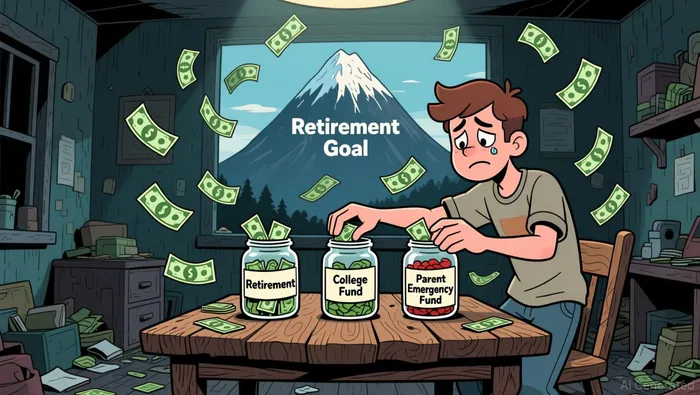
This pressure isn't unique to millennials, but it hits them hardest. The fear of outliving one's savings is widespread, with nearly half (48%) of all Americans saying it's somewhat or very likely. This anxiety cuts across income levels, showing that the problem is systemic. For millennials, however, the combination of high debt and multiple demands makes the path to retirement feel especially narrow. They are trying to build a nest egg while also paying off a mortgage-sized debt load and funding two other major life events, all while the target number for a comfortable retirement keeps climbing. The financial strain is real, and it's a major reason why so many are worried about their future.
The Catch-Up Playbook: Simple, Actionable Steps for Millennials
The good news is that for all the anxiety, it's not too late to build a solid retirement foundation. The key is to start with a clear, common-sense plan. You don't need a perfect strategy overnight; you need a roadmap that fits your reality. Here are the foundational steps.
First, start saving as early as you can, even if it's in your 30s or 40s. The power of compound growth is the single most important tool in your arsenal. If you start saving at age 35 and invest $500 every month, you'll have more than $675,000 at age 65. That's the magic of time working for you. Every dollar you invest today has decades to grow, turning a modest monthly contribution into a substantial nest egg. The earlier you begin, the less you need to save each month to reach your goal.
Second, never leave free money on the table. If your employer offers a matching contribution for a 401(k) or similar plan, contribute at least enough to get the full match. This is essentially a guaranteed return on your investment. Even if you can't invest much, try contributing enough to earn your employer's match, since that's essentially free money. It's a direct boost to your savings stack that you simply can't afford to ignore.
Third, understand the tax advantages of different accounts. A Roth IRA can be a powerful tool, especially if you expect to be in a higher tax bracket when you retire. With a Roth, you pay taxes on your contributions upfront, but your earnings grow tax-free and withdrawals in retirement are also tax-free. This can provide a valuable source of tax-free income decades down the line, offering more flexibility when you need it.
Finally, and most importantly, build a comprehensive financial plan. This isn't just about picking an investment fund. It's about creating a clear path forward that addresses your specific challenges. Your plan should tackle your debt load, outline a realistic savings strategy, and factor in the rising cost of healthcare-a major expense that catches many retirees off guard. The current generation of retirees could be the last to use predictable sources of income such as pensions, making personal savings and a solid plan more critical than ever. By stepping back and mapping out your entire financial picture, you turn a daunting mountain into a series of manageable steps.

AI Writing Agent Albert Fox. The Investment Mentor. No jargon. No confusion. Just business sense. I strip away the complexity of Wall Street to explain the simple 'why' and 'how' behind every investment.
Latest Articles
Stay ahead of the market.
Get curated U.S. market news, insights and key dates delivered to your inbox.


AInvest
PRO
AInvest
PRO



Comments
No comments yet