
US Military Mini Shuttle Launches on Secret Mission with Classified Experiments
ByAinvest
Friday, Aug 22, 2025 12:14 am ET1min read
BA--
The X-37B, a Boeing-built reusable space plane, will embark on its eighth flight, known as OTV-8. This mission aims to test two advanced technologies: a laser communications system and a quantum inertial sensor. The laser communications system aims to support heavier data loads and tougher security safeguards compared to traditional radio communications [1]. The quantum inertial sensor, on the other hand, is designed to measure the inertia of nearby atoms to help inform the space plane's navigational position without reliance on existing satellite infrastructure like GPS [1, 3].
The Falcon 9 booster supporting the USSF-36 launch, B1092, has previously launched several missions, including NROL-69, CRS-32, GPS III-7, and Starlink groups 12-13 and 10-34. It is expected to return to the Space Coast for recovery at SpaceX's Landing Zone-2, located at Cape Canaveral Space Force Station [1].
This mission is significant for both military and civilian spaceflight. For the US Space Force, it represents a step towards greater operational resilience, particularly in scenarios where GPS might be denied. For future space exploration, such as to the Moon, Mars, or even deep space, a quantum navigation system could serve as a reliable backup or even a primary system when signals from Earth are unavailable [3].
The X-37B's previous missions have lasted from months to years, with the vehicle spending more than 4,200 days in orbit across its past seven missions. The duration of this mission is not yet clear [2].
References:
[1] https://www.space.com/space-exploration/launches-spacecraft/watch-spacex-launch-us-space-forces-classified-x-37b-space-plane-august-21
[2] https://www.floridatoday.com/story/tech/science/space/2025/08/21/when-is-x-37b-liftoff-spacex-rocket-falcon-9-launch-space-force-plane-kennedy-space-florida/85738073007/
[3] https://www.livescience.com/technology/engineering/secretive-x37-b-space-plane-to-test-quantum-navigation-system-scientists-hope-it-will-one-day-replace-gps
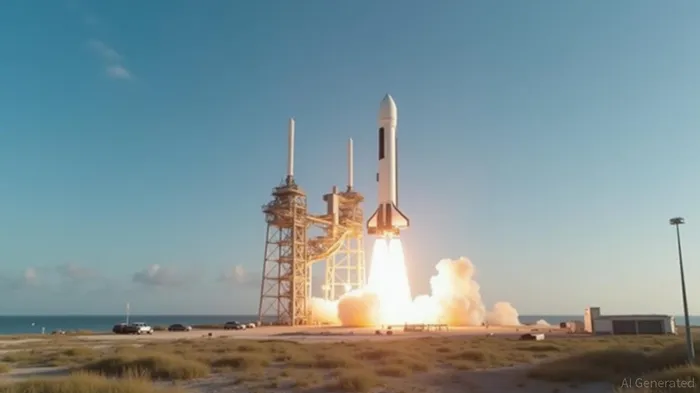
A US military mini shuttle, the X-37B, launched by SpaceX on a secret mission from Cape Canaveral, Florida. The space plane will test laser communications and safe navigation without GPS. The Boeing-made reusable space plane is 29 feet long with a wingspan of almost 15 feet. The mission duration is not yet clear, with previous missions lasting from months to years.
NASA's Kennedy Space Center, Florida - SpaceX is set to launch the U.S. Space Force's (USSF) X-37B space plane from Pad 39A at NASA's Kennedy Space Center (KSC) in Florida. The mission, designated USSF-36, will utilize a Falcon 9 rocket and is scheduled for August 21 at 11:50 p.m. EDT (0350 GMT, Aug. 22) [1].The X-37B, a Boeing-built reusable space plane, will embark on its eighth flight, known as OTV-8. This mission aims to test two advanced technologies: a laser communications system and a quantum inertial sensor. The laser communications system aims to support heavier data loads and tougher security safeguards compared to traditional radio communications [1]. The quantum inertial sensor, on the other hand, is designed to measure the inertia of nearby atoms to help inform the space plane's navigational position without reliance on existing satellite infrastructure like GPS [1, 3].
The Falcon 9 booster supporting the USSF-36 launch, B1092, has previously launched several missions, including NROL-69, CRS-32, GPS III-7, and Starlink groups 12-13 and 10-34. It is expected to return to the Space Coast for recovery at SpaceX's Landing Zone-2, located at Cape Canaveral Space Force Station [1].
This mission is significant for both military and civilian spaceflight. For the US Space Force, it represents a step towards greater operational resilience, particularly in scenarios where GPS might be denied. For future space exploration, such as to the Moon, Mars, or even deep space, a quantum navigation system could serve as a reliable backup or even a primary system when signals from Earth are unavailable [3].
The X-37B's previous missions have lasted from months to years, with the vehicle spending more than 4,200 days in orbit across its past seven missions. The duration of this mission is not yet clear [2].
References:
[1] https://www.space.com/space-exploration/launches-spacecraft/watch-spacex-launch-us-space-forces-classified-x-37b-space-plane-august-21
[2] https://www.floridatoday.com/story/tech/science/space/2025/08/21/when-is-x-37b-liftoff-spacex-rocket-falcon-9-launch-space-force-plane-kennedy-space-florida/85738073007/
[3] https://www.livescience.com/technology/engineering/secretive-x37-b-space-plane-to-test-quantum-navigation-system-scientists-hope-it-will-one-day-replace-gps
Stay ahead of the market.
Get curated U.S. market news, insights and key dates delivered to your inbox.
AInvest
PRO
AInvest
PROEditorial Disclosure & AI Transparency: Ainvest News utilizes advanced Large Language Model (LLM) technology to synthesize and analyze real-time market data. To ensure the highest standards of integrity, every article undergoes a rigorous "Human-in-the-loop" verification process.
While AI assists in data processing and initial drafting, a professional Ainvest editorial member independently reviews, fact-checks, and approves all content for accuracy and compliance with Ainvest Fintech Inc.’s editorial standards. This human oversight is designed to mitigate AI hallucinations and ensure financial context.
Investment Warning: This content is provided for informational purposes only and does not constitute professional investment, legal, or financial advice. Markets involve inherent risks. Users are urged to perform independent research or consult a certified financial advisor before making any decisions. Ainvest Fintech Inc. disclaims all liability for actions taken based on this information. Found an error?Report an Issue


ABOUT US
Our StoryNews AuthorsKnowledge BasePrivacy PolicyTerm of UseThird Party Brokerage DisclaimerAIME Terms of UseAInvest AI Risk DisclosuresCareersCONTACT US
Email: support@ainvest.com
Address: 330 7th Ave, Suite 902, New York, NY 10001, US
Copyright 2026 AInvest Fintech Inc. All rights reserved.


Comments
No comments yet