
Military Deployable Infrastructure Market Set to Reach $1.29 Billion by 2039, Driven by Modular Infrastructure, Climate Resilience, AI Integration, and Autonomous Deployment.
ByAinvest
Wednesday, Aug 27, 2025 5:46 am ET1min read
AIR--
Evolving warfare strategies, increasing rapid deployment capabilities, and increasing joint operations are the primary drivers behind this market expansion. The integration of advanced technologies such as AI and autonomous systems is also playing a pivotal role in shaping the future of military deployable infrastructure. For instance, passive radar technology, which can detect and track targets without emitting signals, is becoming increasingly important for covert surveillance and threat detection [1].
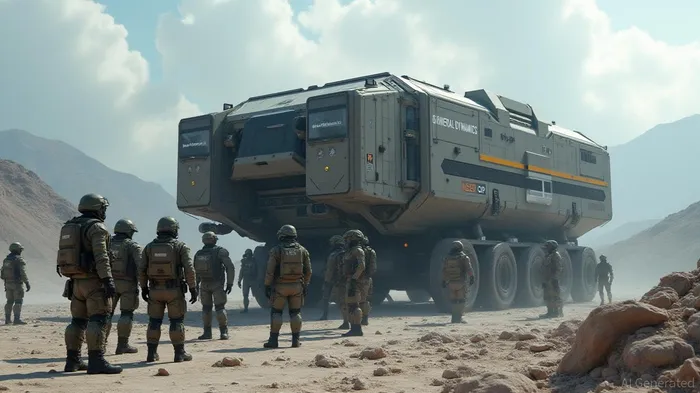
Major players in the market include General Dynamics, Rheinmetall, and AAR Corp. These companies are focusing on developing energy-efficient solutions, enhancing mobility, and integrating AI to meet the growing demands of the military. For example, General Dynamics has been working on modular construction technologies and renewable energy solutions, while AAR Corp is focusing on advanced communication systems and smart logistics [1].
However, the market's outlook is being affected by rapid changes in trade relations and tariffs globally. The report notes that the impact of tariffs, particularly between the US and other countries, is likely to raise costs for expeditionary military bases and have a broader effect on the global economy and trade [1]. Defense contractors are stockpiling essential materials and working with allied nations to diversify supply chains in response to these challenges.
In conclusion, the military deployable infrastructure market is experiencing robust growth, driven by technological advancements and evolving security concerns. Despite the challenges posed by trade tensions, the market is expected to continue its upward trajectory, supported by the integration of AI and autonomous deployment technologies.
References:
[1] https://finance.yahoo.com/news/military-deployable-infrastructure-global-industry-094100749.html
GD--
The military deployable infrastructure market is expected to reach $1.29 billion by 2039, driven by modular infrastructure, climate resilience, AI integration, and autonomous deployment. The market will grow from $0.95 billion in 2024 to $1.01 billion in 2025, and then to $1.29 billion in 2029, with a CAGR of 6.3%. The growth is attributed to evolving warfare strategies, increasing rapid deployment capabilities, and increasing joint operations. Major players include General Dynamics, Rheinmetall, and AAR Corp.
The military deployable infrastructure market is poised for significant growth, expected to reach $1.29 billion by 2029, according to a recent report [1]. This growth is driven by several key trends, including modular infrastructure, climate resilience, AI integration, and autonomous deployment. The market is anticipated to grow from $0.95 billion in 2024 to $1.01 billion in 2025, with a compound annual growth rate (CAGR) of 6.3%.Evolving warfare strategies, increasing rapid deployment capabilities, and increasing joint operations are the primary drivers behind this market expansion. The integration of advanced technologies such as AI and autonomous systems is also playing a pivotal role in shaping the future of military deployable infrastructure. For instance, passive radar technology, which can detect and track targets without emitting signals, is becoming increasingly important for covert surveillance and threat detection [1].
Major players in the market include General Dynamics, Rheinmetall, and AAR Corp. These companies are focusing on developing energy-efficient solutions, enhancing mobility, and integrating AI to meet the growing demands of the military. For example, General Dynamics has been working on modular construction technologies and renewable energy solutions, while AAR Corp is focusing on advanced communication systems and smart logistics [1].
However, the market's outlook is being affected by rapid changes in trade relations and tariffs globally. The report notes that the impact of tariffs, particularly between the US and other countries, is likely to raise costs for expeditionary military bases and have a broader effect on the global economy and trade [1]. Defense contractors are stockpiling essential materials and working with allied nations to diversify supply chains in response to these challenges.
In conclusion, the military deployable infrastructure market is experiencing robust growth, driven by technological advancements and evolving security concerns. Despite the challenges posed by trade tensions, the market is expected to continue its upward trajectory, supported by the integration of AI and autonomous deployment technologies.
References:
[1] https://finance.yahoo.com/news/military-deployable-infrastructure-global-industry-094100749.html
Stay ahead of the market.
Get curated U.S. market news, insights and key dates delivered to your inbox.
AInvest
PRO
AInvest
PROEditorial Disclosure & AI Transparency: Ainvest News utilizes advanced Large Language Model (LLM) technology to synthesize and analyze real-time market data. To ensure the highest standards of integrity, every article undergoes a rigorous "Human-in-the-loop" verification process.
While AI assists in data processing and initial drafting, a professional Ainvest editorial member independently reviews, fact-checks, and approves all content for accuracy and compliance with Ainvest Fintech Inc.’s editorial standards. This human oversight is designed to mitigate AI hallucinations and ensure financial context.
Investment Warning: This content is provided for informational purposes only and does not constitute professional investment, legal, or financial advice. Markets involve inherent risks. Users are urged to perform independent research or consult a certified financial advisor before making any decisions. Ainvest Fintech Inc. disclaims all liability for actions taken based on this information. Found an error?Report an Issue


ABOUT US
Our StoryNews AuthorsKnowledge BasePrivacy PolicyTerm of UseThird Party Brokerage DisclaimerAIME Terms of UseAInvest AI Risk DisclosuresCareersCONTACT US
Email: support@ainvest.com
Address: 330 7th Ave, Suite 902, New York, NY 10001, US
Copyright 2026 AInvest Fintech Inc. All rights reserved.


Comments
No comments yet