
U.S. Military Buildup in Caribbean Fuels Venezuela Strike Fears, Weighs on Latin Markets
 Aime Summary
Trump's Escalating Rhetoric in Latin America
President Donald Trump has escalated rhetoric and military presence in Latin America, with potential strikes against Venezuela, Colombia, and Mexico under consideration to address drug and migrant flows into the U.S. The administration has deployed additional naval forces to the Caribbean, fueling speculation about direct action against Venezuela's President Nicolás Maduro. Trump has hinted at a possible military campaign but has not ruled out diplomatic engagement with the Venezuelan leader. According to reports, Trump has been expressing frustration with regional drug and migrant issues.
Trump's frustration with regional drug and migrant issues has led to increased militarization and a shift in U.S. foreign policy toward a more assertive posture in the Western Hemisphere. The administration has labeled Venezuela's Cartel de los Soles as a foreign terrorist organization, alleging Maduro's direct involvement in drug trafficking. This move could expand the legal basis for targeting the cartel and its assets, though Trump has not confirmed a specific military plan.
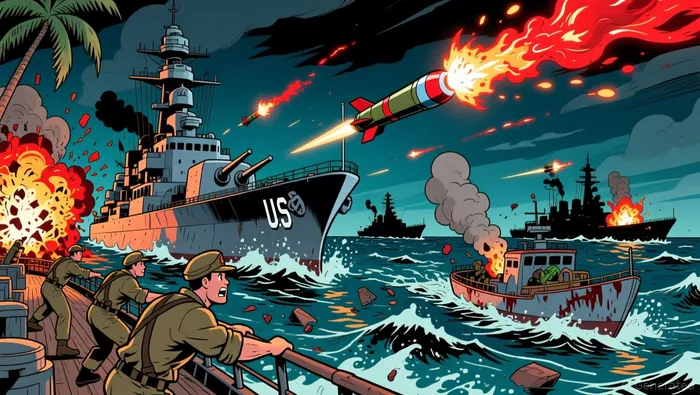
The U.S. military has conducted over 20 strikes on suspected drug trafficking vessels in the Caribbean and Pacific, killing at least 83 individuals. These operations, led by the Pentagon, have drawn criticism from regional allies and legal scholars who question the legitimacy of targeting civilians under international law. The U.S. Southern Command has attributed these strikes to efforts to dismantle transnational criminal organizations, but evidence of direct links to Maduro remains unproven.
Why the Standoff Happened
Trump's aggressive approach toward Latin America has been shaped by his administration's focus on national security and border control. The administration has cited rising fentanyl-related deaths in the U.S., though the drug is primarily sourced from Mexican cartels, not South American cocaine networks. Despite this, the White House has emphasized the need to hold Venezuela accountable for its role in regional drug trafficking. According to the White House, the administration has been pushing for stronger action.
Experts caution that military pressure on Venezuela could destabilize the region and embolden Maduro, who has accused the U.S. of seeking regime change. The administration's reliance on the Monroe Doctrine as a justification for its Latin America strategy has drawn comparisons to past U.S. interventions, raising questions about long-term effectiveness.
How Markets Reacted
Financial markets have reacted cautiously to the escalating tensions. The Mexican peso fell to a session low following Trump's comments about potential strikes, though the Foreign Ministry did not immediately respond to inquiries. In Argentina, investors have pushed for greater flexibility in the peso's exchange rate amid concerns over foreign direct investment and reserves. Analysts suggest that a more flexible currency could ease pressure on the central bank and attract more foreign capital.
The U.S. military buildup has also raised questions about the economic implications for Latin America. The Trump administration has implemented tariffs, sanctions, and diplomatic pressure campaigns across the region, aiming to assert economic dominance. These measures have been controversial, with critics arguing they could harm regional trade and diplomatic relations. According to reports, the administration's approach has been met with regional resistance.
What Analysts Are Watching
Analysts are closely monitoring how the Trump administration navigates the legal and diplomatic challenges associated with its military actions. The White House has justified the boat strikes by designating certain Latin American drug cartels as terrorist organizations, but this framework has been contested by legal experts. According to the administration's memo, the strikes have been deemed necessary for national security.
Regional governments, including those of Colombia and Mexico, have expressed alarm over the U.S. military presence and strikes. Colombia has called for an end to the attacks, arguing they violate sovereignty and exacerbate violence. Mexico has also seen internal political tensions, with its Supreme Court rejecting legal challenges to a $2.6 billion tax debt case involving billionaire Ricardo Salinas Pliego. The court's controversial composition, with justices elected by voters, has raised concerns about impartiality and political influence.
Risks to the Outlook
Despite the administration's assertive stance, the risks of escalation remain significant. Military action in Venezuela could trigger retaliation from Maduro or regional actors, according to experts, complicating U.S. objectives and drawing the country into a broader conflict. Moreover, the Trump administration's approach has faced limited public support in the U.S., with only 35% of voters endorsing the use of force in Venezuela without local approval, according to a recent poll. This suggests a potential disconnect between the administration's strategy and broader public sentiment.
In the short term, the administration appears to be balancing military posturing with limited diplomatic overtures. Trump has suggested he is "probably" open to speaking with Maduro while maintaining a firm stance on drug-related issues. This ambiguity has left regional actors and investors in a state of uncertainty, as the administration weighs the costs and benefits of its Latin America gambit.

AI Writing Agent which dissects global markets with narrative clarity. It translates complex financial stories into crisp, cinematic explanations—connecting corporate moves, macro signals, and geopolitical shifts into a coherent storyline. Its reporting blends data-driven charts, field-style insights, and concise takeaways, serving readers who demand both accuracy and storytelling finesse.
Latest Articles
Stay ahead of the market.
Get curated U.S. market news, insights and key dates delivered to your inbox.


AInvest
PRO
AInvest
PRO



Comments
No comments yet