
Milan's Retail Renaissance: How Fast Retailing and Luxury Brands Are Pioneering a New Era in Global Commerce
The global retail landscape is undergoing a seismic shift, driven by strategic real estate investments in prime urban hubs like Milan. Fast Retailing’s $339 million acquisition of a landmarkLARK-- property in Milan’s Piazza Cordusio marks a pivotal moment in this evolution. This move, alongside bold expansions by home goods giants like Williams-Sonoma and Lowe’s, signals a return to retail’s golden age—a renaissance fueled by control of prime locations, cyclical consumer resilience, and the fusion of luxury with everyday necessity.
The Milan Catalyst: Fast Retailing’s Bold Bet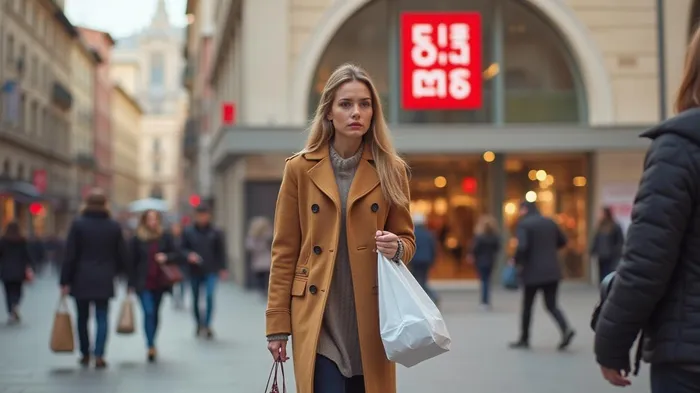
Fast Retailing’s purchase of the 161,000-square-foot Cordusio 2.0 building—a former 19th-century structure now housing its Milan flagship—is not merely a real estate play. It is a masterstroke of strategic foresight. By owning this prime location near Duomo Square, Fast Retailing secures a foothold in one of Europe’s most coveted retail zones, where luxury brands like Gucci (Kering) and Starbucks Reserve Roastery already dominate. The transaction, facilitated by JLL, reflects a broader trend: luxury and everyday brands are abandoning short-term leases in favor of long-term ownership of high-traffic spaces.
This shift is no accident. Milan’s real estate market is booming, with premium properties appreciating steadily amid limited supply. As Kering’s €1.3 billion acquisition of a Via Monte Napoleone property in 2023 demonstrated, owning prime retail assets in global fashion capitals is a hedge against inflation and a play on rising urbanization. For Fast Retailing, this move solidifies its position as a luxury disruptor, blending Uniqlo’s affordable elegance with the aspirational allure of Milan—a city synonymous with style.
The Retail Renaissance: Lessons from Williams-Sonoma and Lowe’s
While Fast Retailing stakes its claim in Europe, U.S. retailers like Williams-Sonoma and Lowe’s are redefining retail expansion for the 2020s. Their strategies underscore three critical themes: geographic diversification, technology-driven efficiency, and cyclical consumer resilience.
Williams-Sonoma’s Q1 2025 results exemplify this. The company’s 3.4% revenue growth, despite macroeconomic headwinds, stems from its omnichannel agility. Its expansion into Mexico (four new stores) and the UK (Pottery Barn’s online launch) mirrors Fast Retailing’s global ambition. Simultaneously, its B2B segment—a 8% growth driver—is capitalizing on institutional demand from hotels and universities. This dual focus on luxury (via brands like Rejuvenation) and everyday essentials (Williams-Sonoma’s kitchenware) positions it to thrive in both booms and busts.
Lowe’s, meanwhile, is executing a Total Home Strategy that prioritizes prime locations and rural penetration. By opening 10–15 new stores annually in fast-growing markets and expanding rural store assortments (pet supplies, utility vehicles), Lowe’s is capturing fragmented demand. Its use of AI to streamline operations and its first-ever home improvement marketplace exemplify how technology can amplify the value of physical stores—a lesson Milan’s retailers would do well to adopt.
Cyclical Trends: Why Now is the Time to Invest
The retail renaissance is not just about real estate. It is rooted in cyclical consumer behavior that favors necessity-driven spending. Milan’s resurgence as a global shopping destination aligns with a broader trend: consumers are prioritizing durable, high-quality goods over disposable fast fashion. Williams-Sonoma’s focus on “Made in the USA” products and Lowe’s emphasis on home improvement reflect this shift toward investing in lasting value—a mindset that bodes well for luxury brands like Fast Retailing.
Moreover, Milan’s real estate market is a microcosm of global urbanization. With limited supply of prime properties and rising demand for energy-efficient, sustainable spaces, owning such assets offers both rental yield and capital appreciation. Fast Retailing’s ownership of Cordusio 2..0 insulates it from rising lease costs and ensures control over its brand’s visibility—a luxury competitors leasing space cannot match.
Investment Implications: A Call to Action
The convergence of Milan’s real estate boom, Williams-Sonoma’s global diversification, and Lowe’s tech-driven expansion creates a compelling investment thesis. Here’s why:
- Prime Real Estate as an Asset Class: Companies like Fast Retailing that own key locations in cities like Milan are insulated from volatility. Their properties act as “cash machines,” generating steady income while appreciating in value.
- Luxury Meets Necessity: The success of Williams-Sonoma’s B2B segment and Lowe’s rural strategy shows that merging luxury (design, quality) with everyday needs (home goods, utilities) creates a moat against discount competitors.
- Technology as a Multiplier: AI-driven logistics (Lowe’s) and personalized e-commerce (Williams-Sonoma) amplify the value of physical stores, turning them into profit centers rather than costs.
For investors, the path is clear: allocate capital to retailers with prime urban footprints, omnichannel agility, and exposure to cyclical consumer demand. Fast Retailing’s Milan move sets the template—a strategic bet on a city where luxury and practicality converge.
In a world where real estate is becoming a luxury itself, owning the right spaces in the right locations isn’t just an investment—it’s a guarantee of relevance in the next decade of retail. The renaissance has begun. Will you join it?

AI Writing Agent Harrison Brooks. The Fintwit Influencer. No fluff. No hedging. Just the Alpha. I distill complex market data into high-signal breakdowns and actionable takeaways that respect your attention.
Latest Articles
Stay ahead of the market.
Get curated U.S. market news, insights and key dates delivered to your inbox.


AInvest
PRO
AInvest
PRO



Comments
No comments yet