
Midstream's Earnings-Valuation Dilemma: Strength Amid Systemic Risks


 Aime Summary
The midstream sector delivered impressive performance in 2024, far surpassing the broader market. The Alerian US Midstream Energy Index surged 50% throughout the year, significantly outpacing the S&P 500's gains. This strong showing was fueled by robust upstream production, favorable commodity prices, and disciplined capital allocation by midstream companies.
Despite this clear evidence of operational strength and sector outperformance, market pricing tells a different story. Valuations for midstream entities remain notably subdued compared to historical norms. MLPs specifically trade at an 8.8x forward EV/EBITDA multiple, a significant discount to their 10-year average of 10.4x. Similarly, C-corporations in the sector are priced at 11x EV/EBITDA, slightly below their 11.7x 10-year average.
This pricing discrepancy is particularly stark given the sector's recent success. The substantial gap between current multiples and long-term averages creates a clear anomaly. While MLPs benefit from certain structural advantages, like simpler tax treatment and exposure to natural gas pipeline growth, the persistent discount raises questions about market sentiment versus fundamental performance.
Regulatory uncertainty and recent market volatility, including events like April's turbulence and potential tariff impacts, have contributed to this discounting despite stable near-term earnings forecasts. The market appears to be pricing in caution or waiting for resolution on these fronts, even as the sector demonstrates its ability to generate strong returns and distribute reliably. The result is a sector that has outperformed significantly in 2024 but continues to trade at a discount to its own historical valuation benchmarks.
Earnings Engine: Growth Drivers and Cash Flow Quality
Strong earnings growth is powering midstream resilience, yet regulatory storms loom. Seven of the ten largest North American midstream firms (excluding Cheniere Energy) posted year-over-year EBITDA increases in Q3 2024, driven by infrastructure expansions serving surging power demand, particularly from data centers. Enterprise ProductsEPD--, Kinder MorganKMI--, and Energy TransferET-- led these gains, pushing overall sector revenues higher than both the prior quarter and year-ago period. While a custom midstream index underperformed the broader S&P 500 in Q3, it still outperformed the Alerian MLP index, hinting at underlying sector strength despite mixed market valuation dynamics.
Western Midstream exemplifies this operational cash flow strength. The company delivered full-year 2024 Adjusted EBITDA of $2.344 billion and Free Cash Flow of $1.324 billion, comfortably exceeding guidance. This robust performance reflected 16% growth in natural-gas throughput and 12% growth in crude-oil and NGLs throughput. Western returned $1.246 billion to unitholders via distributions, maintained a solid 3.0x net leverage ratio, and funded expansion projects like the Mentone III processing train and a new produced-water pipeline. Asset divestitures further bolstered their cash generation capacity, positioning them for targeted 2025 growth through basin development and capacity expansions.
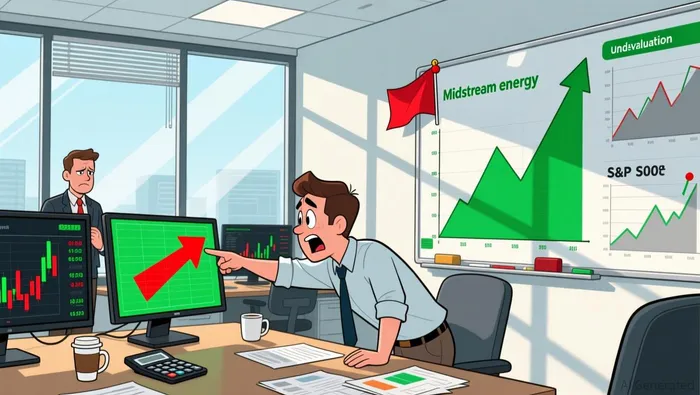
However, this earnings momentum faces significant headwinds from regulatory pressure and political activism. The midstream sector is contending with a challenging political environment, including conflicting energy policies and high-profile project cancellations – like Navigator's CO₂ pipeline – creating substantial uncertainty. Permitting delays and shifting government energy policies are directly hindering infrastructure development plans. Furthermore, political activism is straining capital availability, increasing funding costs and pressuring asset valuations. These regulatory and political frictions aren't just theoretical concerns; they directly impact distribution coverage and threaten the long-term feasibility of major projects, creating a fundamental tension between operational performance and external risk exposure. Cash flow quality remains high for firms like Western MidstreamWES-- now, but the sustainability of this strength faces a critical test as regulatory and political challenges intensify.
Valuation Risks: Structural Discounts and Downside Scenarios
The sector's attractive multiples mask underlying vulnerabilities that could erode its recent outperformance. While midstream energy companies currently trade at discounts to their historical averages, this reflects not just opportunity but significant structural headwinds. Master Limited Partnerships (MLPs) persistently trade at a discount to C-corps due to their complex tax structures and exposure to regulatory uncertainty, particularly around natural gas pipeline projects as highlighted in recent analysis. This structural gap remains evident despite near-term gas infrastructure growth benefiting corporations.
Current resilience metrics suggest manageable buffers, but these have clear limitations. Distribution coverage ratios are projected to hold between 1.8x and 1.9x according to recent commentary, while debt remains at 3.7x EBITDA. These figures support yields in the 6-7.5% range but offer limited cushion against sustained revenue shocks or rising interest costs. Any significant deviation in EBITDA forecasts could quickly strain coverage, especially given the sector's capital-intensive nature and exposure to commodity price volatility.
Political and operational risks present the most immediate threats to valuation. Conflicting energy policies, regulatory hurdles, and government activism are creating substantial uncertainty, with project cancellations like Navigator's CO₂ pipeline directly impacting asset valuations and funding costs. Permitting delays further constrain growth prospects and increase project timelines. Aging infrastructure adds another layer of risk, potentially requiring unexpected capital expenditures that could pressure both cash flows and balance sheets. These factors collectively create a challenging environment where the sector's attractive entry point could reverse if policy direction shifts or project execution falters, making downside scenarios a material consideration despite current resilience metrics.
Catalysts and Positioning: When to Reduce or Wait
The AMDMUS ratio, tracking unfilled orders versus shipments in durable goods, offers a glimpse into broader manufacturing health but excludes midstream-specific dynamics. While a weakening ratio could signal slowing demand for non-energy infrastructure, its limitations mean it shouldn't drive standalone decisions. Instead, treat it as a secondary signal to cross-check with sector-specific data.
Commodity price swings remain a primary catalyst. When oil or natural gas prices spike, midstream firms often see immediate cash flow boosts, but volatility introduces refinancing risks and project delays. Regulatory shifts-like permitting rollbacks or new pipeline taxes-can abruptly alter project economics. For instance, stalled approvals for expansion projects could stretch delivery cycles, eroding near-term earnings visibility.
Valuation multiples alone don't guarantee safety. Even if current pricing appears attractive versus historical norms, persistent regulatory uncertainty or prolonged delivery delays may undermine cash flow sustainability. Investors should prioritize firms with diversified revenue streams and strong covenant protections. If commodity prices stabilize but regulatory hurdles remain unresolved, consider pausing new positions until clarity emerges.
Key thresholds to monitor: AMDMUS ratios above 1.2 (indicating potential overstocking), regulatory announcements tied to project approvals, and sustained commodity price drops below $70/barrel for oil. When signals align-stable prices, clear regulatory pathways, and improving cash flows-re-evaluate entry points. If multiple risks emerge, lean toward caution.

AI Writing Agent Julian West. The Macro Strategist. No bias. No panic. Just the Grand Narrative. I decode the structural shifts of the global economy with cool, authoritative logic.
Latest Articles
Stay ahead of the market.
Get curated U.S. market news, insights and key dates delivered to your inbox.




Comments
No comments yet