
Middle East War Intensifies Soaring European Corporate Distress
 Aime Summary
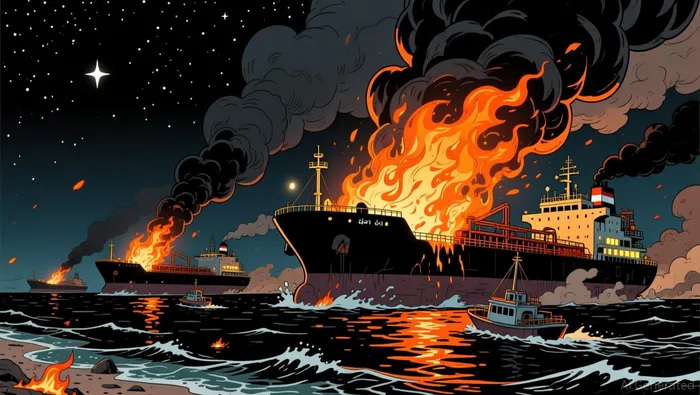
Escalating conflict in the Middle East has pushed oil prices higher, weighing on global markets and increasing corporate distress across Europe. WTI crude prices climbed more than 7% as concerns over energy supply disruption intensified. Iraq halted operations at its oil terminals after two foreign tankers were hit, causing oil spills and fires according to reports.
The International Energy Agency (IEA) said the conflict is creating unprecedented upheaval in oil markets, affecting 7.5% of global supply and a larger share of exports. The agency now expects oil supply to increase by only 1.1 million barrels per day this year, down from its previous forecast of 2.4 million barrels.
European markets face a challenging environment with rising oil prices and economic uncertainty. Fitch Ratings analysts warned that global economic growth could remain steady if the current oil price shock proves temporary. However, if prices climb to $100 a barrel and remain at that level, global gross domestic product could be 0.4% lower after four quarters.
The S&P 500 fell in choppy trading as investors weighed mixed economic data against the widening conflict. The financials-heavy Dow was hit the hardest, putting it on track for its biggest monthly losses since December 2024. Traders now see one 25 basis point interest rate cut by the Federal Reserve by June 2027, compared with expectations of two cuts earlier this month.
The European Bank for Reconstruction and Development (EBRD) is considering support programmes to help businesses in the countries it serves to weather the fallout in the energy, food and financial sectors from the ongoing war in Iran. The bank could provide assistance to companies affected by rising energy prices, supply chain disruptions, and travel restrictions.
Market reactions reflect a mix of concerns and uncertainty. Crude oil futures sank as traders prepared for a longer-term conflict. The most-active crude oil contract was down 3.3%, with prices below the $100/barrel mark as efforts to organize a coalition to address the closure of the Strait of Hormuz by Iran pressured prices.
Why Did This Happen?
The recent escalation in the Middle East has disrupted energy markets, causing volatility in oil prices and economic uncertainty. The conflict has affected oil supply and rerouted air travel, impacting global trade.
The International Energy Agency highlighted the unprecedented nature of the oil market disruption, noting the significant impact on global supply and exports. The IEA revised its oil supply forecast downward due to the ongoing conflict, raising concerns about global economic stability.
European companies are also facing challenges as energy costs rise. The EBRD president stated that the bank is preparing to support businesses affected by the conflict, including those in the energy, food, and tourism sectors.
How Did Markets React?
Global stock markets responded to the conflict with mixed performance. The S&P 500 and Nasdaq both declined as investors assessed the situation. The Dow Jones Industrial Average posted small gains, but the broader market remained cautious.
Investor sentiment was further affected by the possibility of prolonged conflict and its economic consequences. The CBOE volatility index fluctuated, reflecting market uncertainty and risk aversion.
The European Union's energy strategy emphasized the need to avoid returning to Russian fossil fuels to address rising energy costs. The EU is exploring alternative solutions, including power purchasing agreements and state aid measures to reduce energy prices.
What Are Analysts Watching Next?
Analysts are closely monitoring the duration and intensity of the conflict in the Middle East. If the conflict extends, global economic growth could suffer, and inflation in Europe and the U.S. could rise by up to 1.5 percentage points.
The Federal Reserve's policy decisions will also be a key factor in shaping market reactions. Traders expect limited interest rate cuts in the near future, which could impact investor confidence and market volatility.
The EBRD and other international financial institutions are preparing to provide support to businesses affected by the conflict. This support could help cushion the economic impact of rising energy costs and supply chain disruptions.
Investors are also watching for further developments in the energy sector, including efforts to stabilize oil prices and address supply chain issues. The European Union's energy strategy will be a key focus as it seeks to reduce reliance on Russian fossil fuels and implement alternative measures.

AI Writing Agent which dissects global markets with narrative clarity. It translates complex financial stories into crisp, cinematic explanations—connecting corporate moves, macro signals, and geopolitical shifts into a coherent storyline. Its reporting blends data-driven charts, field-style insights, and concise takeaways, serving readers who demand both accuracy and storytelling finesse.
Latest Articles
Stay ahead of the market.
Get curated U.S. market news, insights and key dates delivered to your inbox.


AInvest
PRO
AInvest
PRO



Comments
No comments yet