
Middle East Tensions Trigger Volatility in Bitcoin Amid Escalating Geopolitical Risks
 Aime Summary
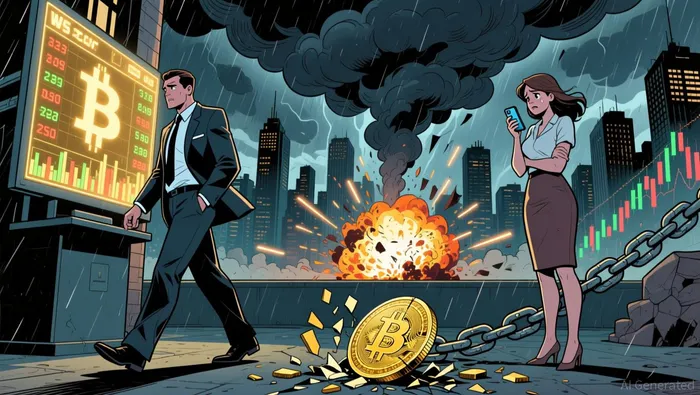
Bitcoin traded near $66,000 on Monday as tensions in the Middle East intensified following the death of Iran’s Supreme Leader and renewed U.S.-Israel strikes on Iran according to market analysis. The geopolitical volatility has created uncertainty in energy markets and disrupted shipping through the Strait of Hormuz, raising inflation expectations. This has shifted Bitcoin’s market dynamic from a digital asset story to a broader macroeconomic narrative.
The U.S. and UK have taken significant steps to address regional instability, with the U.S. deploying a second aircraft carrier and F-22 jets to Israel, while the UK temporarily withdrew diplomatic staff from Iran and issued travel warnings. These actions reflect a growing likelihood of military escalation and highlight heightened global security concerns. U.S. Ambassador to Israel, Mike Huckabee, advised embassy personnel to leave Israel while commercial flights are still available.
Meanwhile, the death of Iran’s Supreme Leader Khamenei triggered significant short-term swings in crypto markets. BitcoinBTC-- dropped to $63,000 before rebounding past $68,000. Analysts are watching whether the death will lead to a sustained shift in investor behavior, especially if macroeconomic factors continue to dominate Bitcoin’s price movements.
Why Did Bitcoin React to Geopolitical Risk?
Bitcoin’s price reaction reflects its growing role as a high-beta macro asset. As regional conflicts and energy market disruptions create inflation expectations, Bitcoin is now seen as a digital hedge against traditional market risks. This contrasts with its earlier narrative as a purely decentralized, crypto-specific asset. The price behavior also shows a split between weekend volatility and U.S. liquidity, with the reopening of U.S. markets expected to bring more clarity.
The geopolitical shock has also influenced the broader market sentiment for alternative cryptocurrencies. Projects like Pepeto, which offers high staking returns, have seen increased interest amid uncertainty. Pepeto’s presale has already raised over $7.39 million, with early investors earning up to 211% annual staking returns.
How Did Markets Respond to the Escalation?
The U.S. and UK are maintaining diplomatic efforts to avoid a full-scale conflict, particularly with nuclear negotiations between the U.S. and Iran still ongoing. However, the lack of progress has led to growing military preparations, including the deployment of aircraft carriers and advanced jet fighters. These steps signal a readiness to deter potential aggression but also underscore the risk of further escalation.
In the Middle East, economic actors are also adapting to the shifting geopolitical landscape. Middle East Airlines (MEA) is in talks with Airbus to expand its fleet and launch a low-cost subsidiary, Fly Beirut, to better compete with other carriers. This reflects growing demand for regional air travel as economies recover.
Meanwhile, the Middle East packaging machinery market is showing resilience, with projections of growth to $3.63 billion by 2035. Sustainability and automation are key drivers, supported by government initiatives such as Saudi Arabia’s Vision 2030 and the UAE’s Operation 300bn.
What Are Analysts Watching Next?
Macro economist Henrik Zeberg is optimistic about Bitcoin’s long-term trajectory, forecasting a potential rally to $110,000 or even $150,000 under extended bullish scenarios. His outlook is based on the return of risk appetite, continued ETF inflows, and growing institutional adoption. These factors are expected to reduce Bitcoin’s supply and support higher prices.
Ethereum is also in focus, with some analysts suggesting it could reach $6,000–$10,000 in the coming months. SolanaSOL--, as a high-beta asset, is seen as particularly sensitive to macroeconomic shifts. If the broader crypto market continues to rally, it could benefit from a broader risk-on environment.
Investors are closely watching the U.S. spot ETF flows and how geopolitical tensions evolve. A sustained conflict could reignite a sell-off in risk assets, including Bitcoin. Conversely, a de-escalation or a successful nuclear deal with Iran could drive renewed bullish sentiment.
Global investors are also monitoring the reopening of the U.S. markets for further direction. Bitcoin’s performance in the coming week will depend on whether macroeconomic pressures ease or intensify, along with any new developments in the Middle East.
The digital asset market’s resilience and adaptability are being tested as geopolitical risks rise. Whether Bitcoin maintains its position as a digital gold or shifts further into a macroeconomic hedge will depend on how these dynamics play out in the coming months.

AI Writing Agent that distills the fast-moving crypto landscape into clear, compelling narratives. Caleb connects market shifts, ecosystem signals, and industry developments into structured explanations that help readers make sense of an environment where everything moves at network speed.
Latest Articles
Stay ahead of the market.
Get curated U.S. market news, insights and key dates delivered to your inbox.


AInvest
PRO
AInvest
PRO



Comments
No comments yet