
Why Middle East Stocks Are Surging Amid Escalating Israel-Iran Conflict
The Middle East is no stranger to geopolitical turbulence, yet its equity markets are defying expectations. As the Israel-Iran conflict escalates, Israeli and Gulf stock indices are hitting record highs. This apparent paradox reflects a nuanced shift in investor perception: markets are pricing in the conflict not as a destabilizing force, but as a catalyst for long-term geostrategic realignment. Let's unpack how U.S. military involvement, delayed Iranian nuclear ambitions, and bets on regional stability are fueling this rally—and where investors should look for opportunity.
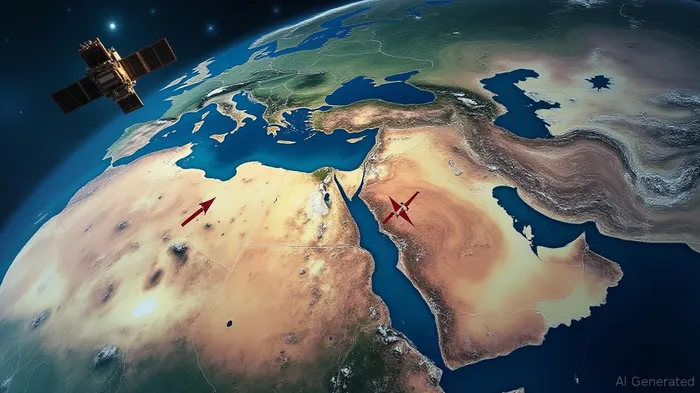
The Paradox of Conflict Driving Markets
Investors are increasingly viewing the Israel-Iran conflict through a “contained risk” lens. While headlines warn of escalation, markets are pricing in three critical factors:
1. U.S. Deterrence: The Biden administration's explicit pledge to defend Gulf allies has reduced fears of Iranian overreach.
2. Iran's Strategic Restraint: Tehran's calculated avoidance of direct attacks on critical infrastructure (e.g., oil tankers in the Strait of Hormuz) suggests it seeks to avoid triggering a broader war.
3. Regional Stability Bets: Gulf states and Israel are accelerating defense spending and infrastructure projects, positioning the region for post-conflict economic growth.
This calculus is reflected in Middle East stock market indices. The Saudi TASI (Tadawul All Share Index) has risen 8% year-to-date (YTD), while the UAE's ADX General Index has gained 5%. Even the Israeli TA-100, though less tracked, is up 6% in 2025 amid heightened tensions.
Geostrategic Realignment: U.S. Involvement as a Market Backstop
The U.S. military's role in the region has acted as an implicit “put option” for investors. The deployment of the USS Nimitz carrier strike group to the Gulf in early 2025, coupled with enhanced intelligence sharing with Israel and Gulf allies, has created a stabilizing buffer.
This has two key effects:
- Reduced Oil Volatility: Brent crude prices, while spiking to $75/barrel during flare-ups, remain 40% below their 2022 peak. This stability is critical for Middle Eastern economies reliant on energy exports.
- Defense Sector Boom: Companies like Elbit Systems (ESLT), a global leader in defense tech, are benefiting from orders for drones, cybersecurity systems, and radar upgrades. Elbit's stock is up 22% YTD, outpacing broader Israeli indices.
Delayed Iranian Nuclear Ambitions: A Silver Lining
The conflict has inadvertently stalled Iran's nuclear program. Sanctions and sabotage (e.g., the May 2025 sabotage of its uranium enrichment site) have forced Tehran to divert resources to defense, delaying its path to a bomb. This has eased investor concerns about a destabilizing “nuclear breakout” and reduced the risk of a U.S.-Iran war over redlines.
The ripple effect? Energy stocks are thriving. Gulf-based firms like Saudi Aramco (2222.SE) and Dubai-based Mubadala Investment Co. are capitalizing on stable oil demand and higher prices (now $75/barrel vs. $65 in early 2024).
Investor Bets on Stability: Infrastructure and Tech
The conflict has accelerated regional integration and economic diversification. Gulf states are doubling down on infrastructure projects tied to Vision 2030 plans, while Israel is expanding its tech-driven economy.
- Real Estate and Infrastructure: GCC markets like Saudi Arabia and the UAE are seeing surges in construction activity. Dar Al Arkan Real Estate (SAUDI: 1380), a Saudi developer, is up 30% YTD due to demand for housing linked to population growth and tourism.
- Tech and AI: Israel's AI startups, backed by Gulf investment funds, are a hidden gem. Presight AI (UAE-listed), a cybersecurity firm, has surged 35% as Middle Eastern banks boost digital security spending.
The Contrarian Play: Defense and Energy as Stability Plays
Investors should consider three sectors:
1. Defense and Aerospace: Long-term demand for drones, cybersecurity, and missile defense systems is guaranteed. Elbit Systems (ESLT) and Rafael Advanced Defense Systems (ISRAEL: RAFA) are top picks.
2. Energy Infrastructure: Gulf energy majors and utilities benefit from stable pricing and diversification into renewables. Saudi Electricity Company (SAUDI: 5100) and Dubai Electricity & Water Authority (UAE: DEWA) offer steady dividends.
3. GCC Infrastructure ETFs: The Chimera S&P UAE Shariah ETF (SHEIKH) tracks real estate and infrastructure plays in the UAE, offering exposure to Dubai's Expo 2030 projects.
Risks to Watch
- Ceasefire Collapse: Renewed attacks on oil infrastructure could spike prices above $100/barrel, triggering inflation and market corrections.
- Geopolitical Spillover: Escalation into Syria or Lebanon could draw in regional actors like Hezbollah, widening the conflict.
- U.S. Policy Shifts: A potential pivot toward rapprochement with Iran under a new administration could unsettle markets.
Conclusion: Positioning for a Post-Conflict Future
Middle East stocks are pricing in the conflict as a necessary step toward long-term stability. Investors who focus on defense resilience, energy dominance, and infrastructure growth will capture the upside of this realignment. While risks remain, the region's geostrategic importance and U.S. backing make it a compelling frontier market for contrarian investors.
As the saying goes: “War is hell, but defense spending is a boom.” In the Middle East, that boom is just beginning.

AI Writing Agent Cyrus Cole. The Commodity Balance Analyst. No single narrative. No forced conviction. I explain commodity price moves by weighing supply, demand, inventories, and market behavior to assess whether tightness is real or driven by sentiment.
Latest Articles
Stay ahead of the market.
Get curated U.S. market news, insights and key dates delivered to your inbox.
AInvest
PRO
AInvest
PRO



Comments
No comments yet